
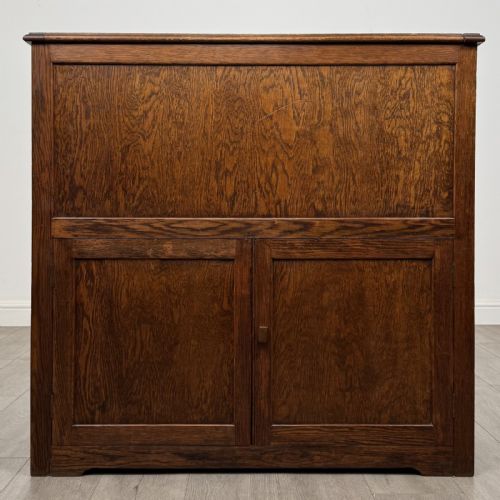
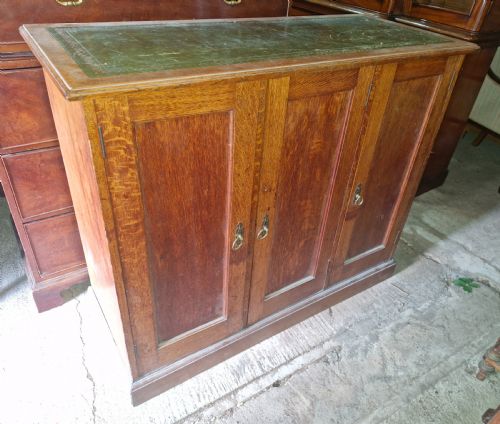
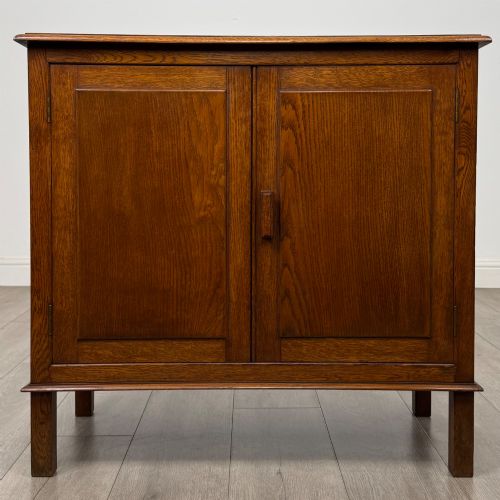


Oak Office Cupboard
An oak office cupboard brings hardworking timber and sensible storage into a room, offering a sturdy workspace centrepiece.
Oak Office Cupboard
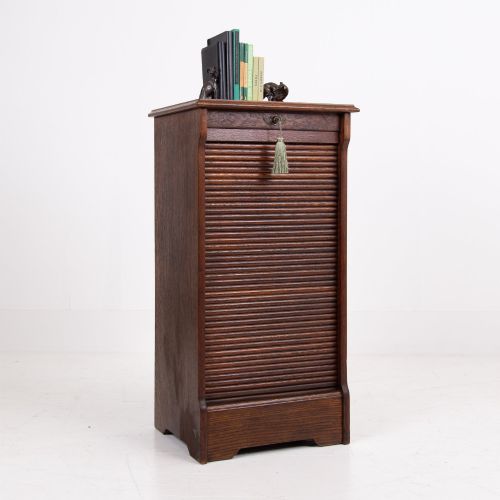
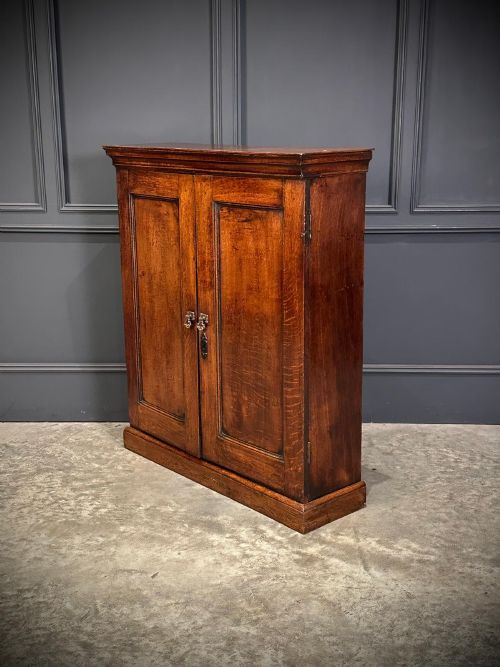
An oak office cupboard provides practical workspace storage, appearing in forms ranging from nineteenth-century fitted interiors and gamekeeper cabinets to early twentieth-century tambour door filing cabinets and music cabinets. You are most likely to meet Edwardian and nineteen-twenties pieces on this page, alongside occasional Victorian and Georgian examples.
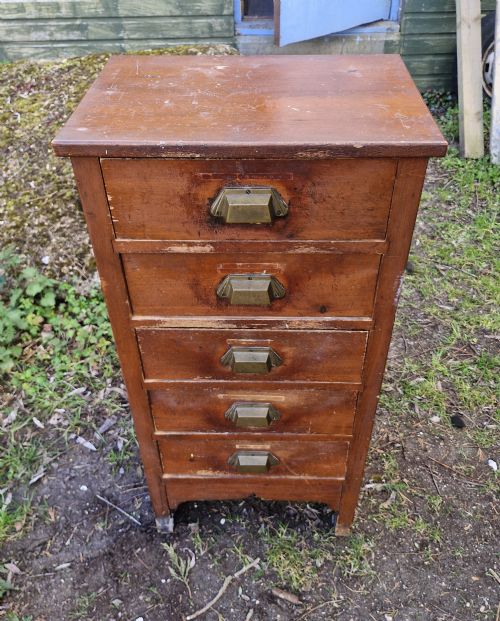
These pieces serve varied administrative tasks, taking the shape of small drawers, clerk cupboards, and double tambour front office filing cabinets. The selection spans periods from the Georgian era through to nineteen-forty French utility and industrial utility designs.
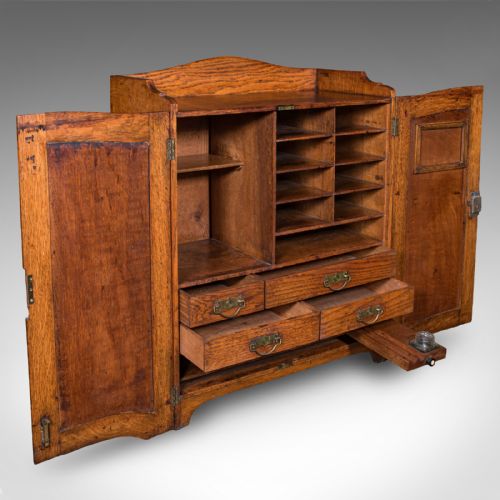
Cabinet variations include raised galleries, fitted pigeon holes, and desk cabinets alongside traditional bookcases and cabinets. Solid oak predominates, accompanied by functional brass and metal hardware.
What varies in quality
Quality rests in the sophistication of the internal fittings, such as specialised pigeon holes, fitted tambour tracks, and period brass handles. Pieces featuring fully fitted interiors and designated storage formats sit at the higher end of the range.
The choice of solid timber and the precision of the joinery distinguish utilitarian storage from finer cabinet work. Original hardware and intact mechanical elements elevate the execution of the piece.
Listings feature solid oak and pine materials alongside brass and metal hardware across Edwardian, Victorian, and twentieth-century periods.
The Oak Office Cupboard Glossary
- Tambour door
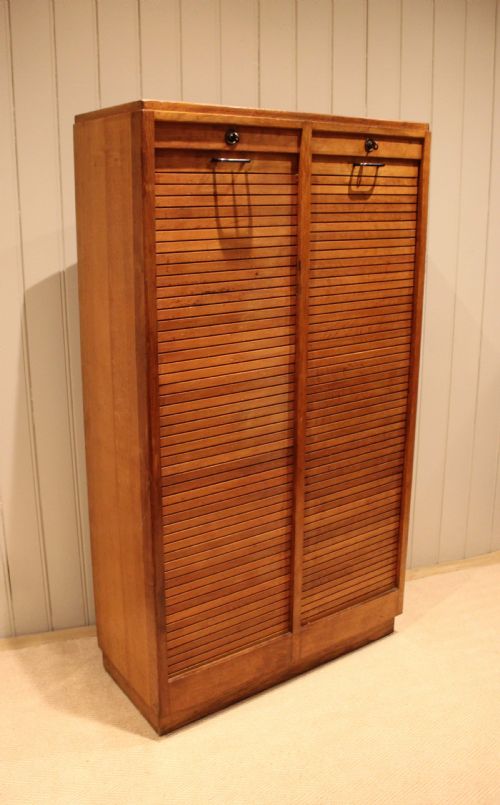
- A flexible door constructed from narrow slats of wood glued to a canvas backing, allowing it to slide smoothly around a curved track. This mechanism is frequently found on filing cabinets to save space in compact offices.
- Pigeon hole
- A small, open compartment within a fitted interior used for sorting correspondence and documents. These compartments form part of the workspace organisation inside nineteenth and twentieth-century cabinets.
- Raised gallery
- A low decorative railing or shelf standing above the main top surface of a piece. This feature prevents items from sliding off the back or sides.
- Book press
- A heavy mechanical device utilised for flattening paper or copying documents, often integrated into early Victorian furniture. These presses combine heavy timber frames with metal screw mechanisms.
- Estate gamekeeper cabinet
- A specialised storage unit constructed for country houses, later utilised as a clerk's cupboard. These robust pieces reflect practical administrative and organizational uses.
Oak Office Cupboard: Frequently Asked Questions
What is a tambour door cabinet?
A tambour door cabinet uses slatted wooden strips on a flexible backing to slide around a curved track, concealing the interior storage. This mechanism allows the doors to recess into the sides of the cabinet.
Such designs proved popular for office filing cabinets and desks from the early twentieth century onwards because they save floor space in tight rooms.
How do I use an office cupboard at home?
An antique office cupboard adapts easily to modern living by serving as storage for paperwork, stationery, or electronics in a study. Fitted interiors with pigeon holes help organise modern correspondence just as they did a century ago.
Larger cabinets and drawer units fit well in hallways or living areas to keep everyday clutter out of sight while adding timber texture to the room.
What periods do these cabinets come from?
The listings span multiple eras, stretching from Georgian and Victorian times through the Edwardian period and into the nineteen-twenties, thirties, and forties. Each era brings distinct manufacturing details and hardware choices.
Twentieth-century pieces often reflect industrial utility and French utility influences, prioritizing functional office storage over ornate decoration.
Are these pieces made of solid oak?
Many listings feature solid oak construction, providing the weight and durability expected of hardworking office furniture. Secondary timbers like pine occasionally appear in hidden structural areas or drawer linings.
Metal and brass components support the moving parts, whilst leather sometimes lines specific interior surfaces.