



Vintage Piecrust Tea Table
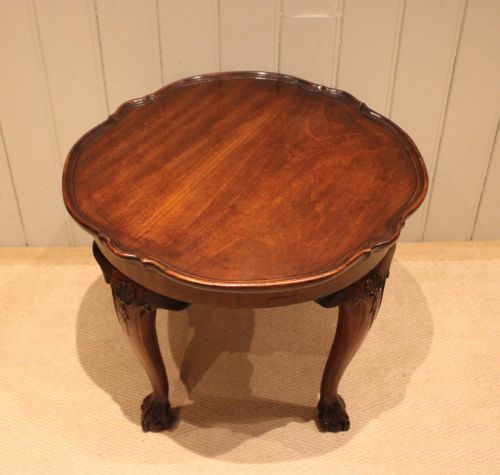
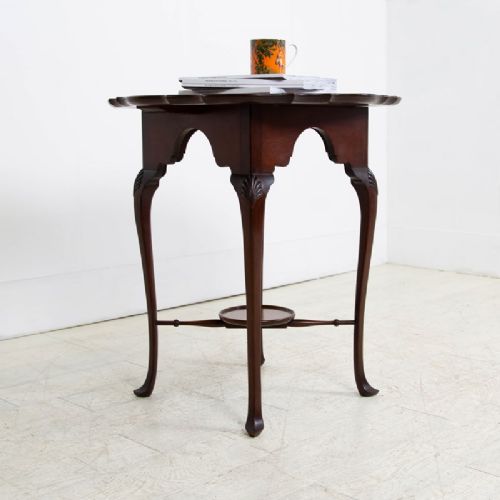
A vintage piecrust tea table offers that distinctive scalloped rim you want, bringing carved detail and practical circular surfaces straight into a room.
Vintage Piecrust Tea Table
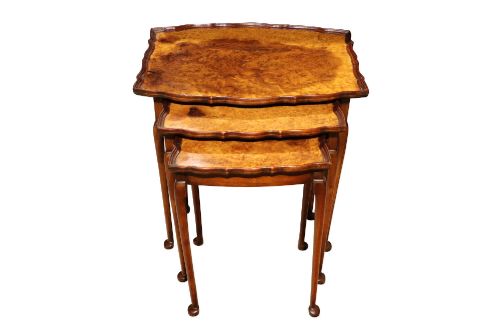
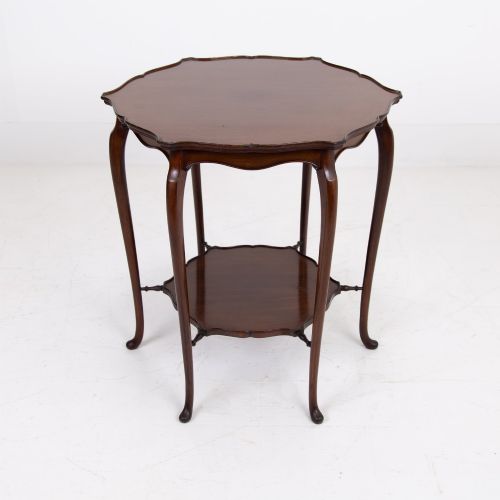
When you search for a vintage piecrust tea table, you are looking at circular occasional tables, coffee tables, and wine tables defined by their raised, carved rims. These small tables appear in forms ranging from tripod wine tables to nest of tables and low coffee tables. You are most likely to meet revival pieces from the early twentieth century, particularly the 1920s and 1930s, alongside earlier Georgian examples.
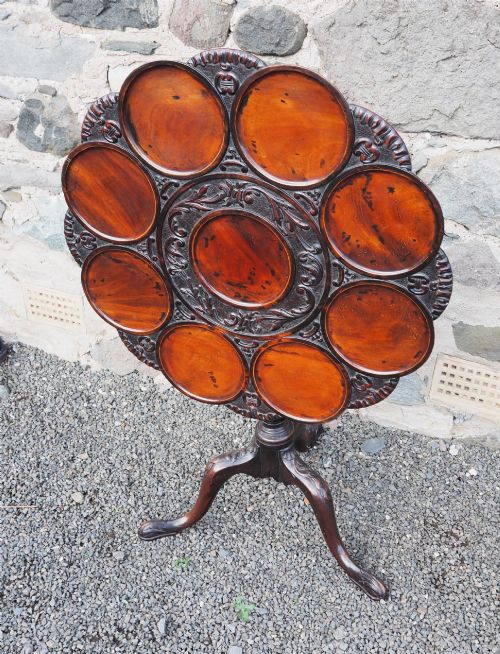
The styles seen across these listings draw heavily on traditional cabinet-making vocabularies, including Chippendale and Queen Anne revivals, as well as Edwardian designs. Makers utilised forms with tilt tops, tripod bases, and occasional side table formats. These pieces served historically for tea service and display, and today they function well as compact surface furniture in sitting rooms.
How they were made
Makers constructed these tables using solid hardwoods and decorative veneers, relying primarily on mahogany, walnut, burr walnut, and figured walnut. Solid walnut and mahogany provided structural stability for tripod legs and turned columns, while burr walnut veneer added dramatic grain patterns to circular tabletops.
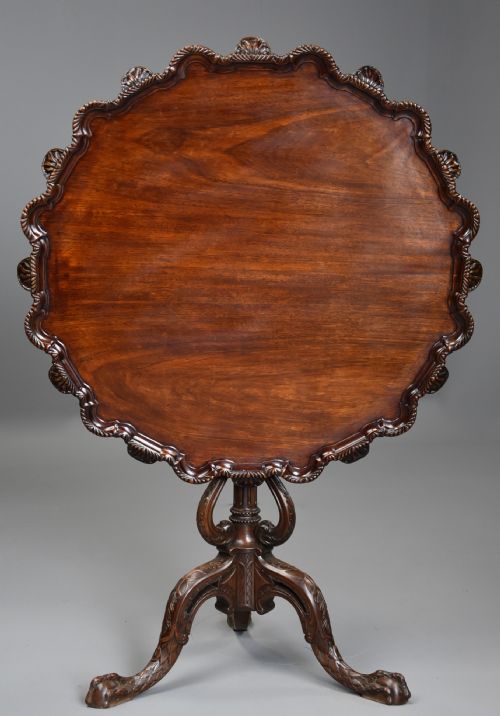
The defining characteristic, the piecrust edge, required skilled woodworking to shape the raised, scalloped profile directly from the solid timber or thick rim stock. Brass elements occasionally appeared in hardware fittings or support mechanisms on specific formats.
Current listings feature walnut, mahogany, and oak across occasional, coffee, and side table formats dating from the eighteenth century to the 1930s.
What varies in quality
The distinction between standard production and finer execution lies in the depth and sharpness of the timber carving around the scalloped rim and tripod legs. Superior tables exhibit crisp, hand-shaped edge work and well-proportioned turned columns rather than flat or machine-rounded contours.
Selection of timber also dictates the tier of quality, with heavily figured burr walnut veneers or dense, well-grained solid mahogany commanding greater visual interest. The integrity of the tilt-top mechanism and the tightness of the joinery at the pillar-to-leg junction further separate everyday utility tables from more accomplished examples.
Shapland and Petter
The Vintage Piecrust Tea Table Glossary
- Piecrust edge
- A raised, carved table rim shaped with decorative scrolls and curves resembling pastry work. This feature protects items from sliding off the circular surface.
- Tilt top
- A tabletop mounted on a catch mechanism that allows the surface to pivot vertically against the pillar. This permitted easy storage against a wall when not in use.
- Tripod base
- A support structure comprising three legs radiating from a central turned column. It ensures stability on uneven floors.
- Burr walnut
- Timber taken from the abnormal growth of a walnut tree, yielding complex, swirling grain patterns. Cabinet-makers sliced this wood into thin veneers for decorative surfaces.
- Chippendale style
- A design influence derived from eighteenth-century cabinet-maker Thomas Chippendale, characterised by carved cabriole legs and ornate wooden detailing. Revival pieces adopted these historic motifs.
Vintage Piecrust Tea Table: Frequently Asked Questions
What is a piecrust table?
A piecrust table is a small circular table featuring a raised, scalloped wooden rim carved to resemble pastry crust.
These tables typically stand on a central pillar supported by three legs, functioning historically for tea service and currently as display or accent pieces.
How do I date a walnut table?
Dating a walnut table involves examining the construction methods, timber preparation, and stylistic revival cues visible in the frame. Pieces from the 1920s and 1930s often combine traditional silhouettes with twentieth-century manufacturing marks.
Comparing the turning on the central column and the application of burr walnut veneer helps distinguish early twentieth-century revival work from eighteenth-century originals.
Are these tables solid wood?
These tables incorporate a mixture of solid hardwoods and decorative wood veneers applied over secondary timber foundations. Mahogany and walnut appear in both solid forms for structural legs and as sliced veneers on tabletops.
Examining the surfaces reveals whether burr walnut veneer or solid mahogany was selected for that specific part of the furniture.