


Vintage Pewter Candle Stands
These vintage pewter candle stands bring tactile weight and honest metalwork to a room, ranging from simple domestic holders to sculptural Arts and Crafts designs.
Vintage Pewter Candle Stands
Vintage pewter candle stands span several centuries of metalworking, encompassing domestic sticks and decorative display pieces. Buyers searching this phrase meet objects shaped across the seventeenth, eighteenth, nineteenth, and early twentieth centuries.
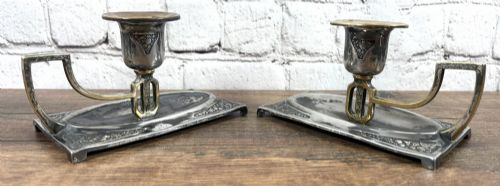
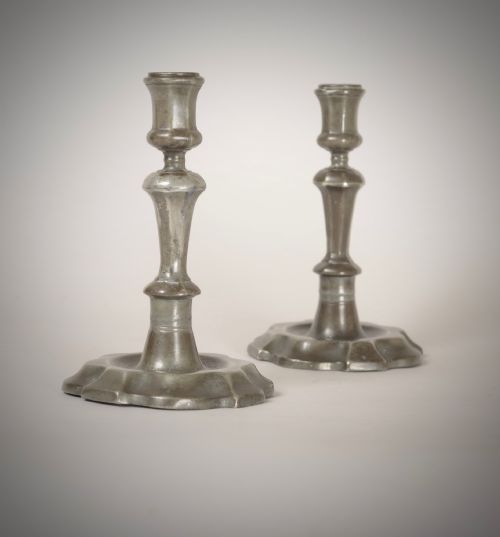
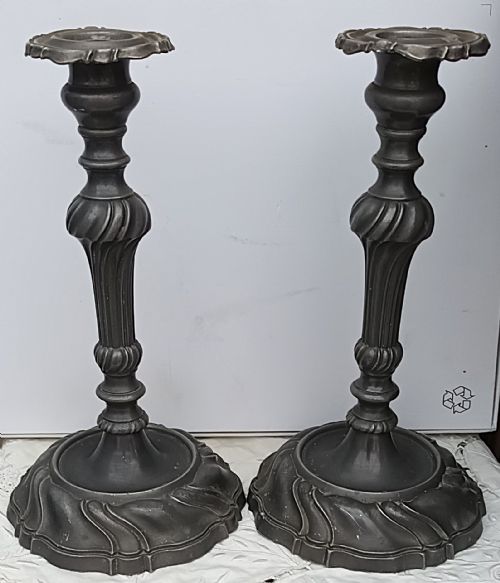
The selections on this page appear most frequently as pairs. Forms range from restrained Stuart designs to elaborate Victorian Rococo, Art Nouveau curves, and geometric Art Deco silhouettes.
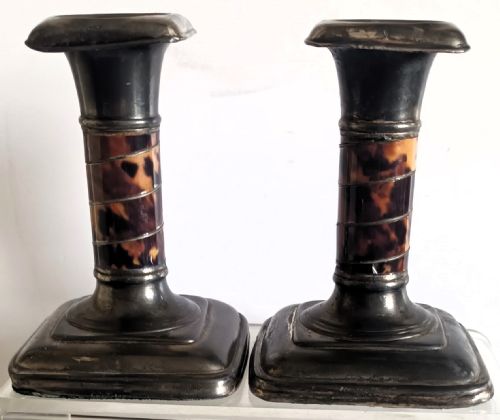
Originating largely from English workshops alongside French and continental makers, these pieces combine utilitarian function with distinct period styling. They utilise the soft grey lustre of pewter, occasionally paired with brass, enamel, or tortoiseshell.
How they were made
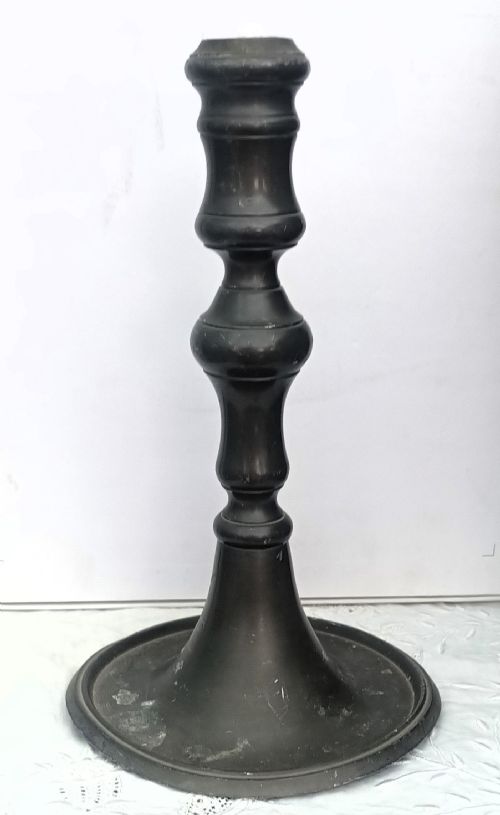
Makers formed these pieces primarily through casting and turning pewter, a durable alloy of tin alloyed with copper and antimony. Artisans shaped the metal in moulds and finished the surfaces on lathes.
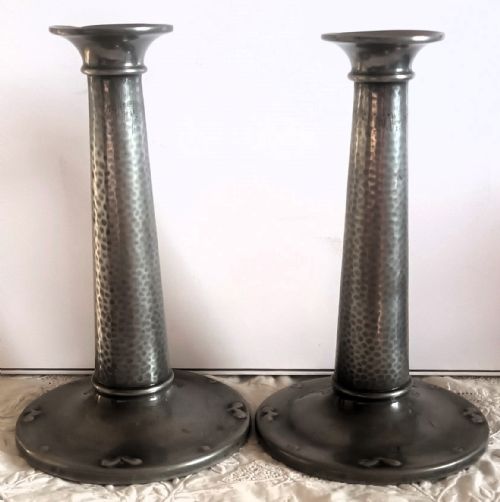
Twentieth-century examples incorporate specialised decorative techniques such as enamel insets and applied brass details. Arts and Crafts pieces highlight hammered textures, while earlier periods rely on simpler cast profiles and turned shafts.
Some nineteenth-century makers evidently decided that grey metal needed tortoiseshell patches just to keep things interesting on the mantelpiece.
What varies in quality
The distinction in quality rests upon the crispness of the cast detail and the integrity of the metal. Finer examples retain deep, sharp ornamentation without softening from excessive polishing or wear.
Makers who incorporated secondary materials like enamel or tortoiseshell achieved superior results when the mixed media fitted flush within the pewter framework. Weight and balance also separate standard domestic items from ambitious studio productions.
Liberty & Co·Archibald Knox·Alexandre Clerget·WMF
The Vintage Pewter Candle Stands Glossary
- Pewter
- A malleable metal alloy composed principally of tin, historically used for tableware and lighting. Its surface develops a soft patina over decades of handling.
- Arts and Crafts
- A design movement of the late nineteenth and early twentieth centuries emphasising manual skill and honest construction. Pieces from this era often display subtle hammer marks or simple geometric lines.
- Art Nouveau
- A style defined by flowing, organic lines inspired by natural forms. Candlesticks in this manner feature whiplash curves and floral motifs.
- Stuart
- A period style reflecting seventeenth-century British design aesthetics. Objects from this era display robust, restrained turning and heavy proportions.
- Tortoiseshell
- The mottled brown and amber shell of certain sea turtles used historically for ornamental inlay. It provides a rich contrast against polished pewter.
Vintage Pewter Candle Stands: Frequently Asked Questions
How do I clean vintage pewter?
Clean pewter gently using warm water and mild soap, drying it immediately with a soft cloth. Avoid harsh abrasive compounds that strip the historic surface.
Allow the metal to retain its natural dark grey tone rather than attempting to polish it to a bright silver finish.
How do I date an old pewter candlestick?
Examine the weight, style of turning, and any maker marks stamped into the base. Seventeenth and eighteenth-century examples feature heavier, simpler profiles compared to ornate Victorian or Art Nouveau designs.
Compare the surface texture and manufacturing method against known period examples.
What is Tudric pewter?
Tudric was a brand name used by Liberty & Co for high-grade pewter wares produced during the early twentieth century. These items often feature distinctive Art Nouveau motifs and enamelled accents.
Objects bearing this mark represent collaborative design work by prominent artists of the period.