


Vintage Persian Textile
When you want a vintage persian textile, you are looking at tribal weavings and embroideries shaped by nomadic hands across nineteenth and early twentieth-century Persia.
Vintage Persian Textile
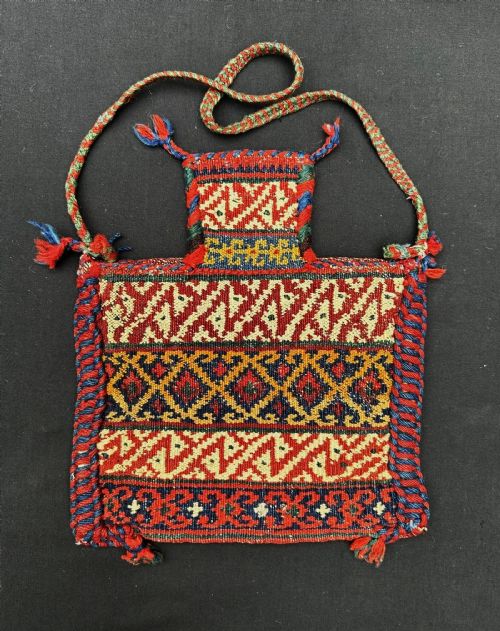
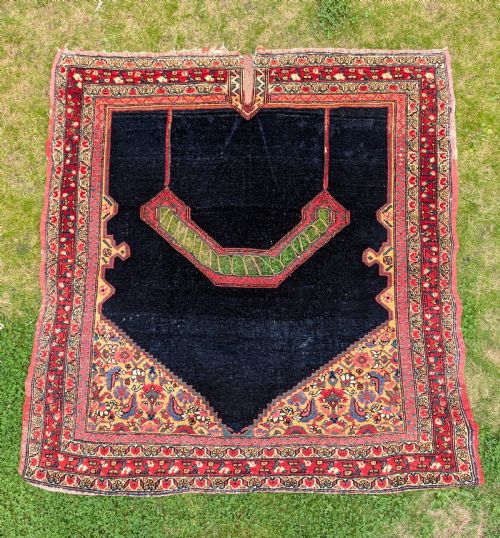
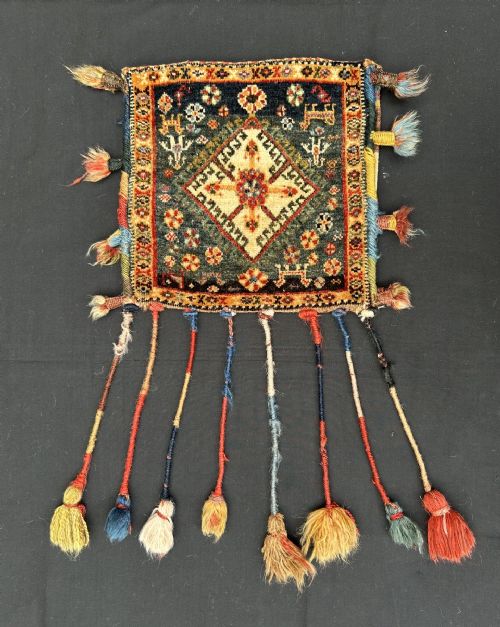
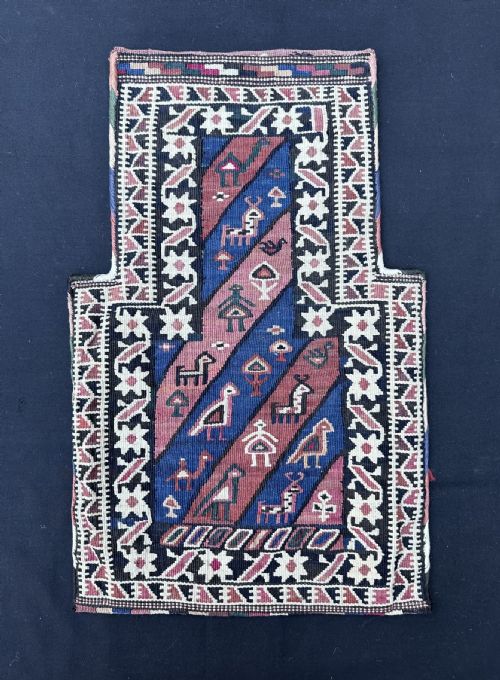
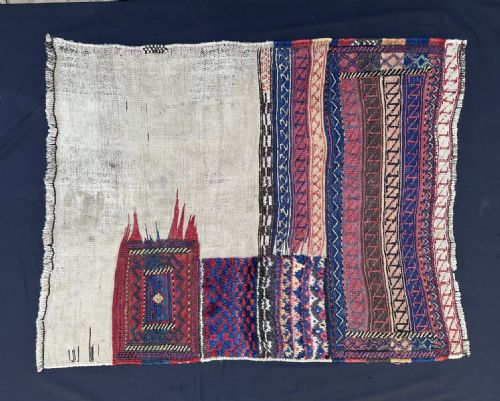
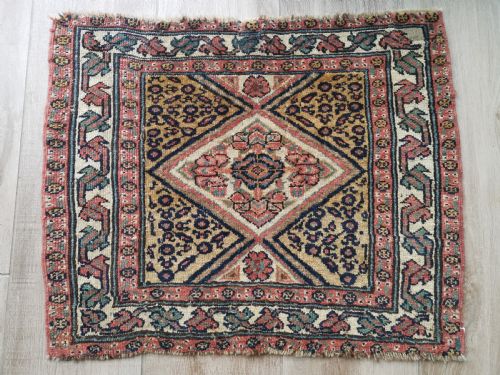
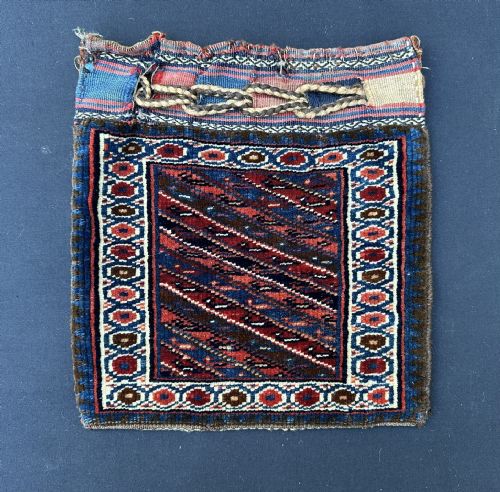
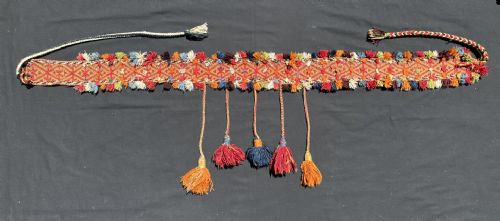
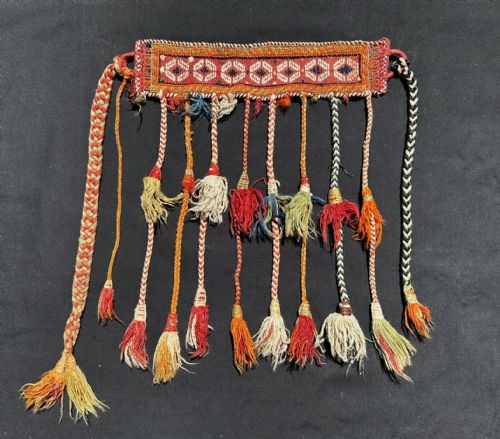
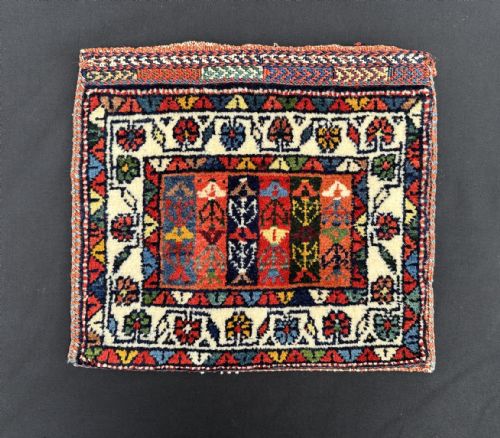
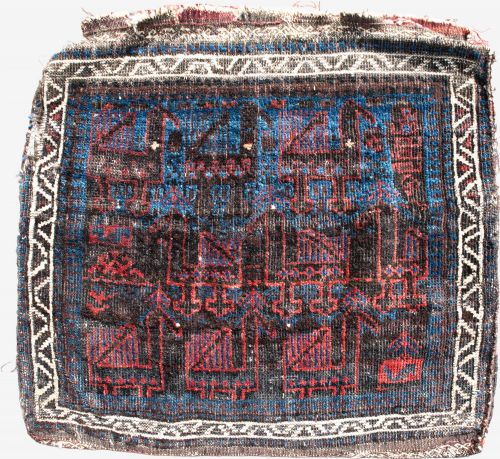
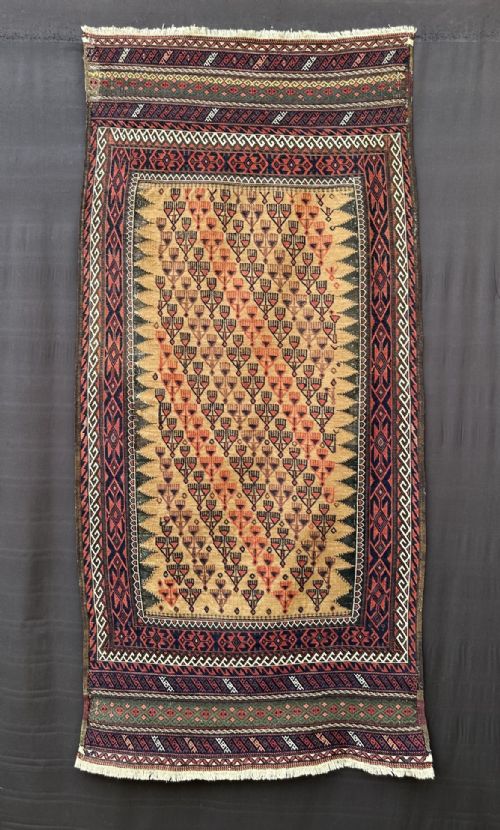
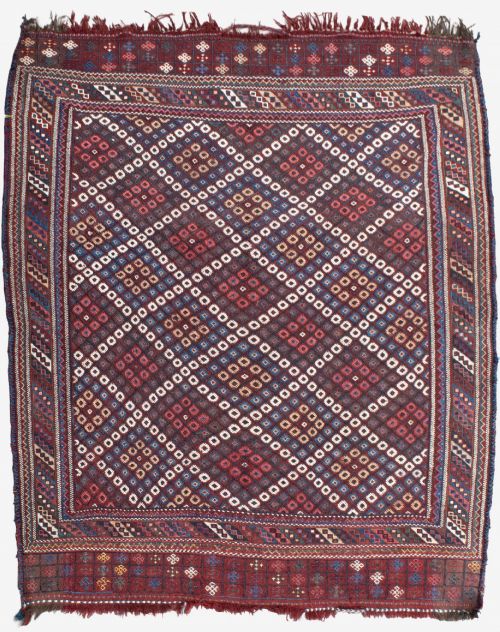
A vintage persian textile encompasses functional tribal items such as vanity bags, storage bags, saddle covers, animal trappings, bread sofreh, and embroidered panels created by nomadic confederacies and regional groups. These objects served utilitarian roles in daily nomadic life, functioning as containers for grain, salt, or personal items, and as dining cloths or horse decorations.
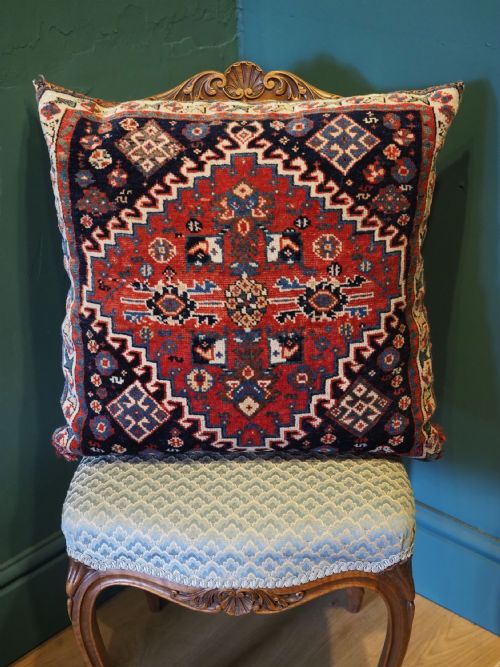
The pieces on this page lean heavily into specific tribal identities, including the Qashqa'i, Afshar, Bakhtiari, Shahsavan, and Baluch groups. Rather than formal city workshop carpets, buyers encounter authentic utilitarian fragments and complete bags that preserve traditional village and tribal designs from regions like Fars, Kerman, and Khorassan.
Dated examples stretch from the mid-nineteenth century through the 1930s, capturing a period when natural dyes and hand-spun materials dominated nomadic production before synthetic alternatives took hold. The forms range from small personal chantehs to large square sofreh cloths and silk-on-felt Rasht embroideries.
How they were made
Makers utilised hand-spun wool, cotton, goat hair, and silk, working with natural dyes to create rich colour palettes across flatweaves, pile rugs, and embroidered surfaces. Foundation structures frequently relied on sturdy wool or cotton warps and wefts to withstand the heavy wear of nomadic travel.
Specialised techniques defined different object types, from Sumac wrapping and banded weft work on storage bags to intricate silk and felt appliqué work on Rasht panels. Weavers employed warp-faced banded structures for Jajim pieces and supplementary weft techniques for intricate tribal motifs like the boteh.
Several bags retain their original goat hair backs and fastening bands, still ready for a journey that ended a century ago.
What varies in quality
Quality rests in the fineness of the weave, the clarity and saturation of the natural dyes, and the integrity of the original structure including backs and borders. Pieces retaining their complete format, original animal hair sides, or untouched wool surfaces command greater appreciation than heavily trimmed fragments.
The precision of tribal motifs and the complexity of regional designs, such as specific sub-tribe weave structures or finely executed embroidery, separate standard utilitarian objects from exceptional examples of nomadic textile art.
The Vintage Persian Textile Glossary
- Sofreh
- A flatwoven spread or cloth used for dining, kneading bread, or wrapping dough during daily nomadic meals. These textiles often feature geometric field designs specific to the weaving tribe.
- Khorjin
- A traditional pair of saddlebags designed for transport on animals during tribal migrations. They typically feature strong flatwoven or piled faces with reinforced backs.
- Chanteh
- A small personal vanity bag or pocket used by nomads for carrying small possessions. They represent some of the most finely detailed personal weaving from tribal groups.
- Sumac
- A flatweaving technique where pattern wefts are wrapped around the warp threads before being beaten down. This creates a durable structure with a ribbed front texture.
- Rasht embroidery
- A traditional Persian needlework style originating from Gilan province utilising wool or silk appliqué laid down on a felt ground. Artisans stitch intricate scrolling floral or pictorial patterns across the surface.
Vintage Persian Textile: Frequently Asked Questions
What is a sofreh used for?
A sofreh functioned as a flat spread placed on the ground during communal meals or used specifically for preparing and resting bread dough within nomadic households.
These textiles were woven by hand to endure daily domestic use while displaying the characteristic geometric patterns of the weaving tribe.
How do I identify tribal origins?
Tribal origins are identified through specific structural techniques, wool qualities, and distinct regional motifs passed down through generations within specific confederacies like the Qashqa'i or Afshar.
Examining the colour palette, border designs, and specific bag shapes helps link a piece to particular areas such as Fars or Kerman province.
Are these pieces made with natural dyes?
Many examples from the nineteenth and early twentieth centuries utilise natural dyestuffs extracted from plants, roots, and insects to achieve deep reds, blues, and golds.
These dyes interact with hand-spun wool to develop a rich patina over decades of use and exposure to light.
How should I display a textile?
Textiles like saddlebag faces, panels, and smaller sofreh cloths can be mounted securely on supportive backings or displayed flat behind protective glass.
Keeping them away from direct sunlight preserves the natural dyed wool and silk threads from fading over time.