


Vintage Persian Living Room Carpet
A vintage persian living room carpet brings warmth and grounded history to a large floor, anchored by enduring weaves and motifs.
Vintage Persian Living Room Carpet
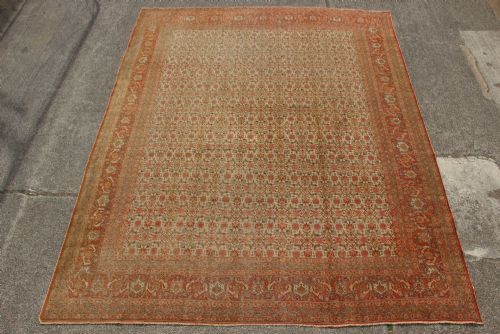
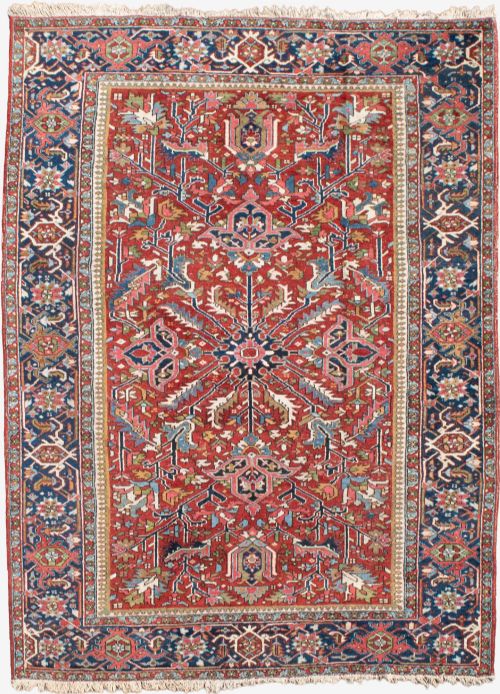
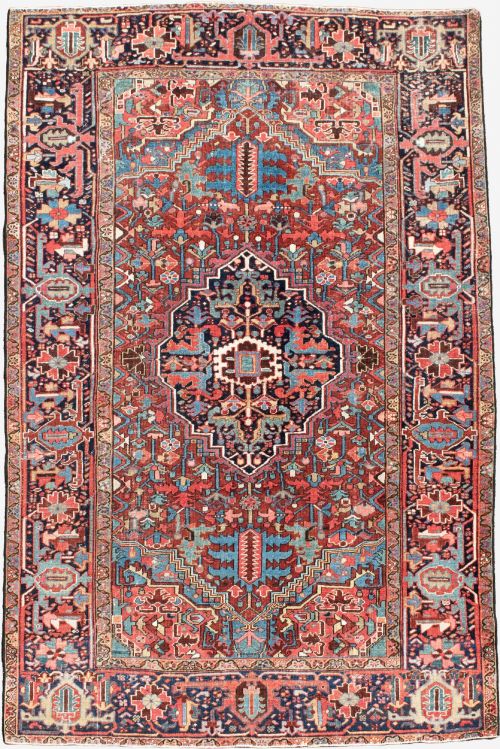
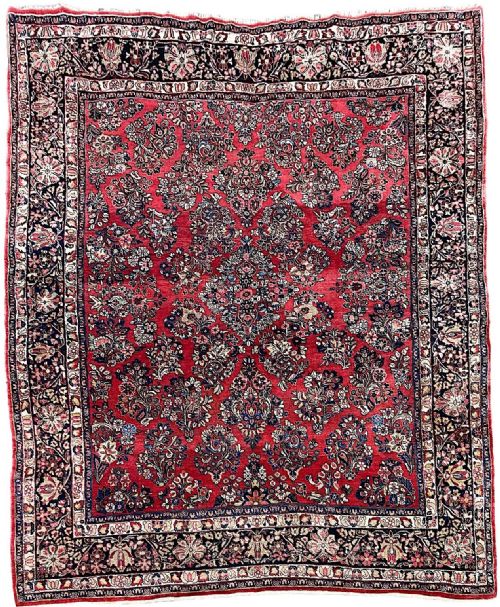
A vintage persian living room carpet encompasses substantial roomsize floor coverings originating from traditional weaving centres in Persia, spanning production from the late nineteenth century into the mid twentieth century. These furnishings bring structured geometry and floral motifs into domestic spaces, appearing in various formats from large floor carpets to smaller area rugs.
The pieces listed on this page predominantly date from the late Victorian and Edwardian eras up to the nineteen-forties, reflecting regional workshops such as Heriz, Tabriz, Sarouk, Kirman, and Qum. Buyers searching this phrase meet both roomsize statement pieces designed for principal reception rooms and compact tribal rugs suited to smaller interiors.
Materials and Construction
Construction relies upon hand-knotted wool foundations, often paired with cotton warps and occasional highlights of silk, yielding a dense and resilient pile designed for daily domestic traffic. Artisans tied individual knots by hand onto vertical looms, ensuring structural integrity across large roomsize formats.
Natural dyeing techniques utilise plant and mineral sources to achieve the soft pastel hues, rich reds, and deep blues recorded in these woollen and part-silk floor coverings. The integration of wool and cotton provides the heavy drape and durability characteristic of traditional Persian regional workshops.
Several pieces preserve the quiet footprint of nomadic sheep, whose lanolin-rich wool ensures the carpet softens gracefully underfoot across the decades.
Assessing Quality and Execution
Quality rests in the precision of the hand-knotted pile, the complexity of the regional design, and the integrity of the wool or silk materials used by the weaver. Finer knots per square inch allow for sharper delineation of intricate geometric medallions and floral sprays.
The depth and nuance of the dye palette separate standard production from superior examples, as does the balance of the overall composition across large roomsize formats. Original edge bindings and even pile wear demonstrate the lasting resilience of the textile.
Benlian Tabriz
The Vintage Persian Living Room Carpet Glossary
- Heriz
- A style of carpet originating from north-west Persia, known for bold geometric central medallions and sturdy construction. These rugs utilise robust wool well suited to heavy domestic use.
- Tabriz
- A Persian city and major weaving centre producing carpets with intricate floral designs, fine knots, and sophisticated medallion layouts. Tabriz pieces often display balanced symmetry and refined detailing.
- Sarouk
- A type of Persian carpet recognised for dense floral sprays, robust wool pile, and rich colour palettes often featuring soft blues and reds. Production centres in the western region of Persia.
- Qum
- A city south of Tehran producing fine wool and silk carpets with precise execution and detailed pictorial or floral motifs. Qum pieces frequently demonstrate high knot counts.
- Boteh
- A traditional Persian teardrop or paisley motif representing a floral spray or cypress tree, commonly repeated across the field of rugs and carpets. This ancient symbol appears frequently in regional weaving.
Vintage Persian Living Room Carpet: Frequently Asked Questions
How do I clean a vintage persian living room carpet?
Vacuum gently using a suction-only attachment without a rotating brush bar to protect the hand-knotted wool pile from abrasion.
Professional specialist cleaning is recommended for deep maintenance to preserve the natural wool fibres and regional dyes.
Will a vintage persian living room carpet handle heavy foot traffic?
Traditional hand-knotted wool carpets from centres like Heriz are constructed specifically to endure daily use in busy household spaces.
Using a quality underlay beneath the carpet prevents slippage, reduces friction against the floor, and adds cushioning to the pile.
How do I identify a Heriz from a Tabriz carpet?
Heriz carpets feature bold, geometric rectilinear medallions and strong, durable wool suitable for hard-wearing floor placement.
Tabriz carpets display curved floral scrolls, finer knotting, and balanced medallion schemes typical of sophisticated urban workshops.
What size of carpet do I need for a living room?
Roomsize formats ranging upwards of three metres accommodate large seating arrangements by anchoring the primary furniture group together.
Smaller area rugs suit hearth placements or partial floor zoning where the surrounding flooring remains exposed.