
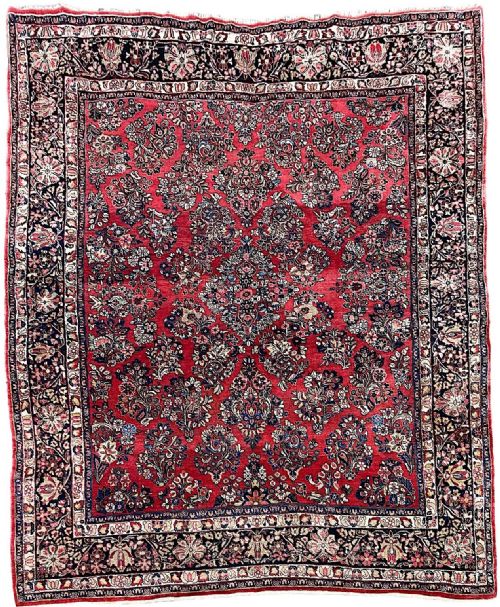


Vintage Persian Living Carpet
A vintage persian living carpet brings depth and texture to a room, drawing on decades of traditional weaving.
Vintage Persian Living Carpet
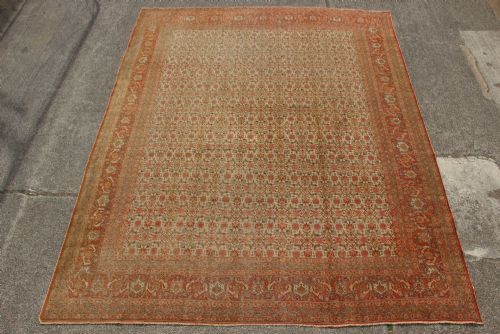
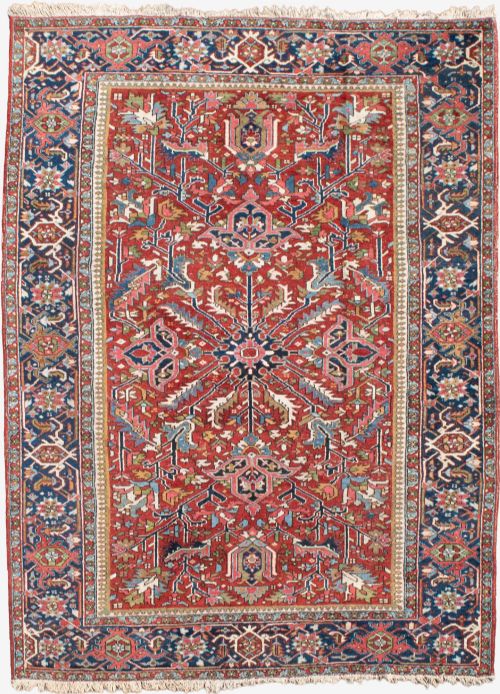
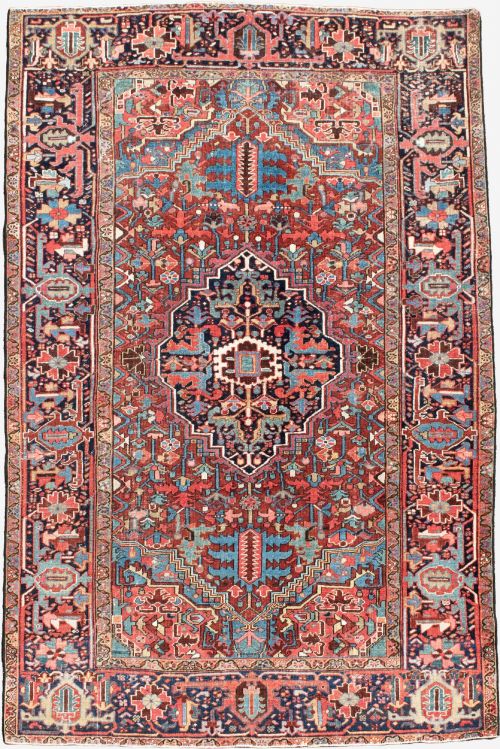
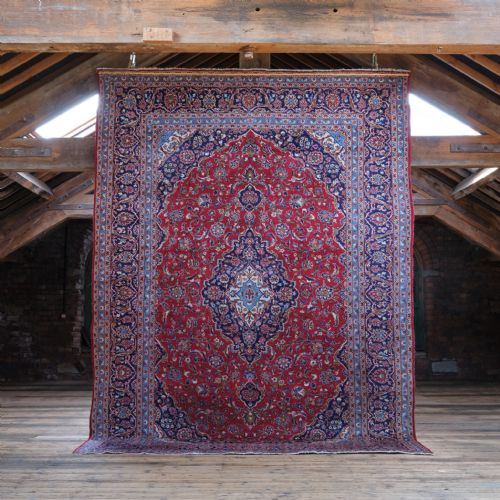
A vintage persian living carpet encompasses large format floor coverings produced across Persia during the late nineteenth and early twentieth centuries. These pieces reflect regional weaving traditions originating in centres such as Tabriz, Heriz, Kashan, Kirman, and Qum.
The selections available include room-sized carpets and smaller area rugs displaying traditional motifs, geometric medallions, and all-over patterns. Production dates span from the 1880s through to the 1940s, capturing distinct periods of craftsmanship.
Buyers encounter regional styles such as Heriz, Sarouk, Hamadan, and Mahal, each identified by specific wool handling and colour palettes. These textiles served primarily as heavy-duty domestic furnishings intended for daily use.
Materials and Technique
Construction relies primarily on hand-knotted wool foundations, occasionally incorporating cotton warps and wefts, alongside occasional silk highlights found in specific regional rug types. Weavers tied individual knots by hand onto vertical looms to create dense, durable pile fabrics.
Natural and early synthetic dyes produced the varied colour schemes recorded across the listings, yielding soft pastels as well as deep terracotta and indigo tones. The resulting textiles combined resilience with intricate pictorial and geometric designs.
Listings feature pieces dated from the 1870s to the 1940s, utilising wool, cotton, and silk materials.
Factors of Quality
Quality rests upon knot density, the fineness of the wool, and the precision of the drawn design. Higher quality pieces display tighter knotting that preserves intricate curvilinear or geometric patterns over decades of wear.
The integrity of the foundation and the evenly balanced wear across the pile differentiate superior examples from heavily restored or thinning alternatives. Original selvedges and complete border guards also indicate a higher grade of preservation.
Benlian
The Vintage Persian Living Carpet Glossary
- Pile
- The upright yarn loops that form the soft surface of a carpet. This layer absorbs foot traffic and displays the woven pattern.
- Warp
- The vertical threads stretched tightly on the loom before knotting begins. These foundational threads run the length of the rug and often show at the fringes.
- Weft
- The horizontal threads passed alternately over and under the warp threads after each row of knots. This binds the structure together firmly.
- Medallion
- A large central ornamental design motif placed in the middle of the carpet field. It frequently anchors the symmetrical layout of traditional Persian weaving.
- Boteh
- An ancient motif shaped like a pear or curved almond, filled with floral or geometric details. It appears frequently in traditional Persian rug designs.
Vintage Persian Living Carpet: Frequently Asked Questions
How do I clean an old carpet?
Surface dirt lifts easily with gentle vacuuming using a suction-only attachment without a rotating brush bar.
Professional specialist cleaning is necessary for deep washing to protect the natural wool and dye stability.
Can I place these in heavy traffic areas?
Traditional room-sized carpets withstand regular domestic use due to their dense hand-knotted wool construction.
Using a quality underlay prevents slipping and cushions the foundation against hard flooring surfaces.
How do regional styles differ?
Heriz carpets typically present bold geometric central medallions with strong angular corners and robust wool.
Tabriz and Kashan pieces often favour finer curvilinear floral sprays and intricate all-over compositions.
What does part silk mean in a listing?
Selected rugs incorporate silk threads alongside wool to highlight specific details within the design.
This addition creates subtle light reflection and accentuates the finer contours of the woven pattern.