


Vintage Parlour Chairs
These vintage parlour chairs bring nineteenth-century reception rooms to life, offering carved frames and upholstered seats that suit a traditional sitting room.
Vintage Parlour Chairs
Vintage parlour chairs comprise seating designed for formal reception rooms, ranging from single button-back armchairs to matched sets of salon chairs. When searching for vintage parlour chairs, buyers encounter pieces originating primarily from the Victorian and Edwardian eras, alongside earlier nineteenth-century examples.
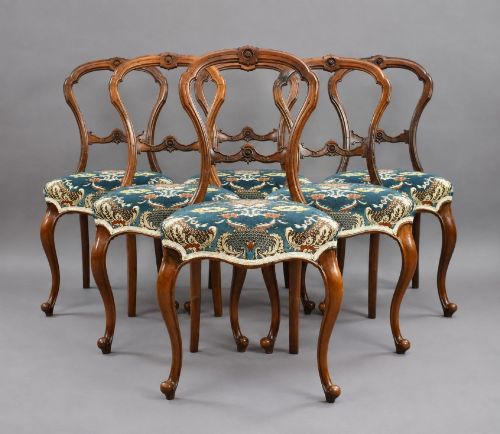
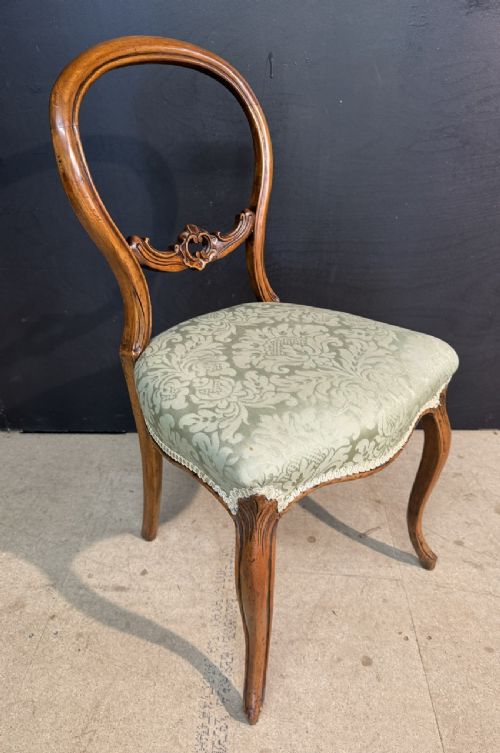
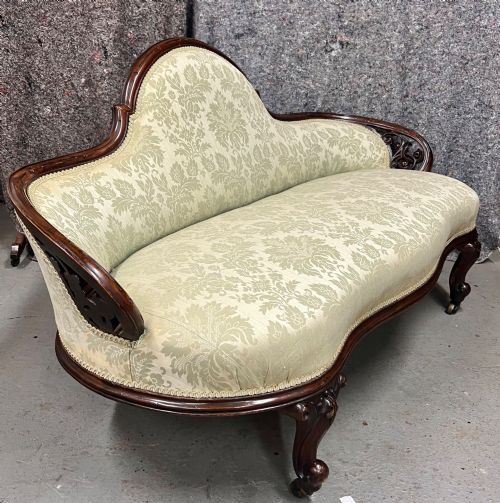
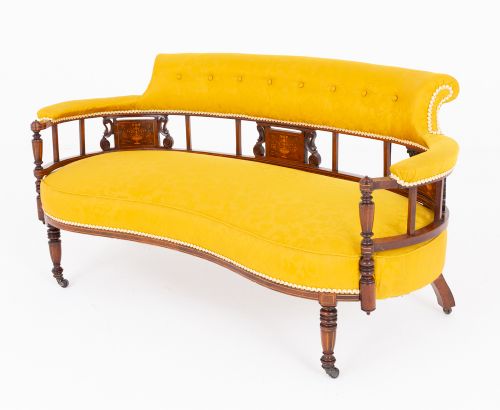
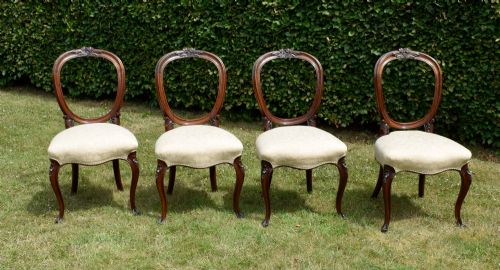
The selection includes specific forms such as low nursing chairs, balloon-back salon seats, inlaid mahogany occasional chairs, and larger sets incorporating settees and sofas. Walnut, rosewood, and mahogany form the structural backbone of these pieces, frequently paired with contemporary upholstery, velvet, and textile coverings.
Materials and construction
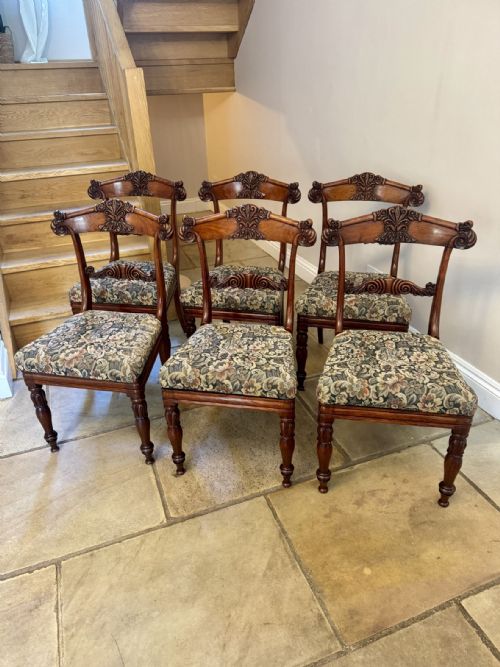
Cabinetmakers constructed these frames using dense hardwoods like mahogany, walnut, and rosewood, often applying detailed carving or decorative floral inlay. French styles introduce giltwood and carved walnut, while Edwardian pieces frequently feature delicate light-wood inlay set into mahogany or beech.
Upholstery techniques varied from traditional sprung interiors covered in velvet and patterned textiles to button-back designs that demanded precise hand-stitching. Brass details and gilt finishes appear on French revival armchairs and decorative salon seating.
Common seating formats on this page include single salon chairs, multi-piece parlour suites, and open armchairs.
Assessing quality in seating
Quality rests in the crispness of the timber carving and the integrity of the frame construction, particularly at the joints where cabriole or turned legs meet the seat rails. Superior examples display carefully matched timber grains, precise marquetry inlay, and robust internal framing that withstands regular use.
The refinement of the silhouette distinguishes finer pieces, such as the proportional grace of a balloon-back chair or the balanced curves of an open armchair. Original upholstery details and harmonious suite pairings elevate the desirability of matched salon sets.
Baumann
The Vintage Parlour Chairs Glossary
- Balloon back
- A chair back shaped in an open oval curve resembling a balloon, commonly found on nineteenth-century walnut and rosewood dining and parlour chairs.
- Cabriole leg
- A furniture leg that curves out in a convex arc and tapers inward in a concave arc, ending in a pad or decorative foot.
- Marquetry
- Decorative veneer patterns applied to furniture surfaces using thin pieces of wood, shell, or ivory to form intricate floral or geometric designs.
- Fauteuil
- An open-armed upholstered armchair with exposed wooden sides, originating from French furniture design traditions.
- Settee
- A medium-sized upholstered bench with a back and arms, designed to seat two or more people comfortably in a parlour or drawing room.
Vintage Parlour Chairs: Frequently Asked Questions
What is a parlour chair?
A parlour chair is a decorative seat designed for nineteenth and early twentieth-century reception rooms where guests were entertained. These pieces prioritise ornamental carved frames and comfortable upholstery over heavy utility.
They appear as single armchairs, nursing chairs, or matching components of larger salon suites. Their varied forms reflect the shifting decorative tastes of the Victorian and Edwardian periods.
How do I date a parlour chair?
Dating relies on identifying the prevailing timber choices, structural styles, and ornamental motifs recorded in the piece. Victorian examples often utilise heavy rosewood or walnut with balloon backs, while Edwardian pieces favour lighter mahogany frames with inlaid floral details.
Cabinetmaking techniques and upholstery styles also provide chronological clues, shifting from mid-nineteenth-century carving traditions toward lighter twentieth-century revival designs.
Can I use these chairs daily?
Most vintage parlour chairs function well for everyday seating provided the internal frame and joinery remain stable. Many buyers place them in living rooms, studies, or bedrooms as accent seating.
Periodic checks of the leg joints and upholstery support ensure these historic pieces handle regular domestic use without sustaining structural damage.
How do Victorian and Edwardian chairs differ?
Victorian parlour chairs generally feature darker woods like rosewood and walnut, deep button-backed upholstery, and robust, heavily carved frames. They project a sense of formal weight and ornate Victorian craftsmanship.
Edwardian pieces lean toward lighter mahogany or beech structures, frequently incorporating delicate floral inlay and brighter textile coverings. These later designs reflect a preference for airier, more versatile drawing-room layouts.