






Vintage Panel Room Divider
These vintage panel room divider pieces shape open spaces using folding panels of wood, lacquer, leather, and fabric across many historical periods.
Vintage Panel Room Divider
A vintage panel room divider partitions large spaces or creates privacy using hinged sections that fold flat when not in use. These functional items appear in forms such as folding screens, room dividers, modesty screens, and table screens.
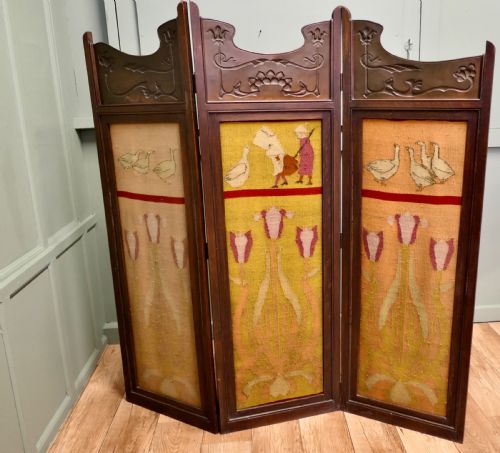
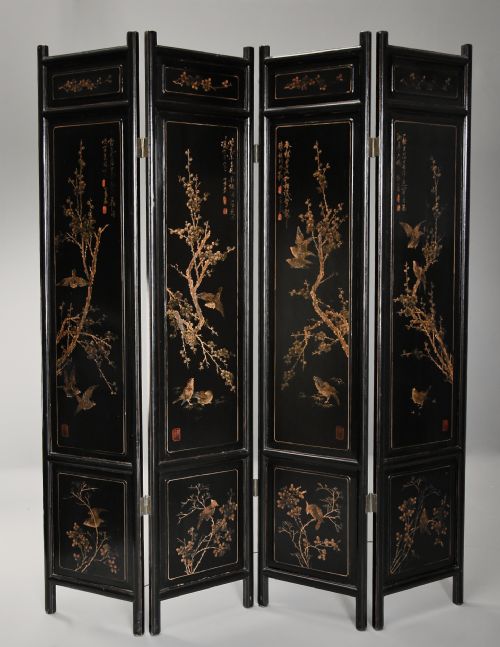
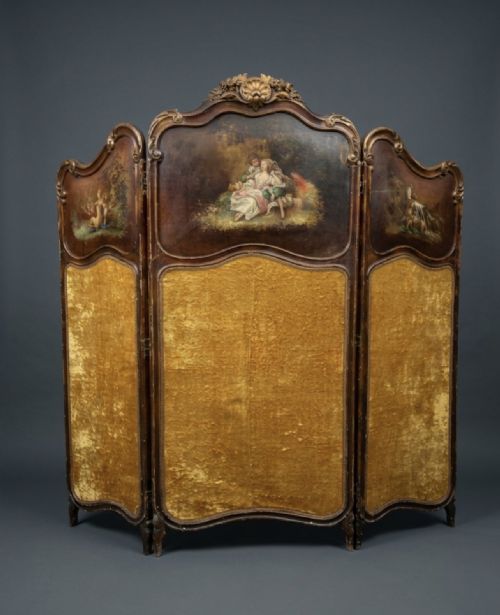
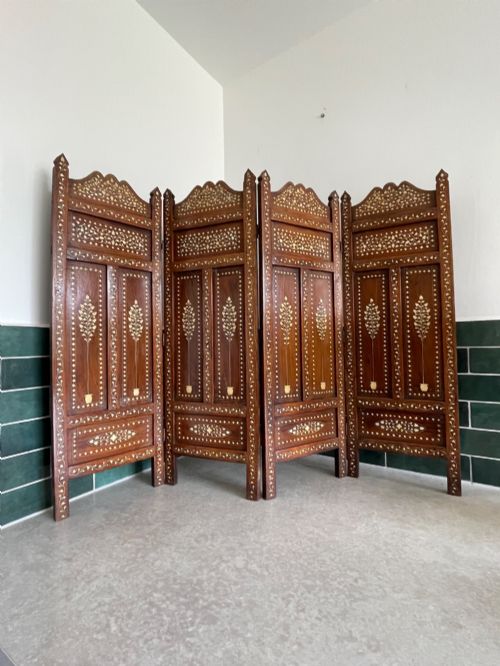
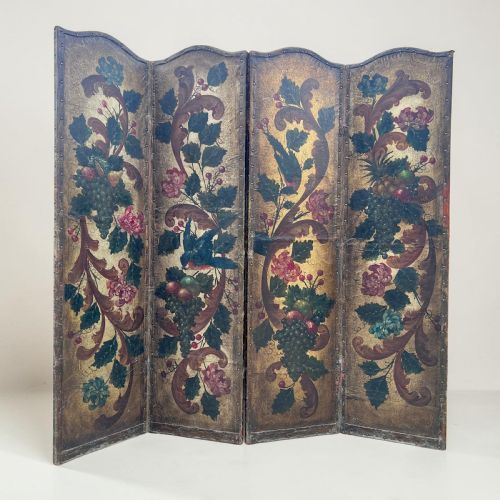
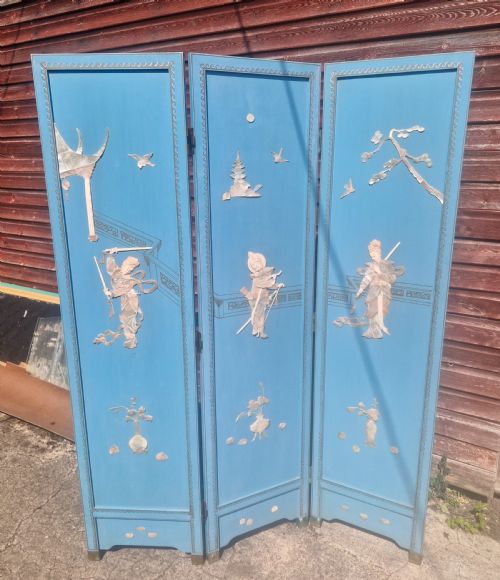
The selections available here span numerous origins and aesthetics, including Chinese black lacquered works, French walnut and leather examples, Indian padauk carvings, and British Arts and Crafts designs. Most pieces rely on a multi-fold construction ranging from three to eight leaves.
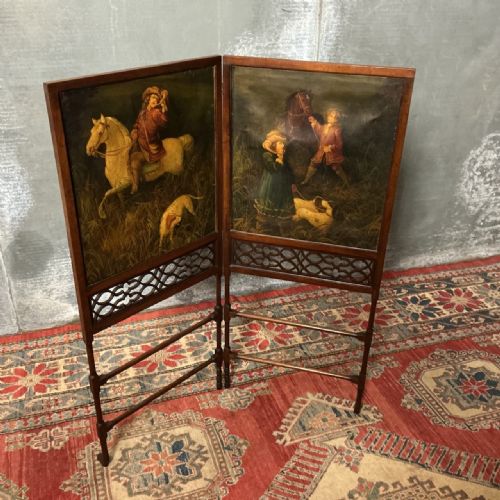
Period pieces date from the eighteenth century through the early twentieth century, encompassing Victorian, Edwardian, Art Nouveau, and Chinoiserie styles. Buyers frequently encounter folding screens with painted panels, textile inserts, or carved wood frames.
How they were made
Frames utilise timber such as mahogany, oak, walnut, and padauk, joined with hinges to permit flexible folding across multiple leaves. Structural supports hold decorative inserts made from leather, glass, fabric, brass, or copper.
Surface ornamentation involves hand-painting, lacquer finishes, gilt, needlepoint, and oil paintings applied directly to the panels. Artisans also employed fretwork carving, hardstone mounting, and scrap work collage to adorn the folding surfaces.
One historical screen preserves the energetic debates of an Eton College political society from the nineteen-twenties within its oak frame.
What varies in quality
Construction standards depend upon the joinery of the wooden frame and the durability of the hinges connecting each leaf. Heavier materials like carved wood, thick lacquer, and glass require robust framing to maintain stability across multiple folds.
Artistic execution separates standard items from superior examples through the hand-painted detail on leather, silk, or canvas panels. Intricate carving, original textiles such as William Morris velvet, and well-preserved gilt or lacquer elevate the craftsmanship of a piece.
William Morris
The Vintage Panel Room Divider Glossary
- Chinoiserie
- European decorative style reflecting Chinese artistic traditions. This aesthetic appears frequently on lacquered and painted folding screens.
- Padauk
- Dense tropical hardwood valued for its rich colour and durability. Makers utilised this timber for carved Indian screens.
- Modesty screen
- A portable privacy partition historically used in dressing rooms or domestic spaces. These pieces often feature painted panels.
- Needlepoint
- Embroidery stitched onto canvas mesh to create pictorial designs. Examples of this technique form the soft panels of privacy screens.
- Table screen
- A miniature version designed to stand on furniture rather than the floor. These items display decorative panels similar to full-sized room dividers.
Vintage Panel Room Divider: Frequently Asked Questions
How do I choose the right size room divider?
Consider the height and width of the space you want to partition, remembering that folding screens take up less linear space when angled than when pulled straight.
Larger multi-fold pieces require adequate floor clearance to fold comfortably without straining the hinges.
Where were these screens used historically?
These partitions served in bedrooms, dressing rooms, and parlours to create private alcoves or block drafts from open doors and windows.
Institutional settings also utilised them, as seen with academic and political society screens from the early twentieth century.
How do I care for leather and lacquer panels?
Dust wood and lacquer surfaces gently with a dry cloth and keep pieces away from direct sunlight to prevent fading or cracking.
Leather panels benefit from occasional light cleaning appropriate for antique hide without excessive moisture.
How can I tell different period styles apart?
Victorian and Edwardian examples often feature heavy mahogany frames, oil paintings, or needlepoint, while Art Nouveau pieces display organic copper and oak forms.
Chinoiserie and Oriental items typically showcase black lacquer, hardstone mounting, or hand-painted figurative scenes.