

Vintage Painted Table Lamp
These vintage painted table lamps bring hand-brushwork, rich lacquer and coloured pottery into a room, offering warm light alongside decorative presence.
Vintage Painted Table Lamp
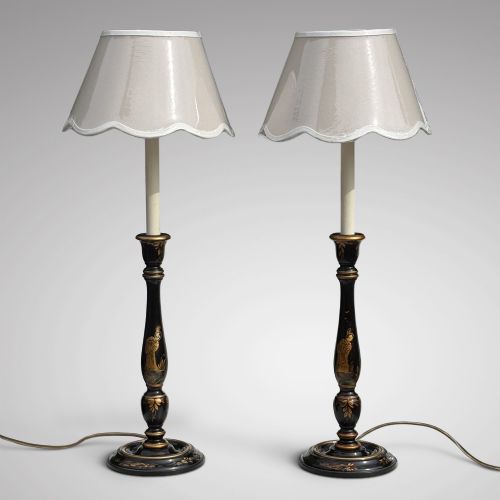
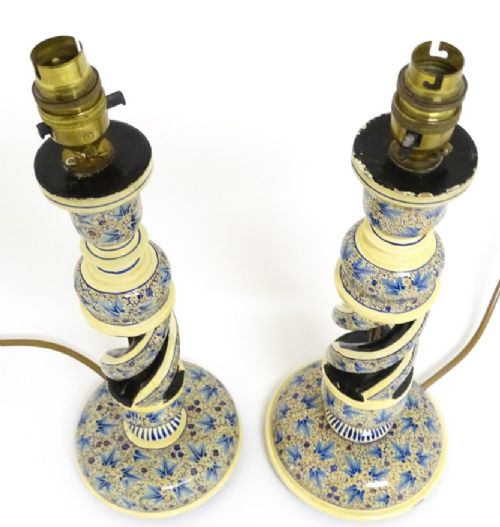
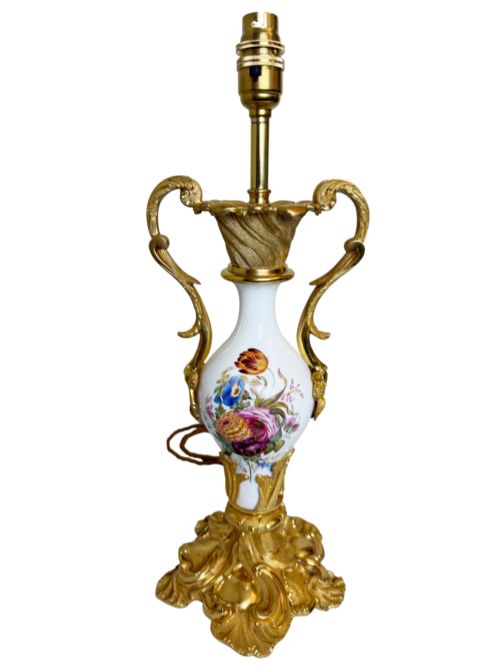
A vintage painted table lamp serves as both a light source and a distinct decorative object. When people search for a vintage painted table lamp, they encounter items ranging from converted oil lamps and nineteenth-century porcelain vases to Kashmiri papier-mache columns and lacquered Chinoiserie timber bases.
The selections on this page span several decades and origins, leaning heavily on early twentieth-century production alongside Victorian and Edwardian examples. Buyers find standard table lamps, converted oil lamps with painted glass fonts, and smaller bedside or desk lighting.
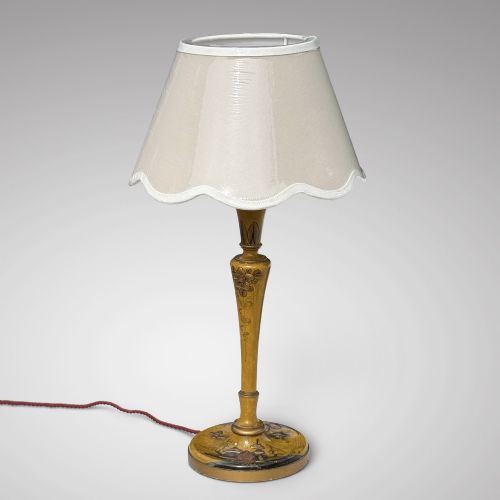
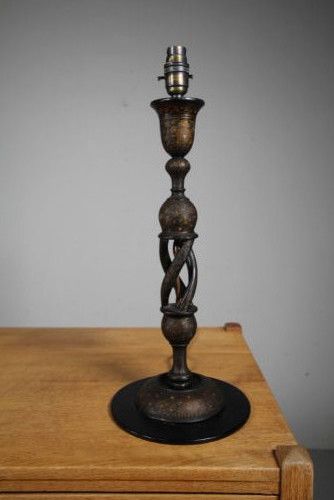
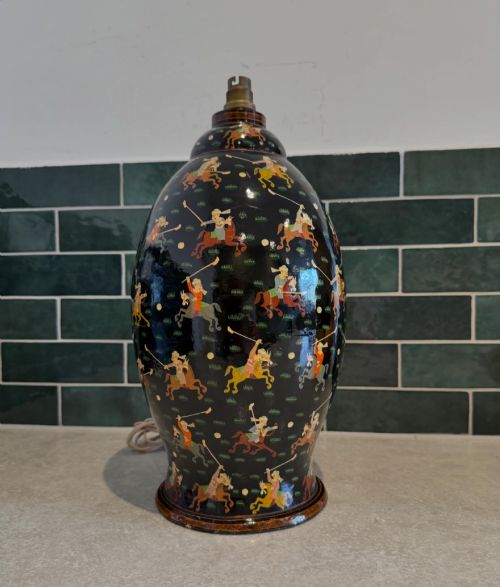
The physical forms vary considerably, from turned wood and brass pillars to bulbous ceramic jars and slender twist standards. Each piece relies on applied colour, whether through floral motifs on satinwood, intricate hand-painted Eastern patterns, or rich lacquered finishes.
How they were made
Makers utilised a variety of base materials including brass, fruitwood, mahogany, pine and cast metal, often applying layers of paint, lacquer or gilt directly onto the surface. Wooden bodies were turned on lathes or joined carefully before receiving hand-painted floral or figurative decoration.
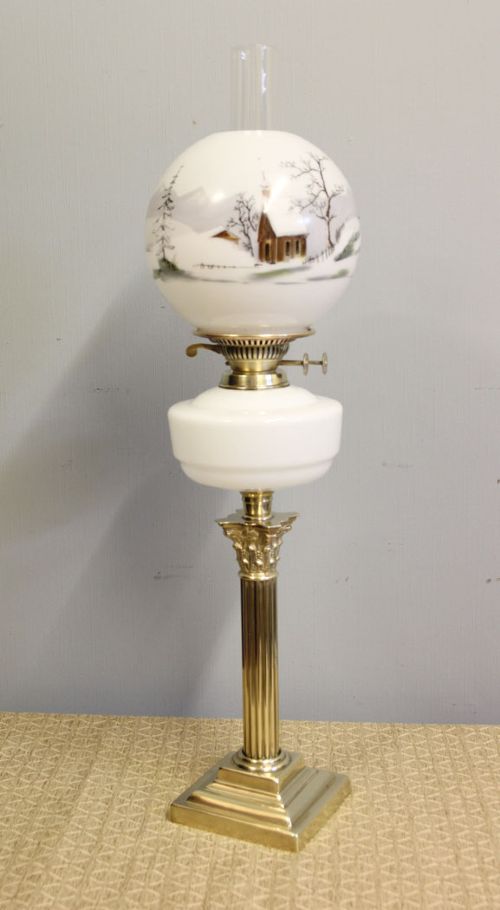
Ceramic and glass components, such as porcelain jars and cranberry glass fonts, were hand-painted and fired before being mounted onto metal or wooden fittings. Many oil lamps and candle lamps from the Victorian era incorporated brass columns paired with painted glass shades.
Conversion work forms a significant part of the inventory, where older items like Japanese Satsuma vases, Chinese porcelain jars or seventeenth-century vessels were later adapted for electricity. Wiring and electrical components were added to these traditional bodies during the twentieth century.
Several lamps began life as seventeenth-century vases before receiving a quiet twentieth-century retirement plan involving electrical wire.
What varies in quality
The standard of the hand-painting dictates much of the appeal, with crisp brushwork, balanced composition and fine detail separating superior examples from simpler production pieces. The depth and integrity of the original lacquer or painted finish also determine the visual impact.
Material selection plays a crucial role, distinguishing solid hardwoods, heavy brass and genuine porcelain from softer pine or lighter alloys. The harmony between the painted body and any mounted metalwork or shade demonstrates the care taken during original manufacture or subsequent conversion.
Royal Worcester·Moorcroft
The Vintage Painted Table Lamp Glossary
- Chinoiserie
- European interpretation and imitation of Chinese and East Asian artistic traditions, often featuring lacquered surfaces and hand-painted motifs. This style appears frequently on table lamps and occasional furniture from the Victorian and Edwardian periods.
- Bouillotte lamp
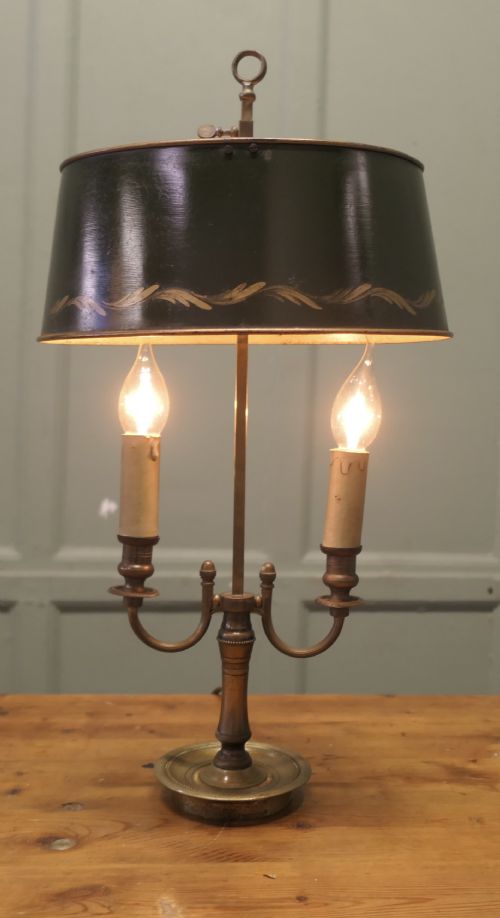
- A traditional desk or table lamp featuring a central standard, a metal shade that can be adjusted in height, and a basin base. French examples often combine brass and painted metal.
- Font
- The oil-holding reservoir of an oil lamp, which in many surviving pieces is made from hand-painted glass or ceramic. These colourful reservoirs are frequently retained when lamps are converted for electrical use.
- Satsuma
- Japanese earthenware originating from the Satsuma province, typically characterised by a cream-coloured crackle glaze decorated with enamel and gilt. These decorative vessels are commonly found converted into table lamps.
- Satinwood
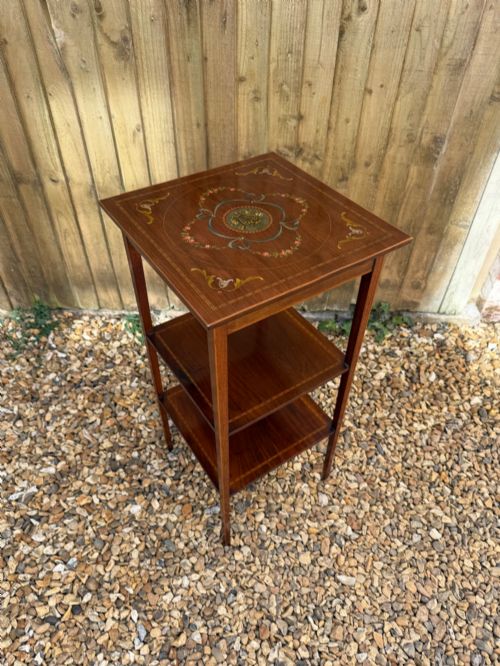
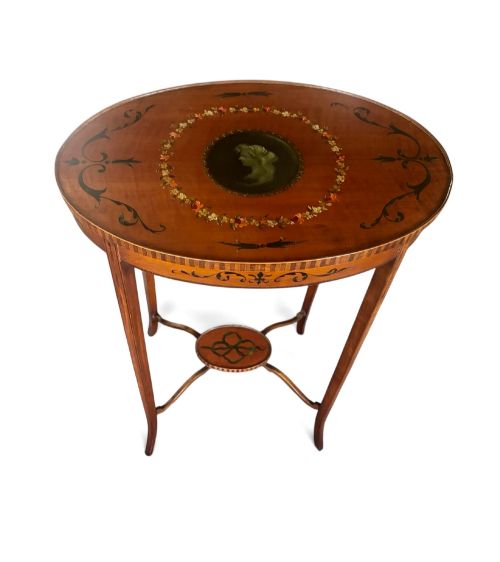
- A durable, lustrous timber native to India and Sri Lanka, highly prized in the eighteenth and nineteenth centuries for cabinet-making and occasional tables. It provides a pale, smooth ground suitable for delicate painted floral decoration.
Vintage Painted Table Lamp: Frequently Asked Questions
How do I clean a painted lamp base?
Painted and lacquered surfaces require gentle dusting with a soft, dry cloth rather than liquid cleaners or harsh chemicals.
Moisture can damage fragile historic finishes, particularly on papier-mache or delicate gesso work.
Can I replace the lampshade?
Choosing a replacement shade involves balancing the scale and weight of the decorated base with the proportions of the room.
Plain fabric shades often help highlight intricate hand-painted patterns without creating visual competition.
How do I date a painted lamp?
Dating relies on examining the materials, the style of the hand-painting, and the construction methods of the base or converted vessel.
Maker marks, screw threads, and wiring channels also offer clues to whether a piece originates from the Victorian era or the early twentieth century.