
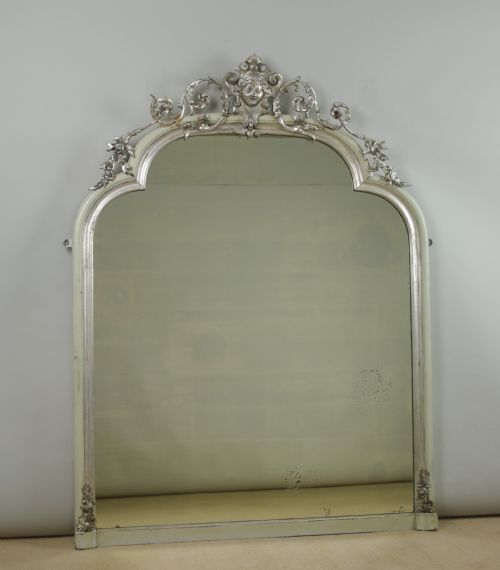


Vintage Painted Mantle Mirror
A vintage painted mantle mirror brings architectural scale and colour to a room, drawing the eye with carved wood and aged glass.
Vintage Painted Mantle Mirror
When you search for a vintage painted mantle mirror, you find large decorative wall pieces designed to sit above a fireplace. These items originate predominantly from the nineteenth century and the Edwardian period.
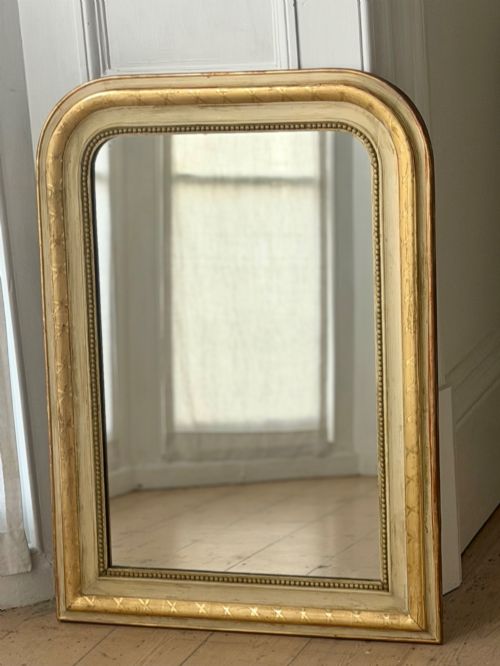
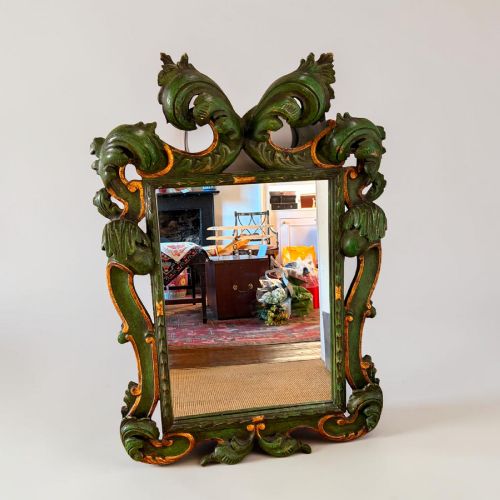
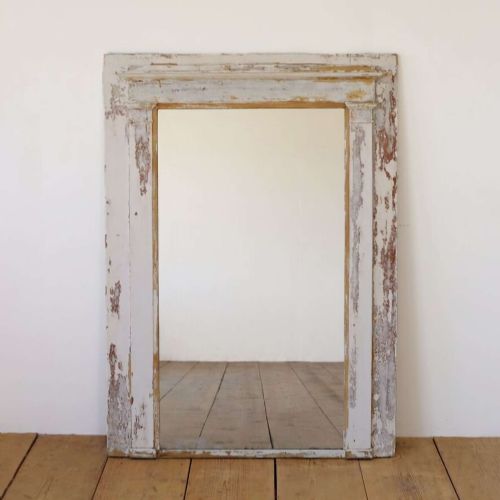
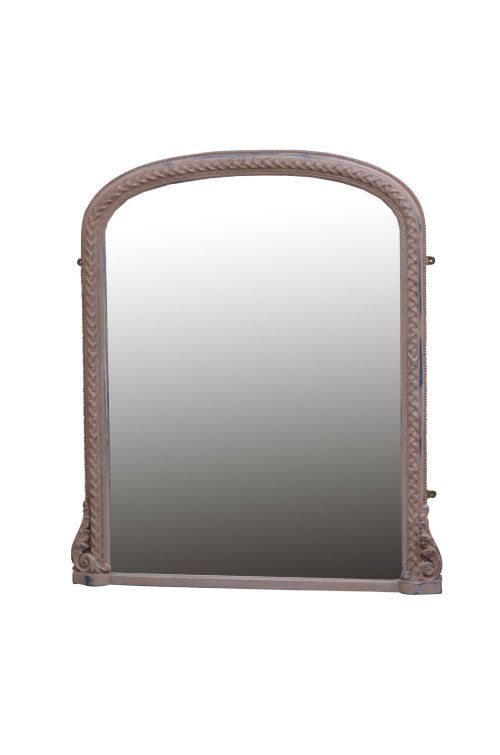
The most common examples on this page are substantial overmantel mirrors with wooden frames finished in layered paint, cream, black, or gilt. French and English workshops produced these pieces in rectangular, arched, and shaped top formats.
Makers utilised styles ranging from Victorian and Louis Philippe to Neoclassical and French Provincial. The forms function equally well reflecting light in a hallway or mounted above a living room hearth.
How they were made
Craftsmen shaped solid timber frames using carved wood and applied gesso to build up intricate surface detail and relief ornamentation. Artisans then applied paint finishes, ranging from monochrome black ebonising and white to complex layered palettes like lilac and ink blue.
Many frames incorporate gold leaf and silvering to accent the mouldings and carved motifs. Original glass plates are set within these heavy wooden structures, often retaining their original silver backing and historical distortion.
Listings span the nineteenth century and the Edwardian era, featuring wood, gesso, paint, and gold leaf materials.
What varies in quality
The depth and execution of the carved wood ornamentation set superior frames apart from simpler mouldings. Relief work executed in gesso shows crispness of detail in the scrolling foliage and architectural columns.
The integrity of the painted surface determines visual success, with layered, undisturbed historic paint finishes holding more character than flat modern applications. The retention of original mirror glass with natural foxing adds considerable depth to the piece.
The Vintage Painted Mantle Mirror Glossary
- Overmantel mirror
- A large wall mirror specifically proportioned to hang on the chimney breast directly above a fireplace mantelpiece. These frames often display horizontal width or arched vertical height to balance the hearth below.
- Gesso
- A plaster-like mixture applied to wooden frames and carved to create raised decorative motifs before gilding or painting. This material allows for sharp architectural and organic details.
- Louis Philippe
- A French nineteenth-century style characterised by simple arched tops, restrained classical proportions, and subtle decorative carving. It bridges heavy baroque forms and cleaner Victorian aesthetics.
- Ebonised
- Wood finished with a dark stain or black paint to imitate expensive ebony wood. This technique was popular in Victorian design for creating high-contrast frames.
- Fretwork
- Openwork ornamentation carved or pierced from thin wood panels in geometric or scrolling patterns. It provides delicate detail on the borders of certain wall mirrors.
Vintage Painted Mantle Mirror: Frequently Asked Questions
Where should I hang a mantle mirror?
These mirrors traditionally sit centrally on the wall directly above a fireplace mantel to reflect light and anchor the room.
They also function effectively on large drawing room walls or in hallways above console tables to create a sense of expanded space.
How do I date an antique mirror?
Dating relies on examining the construction of the wooden frame, the materials used in the gesso, and the style of the carving. Nineteenth-century pieces often display specific regional characteristics tied to English or French cabinetmaking traditions.
The glass itself, if original, shows subtle imperfections, waviness, and silvering wear that point to period manufacturing methods.
Can these mirrors be hung safely on plaster walls?
Due to the substantial weight of solid wood, gesso, and thick glass, these large mirrors require secure wall fixings attached directly into studs or masonry.
Professional mirror hangers utilise heavy-duty brackets and wire rated for the specific weight of the overmantel frame.
What is the difference between an overmantel and a wall mirror?
Overmantel mirrors are specifically engineered with proportions suited to the width of a fireplace, often featuring wide frames designed to command a chimney breast.
Standard wall mirrors follow more balanced or vertical dimensions intended for general room placement rather than architectural hearth alignment.