

Vintage Padded Footstool
These vintage padded footstool examples bring warmth and texture to a room, offering low seating or a place to rest tired feet.
Vintage Padded Footstool
A vintage padded footstool provides a practical seat or footrest, appearing across periods from the Victorian era through the 1930s. Buyers searching for a vintage padded footstool encounter forms ranging from simple upholstered blocks to piano stools and dressing table seats.
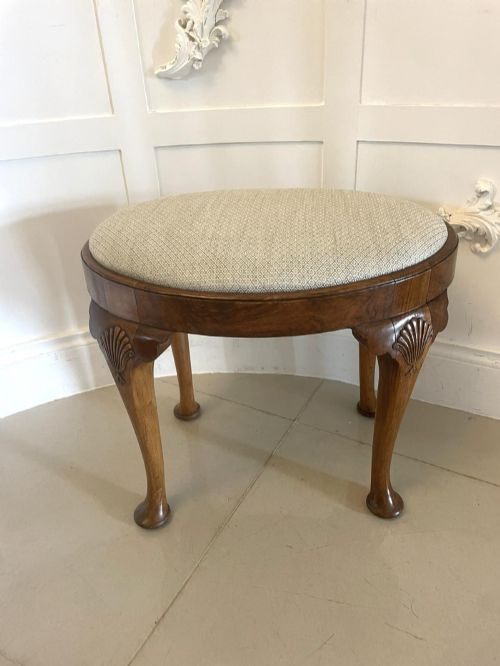
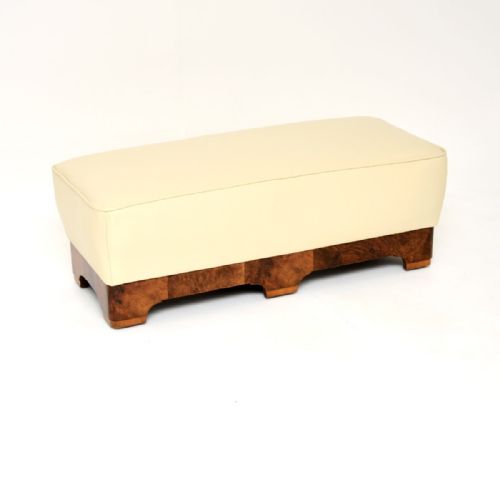
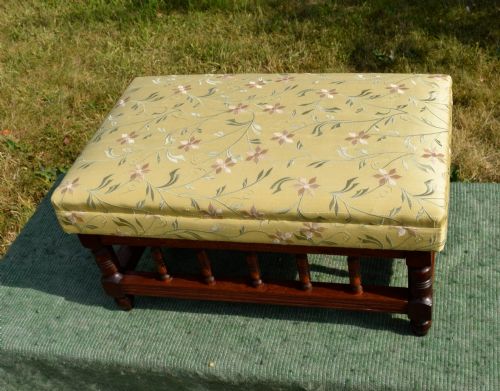
The pieces listed span multiple styles, including Queen Anne Revival, Edwardian, and Art Deco, alongside substantial country house ottomans. Mahogany and walnut frame designs dominate, paired with various textile and leather coverings.
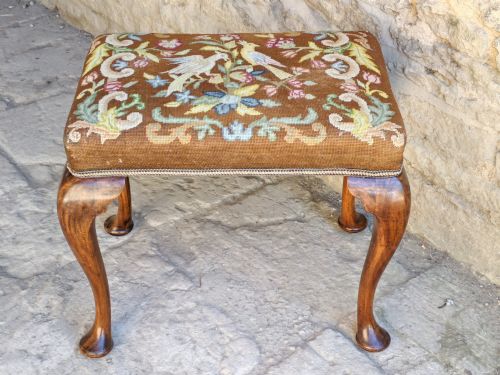
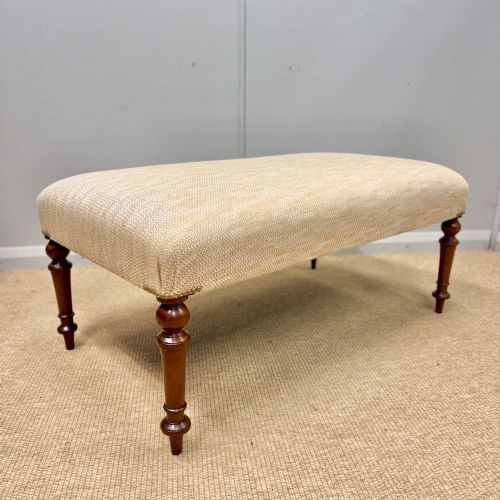
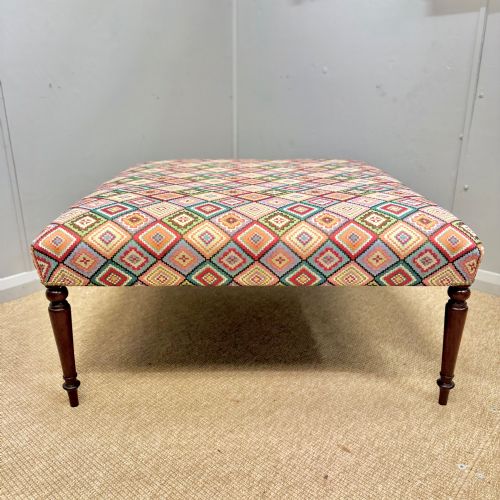
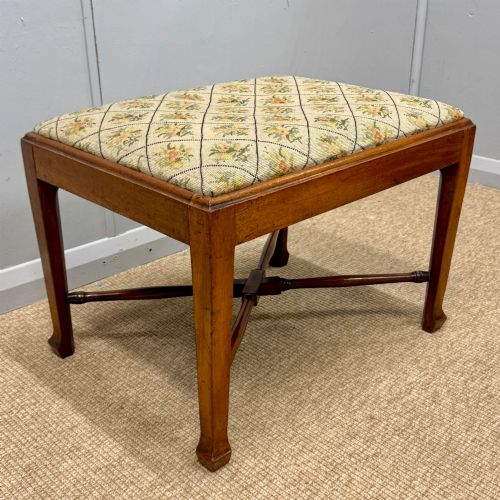
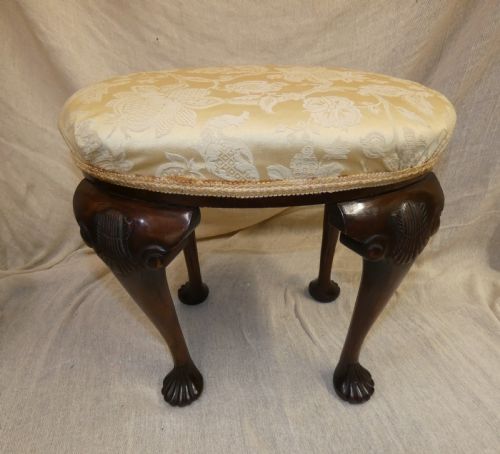
Many items show later upholstery updates using geometric fabrics, herringbone, or needlepoint, while retaining their historic timber frames. From small oval footstools to large centre stools, each piece serves both a decorative and a functional purpose in a traditional or modern interior.
Materials and construction
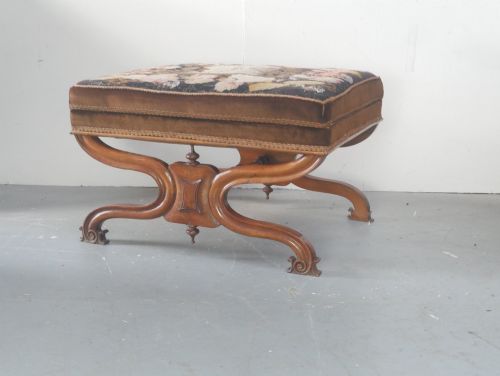
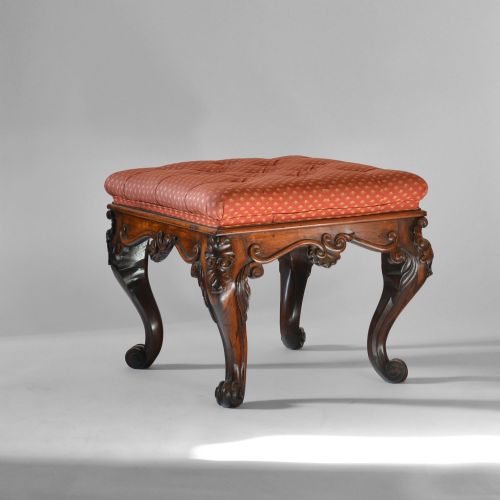
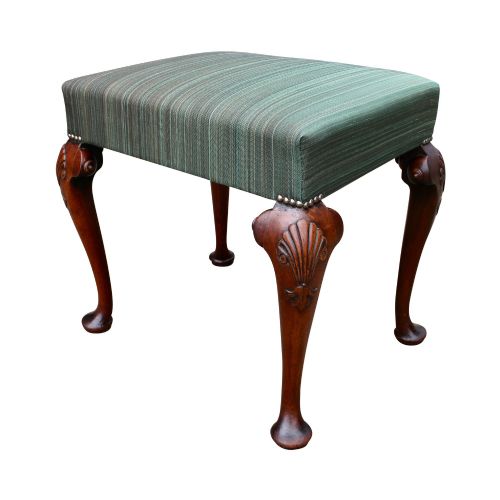
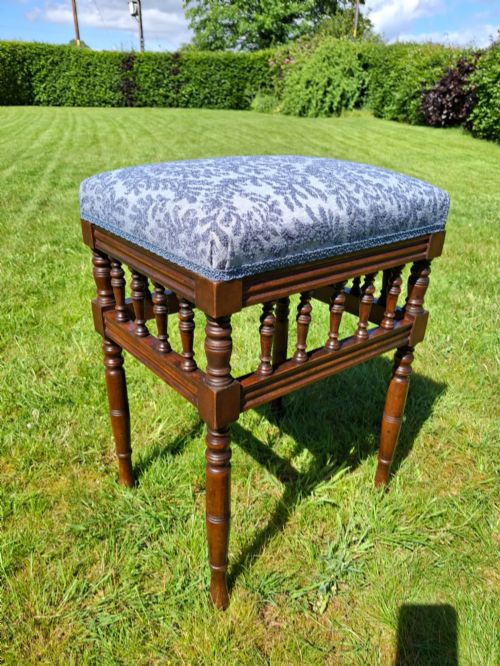
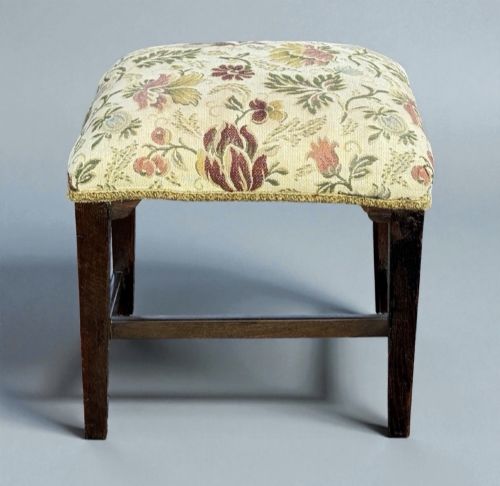
Timbers such as mahogany, walnut, rosewood, and hardwood form the structural framework of these stools, often shaped with cabriole legs, cross stretchers, or twisted rope details. Cabinetmakers utilised traditional joinery techniques to ensure stability across both small footstools and large ottomans.
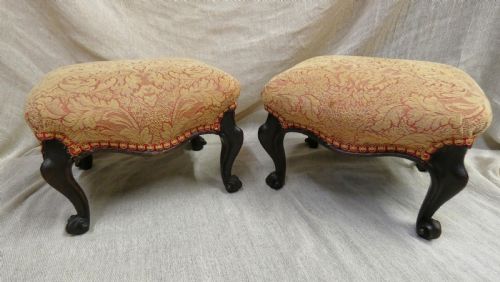
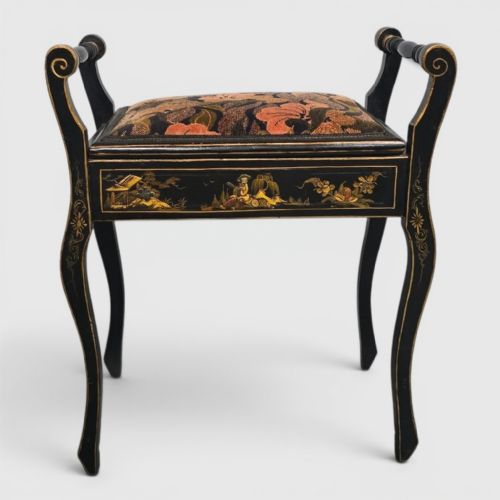
Padding and upholstery transform the wooden frames into comfortable seats, utilising materials like leather, velvet, needlepoint, and various woven textiles. Detail work ranges from carved walnut embellishments and giltwood finishes to black lacquer and inlaid decoration.
Vintage Padded Footstool Retail Price Guide 2026
Typical asking prices for vintage padded footstool among the pieces listed under this phrase on Sellingantiques today, from the lower quarter to the upper quarter. They describe what is for sale here now, not the wider market.
Listings feature items spanning the 19th century, Victorian era, Edwardian period, and the 1930s, constructed from mahogany, walnut, brass, leather, and velvet.
What separates the finest examples
The distinction between standard examples and superior pieces rests upon the crispness of timber carving, the choice of dense hardwoods like walnut and mahogany, and the structural integrity of the frame. Finer stools exhibit thoughtful proportions and refined details such as cabriole legs, brass accents, or intricate inlay.
Quality also shows in the harmony between the historic frame and its upholstery, whether featuring period needlepoint or hand-dyed leather applied with care. Substantial forms like large Scottish baronial stools or country house ottomans demand exceptional joinery to support their scale.
The Vintage Padded Footstool Glossary
- Cabriole leg
- A furniture leg that curves outward and then tapers inward, mimicking an animal's curving leg. This form is common on Victorian and Queen Anne style walnut stools.
- Needlepoint
- A type of canvas work embroidery used for upholstery. It frequently appears on the top of Victorian and Edwardian dressing stools.
- Ottoman
- A low, upholstered seat or footstool without a back or arms. These pieces often feature buttoned leather or deep padding.
- Cross stretcher
- Horizontal wooden rods connecting the legs of a stool for added stability. They are often seen on 19th century and 1930s dressing table stools.
- Chinoiserie
- European decorative art reflecting Chinese artistic motifs. Examples include black lacquered piano stools from the Edwardian period.
Vintage Padded Footstool: Frequently Asked Questions
How do I use a footstool in a living room?
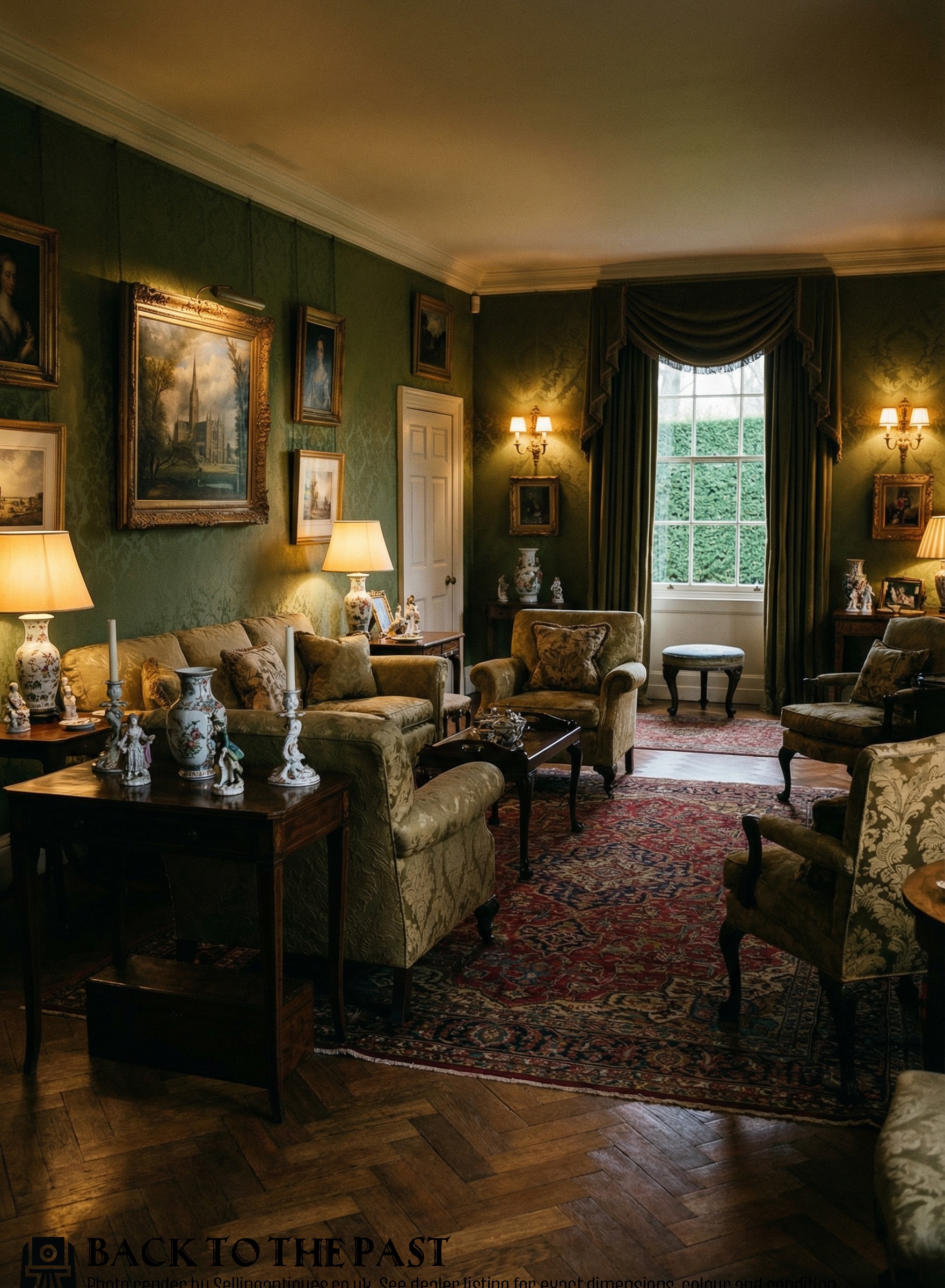
Place a large ottoman or padded stool before a sofa to create an informal surface for resting feet or holding a tray. Smaller wooden stools also function well as impromptu seats near a fireplace.
Selecting a piece with upholstered fabric or leather adds soft texture to complement existing armchairs and wooden furniture.
What is the difference between an ottoman and a footstool?
Ottomans generally describe larger, fully upholstered pieces that can double as centre tables or generous seats. Footstools tend to be more compact frames designed specifically for supporting the feet.
Both categories share similar padded surfaces and appear across the 19th and early 20th centuries in mahogany and walnut.
How do I date a wooden stool?
Examine the timber species, leg profiles, and structural joints to determine the period of manufacture. Victorian pieces often use heavy mahogany or walnut with carved cabriole legs, while 1930s items lean toward burr walnut and clean dressing table forms.
Upholstery fabrics frequently undergo later replacement, so the frame provides the most reliable guide to age.
Can I place these stools on wooden floors?
Most antique stools stand on sturdy wooden legs made from mahogany, walnut, or hardwood. Adding subtle protective pads beneath the feet prevents scuffing on delicate floorboards.
Their solid construction ensures they remain stable on both carpets and hard surfaces.