




Vintage Padded Footrest
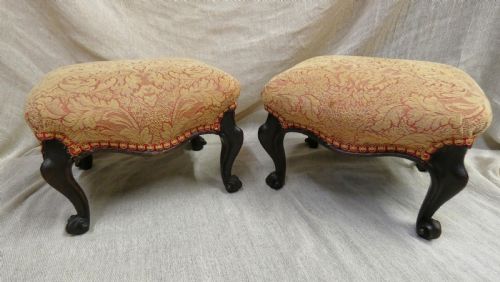
A vintage padded footrest brings low-slung comfort and period craftsmanship into a room, spanning styles from Victorian revival to Edwardian lacquered designs.
Vintage Padded Footrest
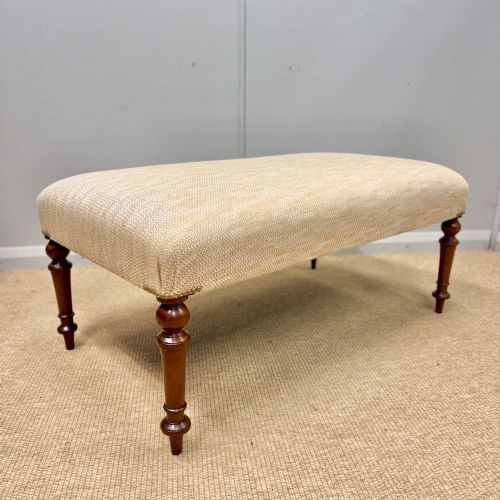
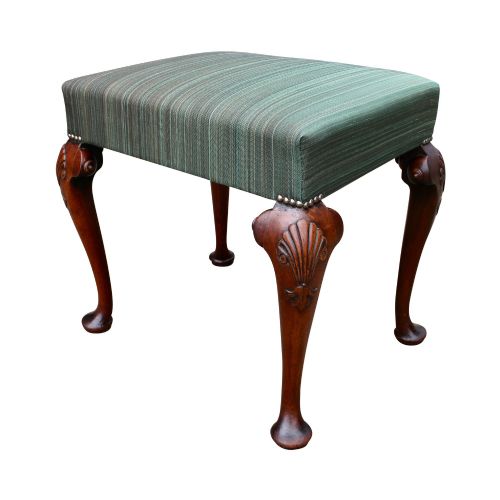
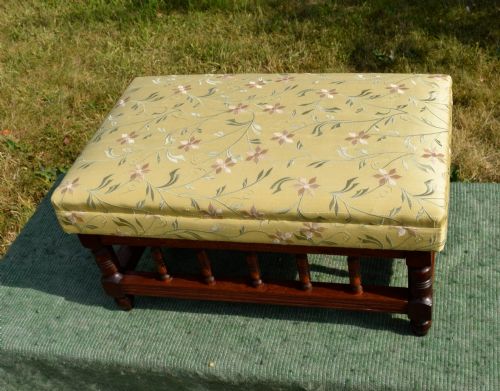
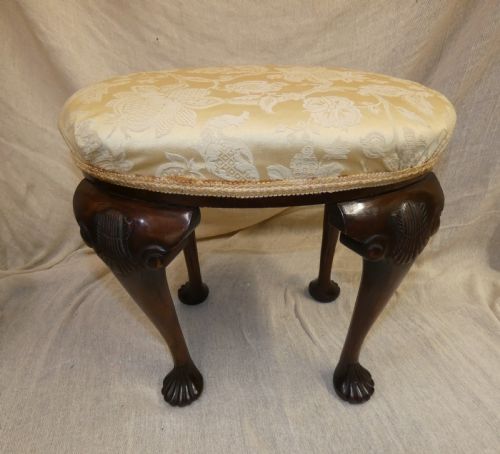
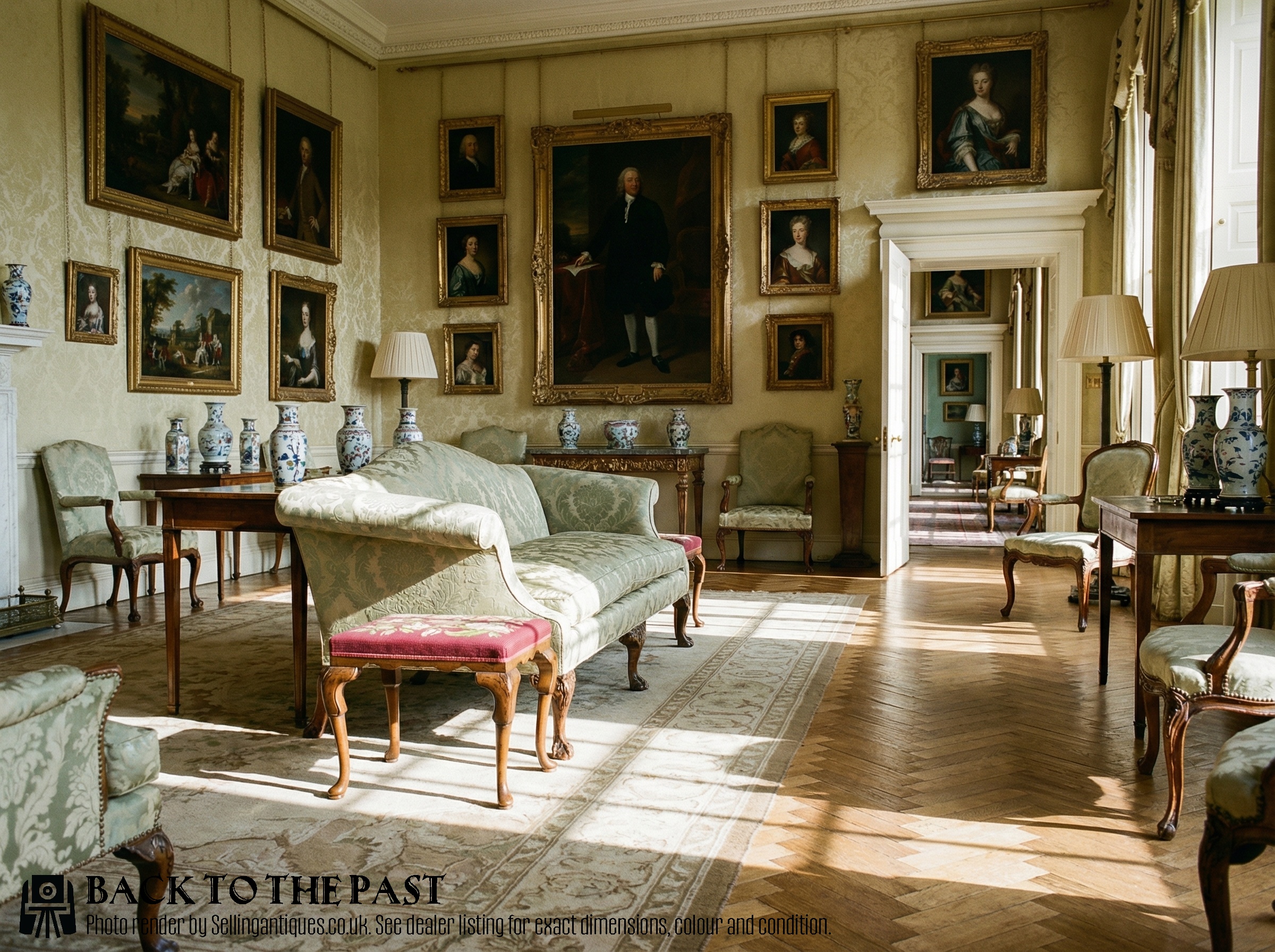
A vintage padded footrest functions as a domestic resting place for tired feet, taking the form of square, oblong, oval, or long stools designed for firesides, dressing tables, and libraries. These pieces emerge from the nineteenth century through the Edwardian era, bearing historical styles such as Queen Anne, George II, Chippendale, and Victorian Rococo revivals.
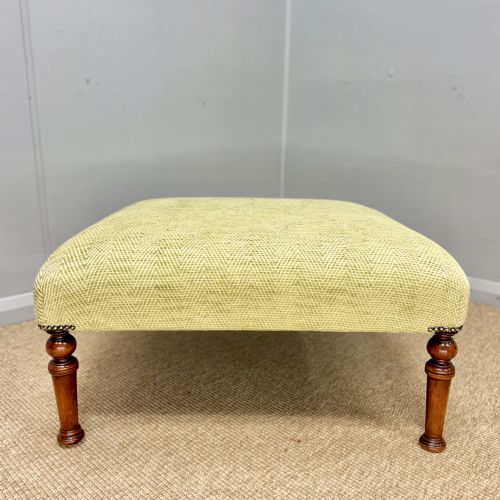
Buyers searching for a vintage padded footrest will most frequently encounter walnut and mahogany frames supported by carved cabriole legs or turned supports. Tops range from newly upholstered surfaces and herringbone wool to antique needlework, tapestry, velvet, leather, and woven rattan.
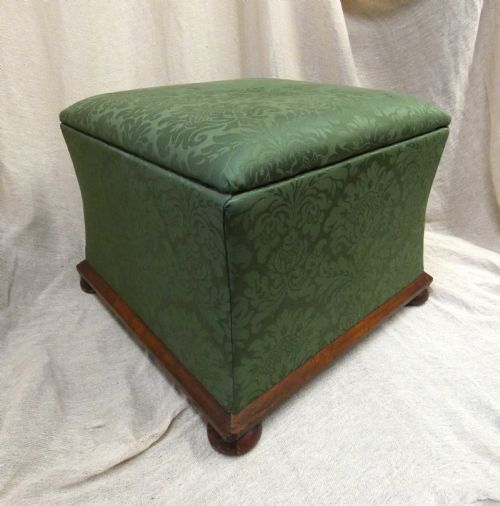
Variations in these furnishings include specialised forms such as gout stools, low dressing stools, and large ottomans. Origins span English workshops alongside French Louis XIV revival pieces and carved Anglo-Indian examples.
How they were made
Carpeneters built the supporting frames of these footstools using dense timbers like walnut, mahogany, oak, and rosewood, often shaping the wood with intricate carvings, black lacquer, or polished finishes. Brass details occasionally appear on structural elements, while teak and woven rattan construct specific regional variations.
Upholstery techniques combined traditional padding with durable textiles, securing the cushions through fabric, velvet, wool, leather, and tapestry. Artisans finished top surfaces with detailed needlework, needlepoint, or herring-bone patterns, mounted upon sturdy timber bases.
Vintage Padded Footrest Retail Price Guide 2026
Typical asking prices for vintage padded footrest among the pieces listed under this phrase on Sellingantiques today, from the lower quarter to the upper quarter. They describe what is for sale here now, not the wider market.
Some nineteenth-century feet spent their days tucked beneath card tables, offering discreet comfort during tense rounds of whist.
What varies in quality
Quality rests in the crispness of the timber carving and the structural integrity of the frame joints, where solid walnut or mahogany outlasts softer woods. Superior examples display balanced proportions, whether in small gout stools or long library benches.
The execution of the upholstery defines the upper tier, distinguishing machine-finished textiles from meticulous hand-worked needlepoint, gros point, or petit point needlework. Original or sympathetic re-upholstery on robust frames separates utilitarian seating from decorative showpieces.
Howard and Sons
The Vintage Padded Footrest Glossary
- Cabriole leg
- A furniture leg that curves outward at the knee and tapers inward to an ankle, frequently terminating in a pad or claw foot. This profile defines many walnut and mahogany pieces from the eighteenth century onwards.
- Gout stool
- An adjustable or angled footrest designed to elevate and support a foot afflicted by gout. These specialised nineteenth-century pieces allowed the sufferer to alter the incline for relief.
- Needlepoint
- Embroidery stitched onto a stiff open-weave canvas, creating durable pictorial or geometric patterns. It covers the padded tops of numerous Victorian and Edwardian stools.
- Chinoiserie
- European decorative art imitating Chinese and East Asian motifs, often featuring hand-painted lacquered surfaces. Edwardian footstools occasionally utilise this exotic ornamentation.
- Ottoman
- A low, upholstered seat or footstool without a back or arms, designed for generalized lounging. Larger Victorian examples served as both central room seats and extended foot rests.
Vintage Padded Footrest: Frequently Asked Questions
Were footstools used in libraries?
Libraries housed sturdy leather-topped foot stools designed to assist readers during long hours of study or to reach high shelves. These utility pieces prioritized durable construction over delicate ornamentation.
Pairs of leather library foot stools are found among nineteenth-century listings, constructed to withstand heavy daily use.
What is the difference between a gout stool and an ottoman?
A gout stool is a specialised, often angled rest intended to elevate a sore foot, frequently appearing with mid-nineteenth-century walnut framing. An ottoman is a larger, symmetrical upholstered seat meant for general lounging.
Ottomans function as central room furnishings or grand footrests, whereas gout stools serve a corrective purpose.
How should I care for antique upholstery?
Protect antique needlework, tapestry, and velvet by keeping the stool away from direct sunlight and excessive moisture. Gentle vacuuming through a mesh screen helps remove dust without disturbing fragile fibres.
Leather surfaces benefit from occasional conditioning to prevent drying and cracking while preserving the original finish.