
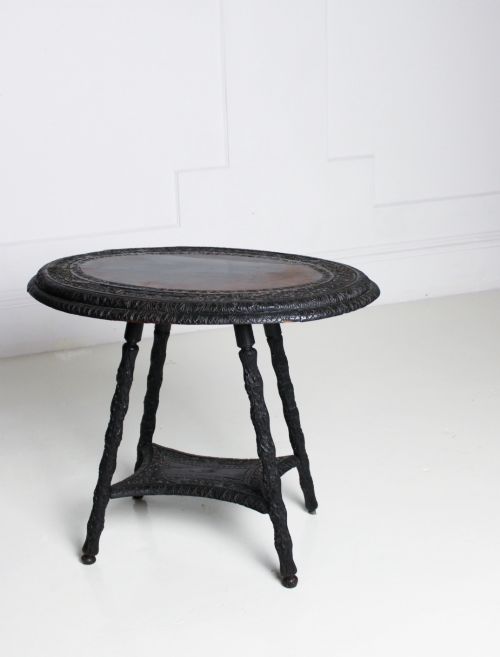
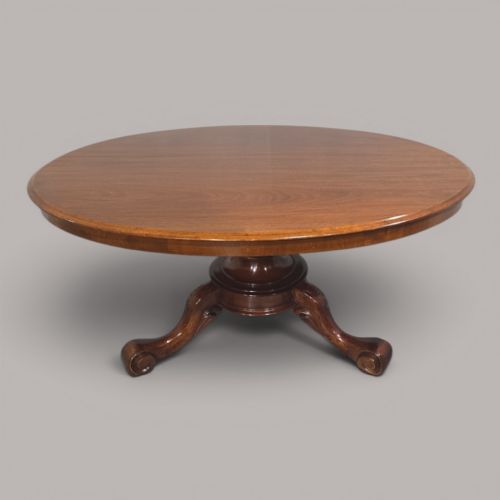
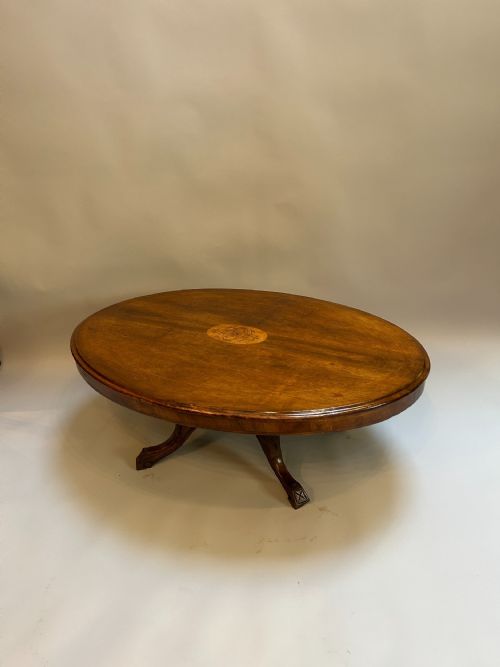


Vintage Oval Coffee Table
A vintage oval coffee table brings curved lines and rich timber into a room, offering a softer footprint than standard rectangular designs.
Vintage Oval Coffee Table
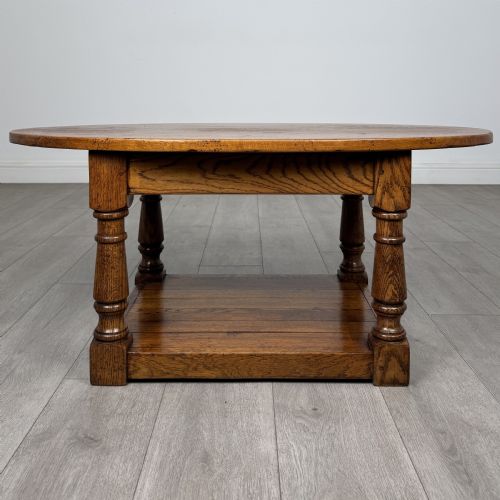
Every vintage oval coffee table brings together period craftsmanship and practical domestic use, spanning several centuries of cabinet making. You will encounter pieces ranging from formal Georgian trays to later Edwardian and Art Deco variations.
Makers adapted traditional forms such as gateleg tables and nests into low formats suited for seating areas. The resulting variety bridges formal dining rooms and relaxed sitting spaces with equal ease.
Materials and construction methods
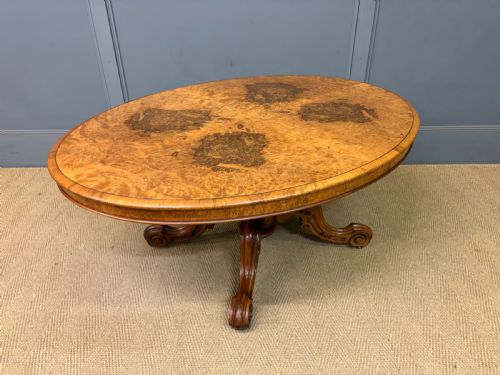
Cabinet makers relied primarily on solid hardwoods such as mahogany, oak, and walnut, frequently applying figured veneers to table tops. Burr walnut and flame mahogany provide distinct decorative grain patterns that catch the light.
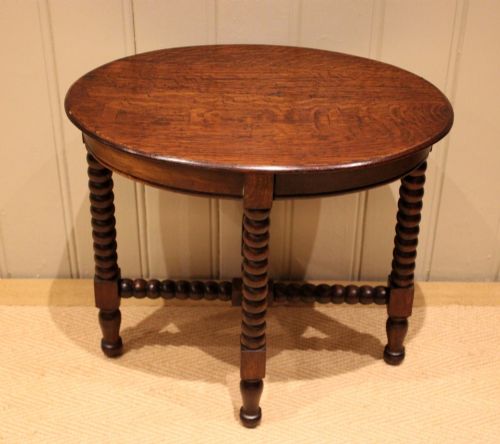
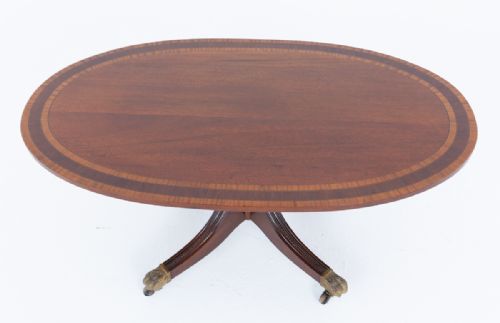
Inlay work, pie crust edging, and brass fittings appear across various styles from the Victorian period through to the 1930s. Joinery methods include traditional pegging, turning for legs, and galleried edges raised from solid stock.
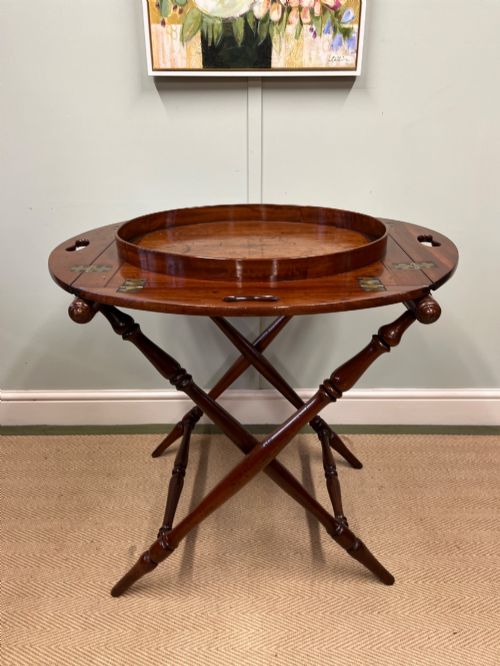
Some tray tables retain faint tea stain rings from bygone afternoons.
Evaluating craftsmanship and proportion
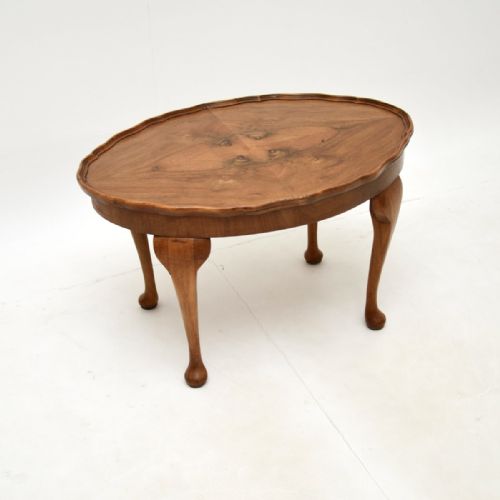
Quality rests in the selection of timber veneers and the crispness of carved details such as pie crust borders and inlaid stringing. Superior examples display careful book-matching on walnut tops and stable, well-joined frames.
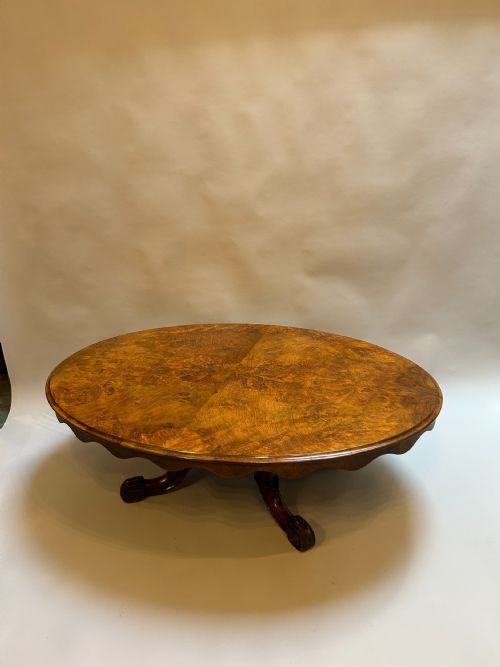
The balance between the oval top and the supporting base dictates the visual success of the piece, particularly on converted trays and tripod stands. Refined proportions separate standard utilitarian tables from finer decorative items.
The Vintage Oval Coffee Table Glossary
- Pie crust
- A raised, carved rim around a tabletop with a scalloped edge resembling pastry work. This decorative feature appears frequently on fine walnut tables.
- Butler tray
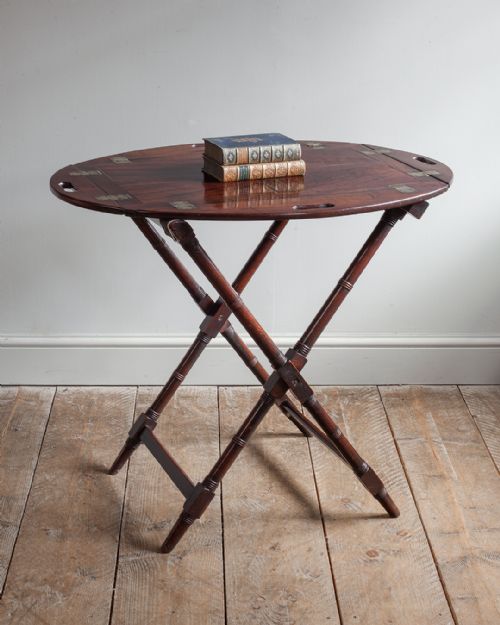
- A removable wooden tray with hinged or fixed sides, originally designed for carrying tableware and now placed upon folding or static stands. They form a distinct subset of low tables.
- Gateleg table
- A table with hinged flaps supported by swinging legs that pivot out from the frame. Oak versions provide sturdy surfaces with adjustable footprints.
- Sheraton Revival
- A late nineteenth and early twentieth-century style emulating the neoclassical designs of George Sheraton. These pieces often feature delicate mahogany and inlaid satinwood.
- Burr walnut
- Timber taken from the warted growths of walnut trees, yielding highly swirled and mottled grain patterns. It forms the primary surface decoration on many Victorian and Art Deco tables.
Vintage Oval Coffee Table: Frequently Asked Questions
How do I date a walnut table?
Dating a walnut table involves examining the timber preparation, joinery methods, and the style of the base. Victorian and Edwardian examples often display rich burr veneers over solid secondary woods.
Later 1930s pieces tend toward simpler Art Deco lines or use contrasting ebony and walnut. Examining the underside and screw types helps confirm the period of manufacture.
Are nest tables practical?
Nest tables offer multiple surfaces that tuck neatly beneath the largest table when floor space is required. Edwardian makers produced many fine sets in mahogany and satinwood.
They allow you to pull out smaller surfaces for drinks or books without cluttering the room. Their multi-tier design makes them adaptable for compact sitting areas.
How do I care for antique timber?
Antique timber surfaces require gentle cleaning with a soft cloth and protection from direct sunlight and excessive heat. Beeswax polish helps maintain the lustre of mahogany and walnut without building up heavy residues.
Using coasters and placemats prevents moisture rings on polished tops. Regular dusting keeps abrasive particles from scratching the delicate veneer.