
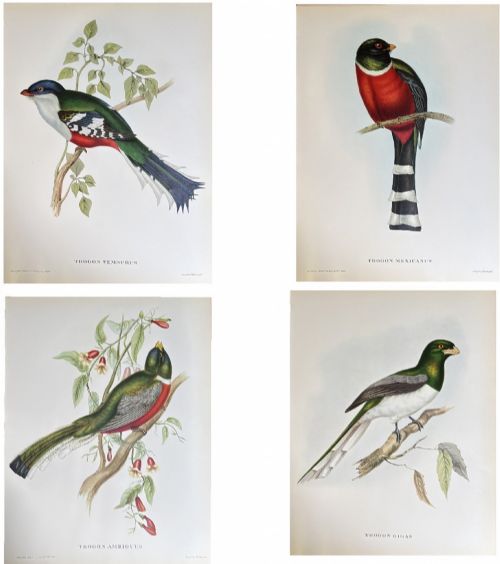
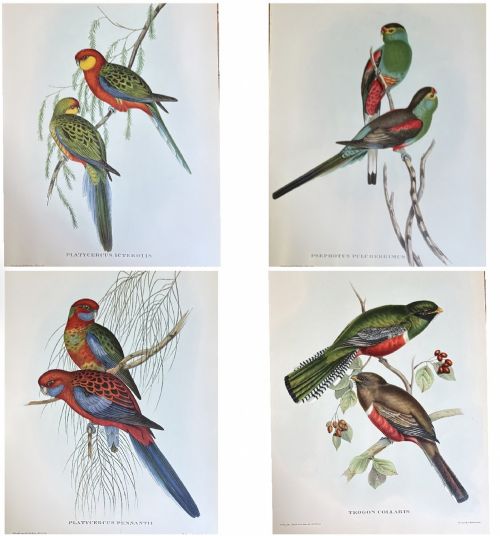
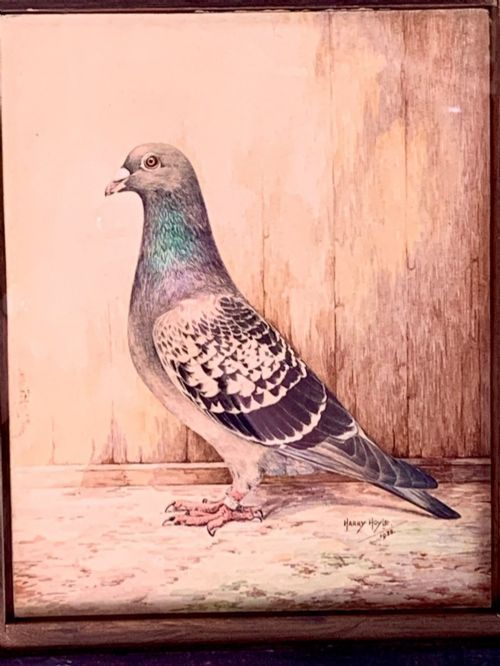
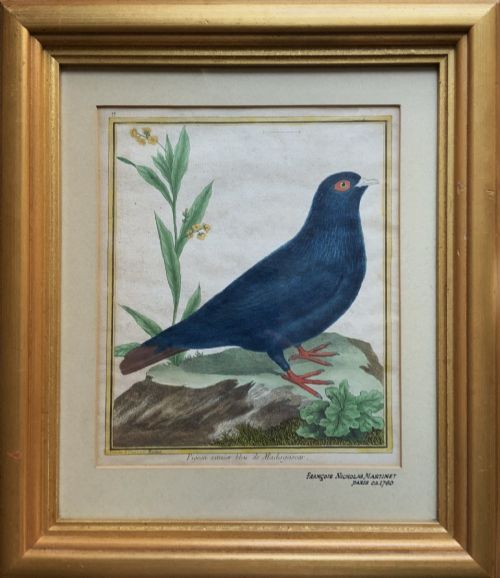




Vintage Ornithological Art
Vintage ornithological art captures avian subjects across centuries through delicate watercolours, ink drawings, and hand-coloured engravings.
Vintage Ornithological Art
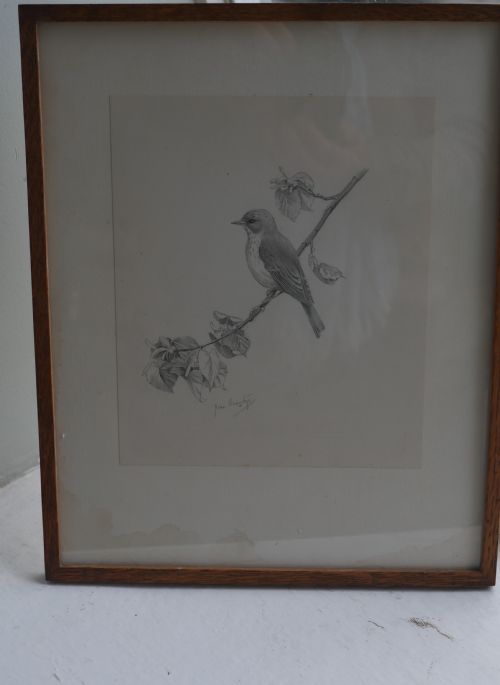
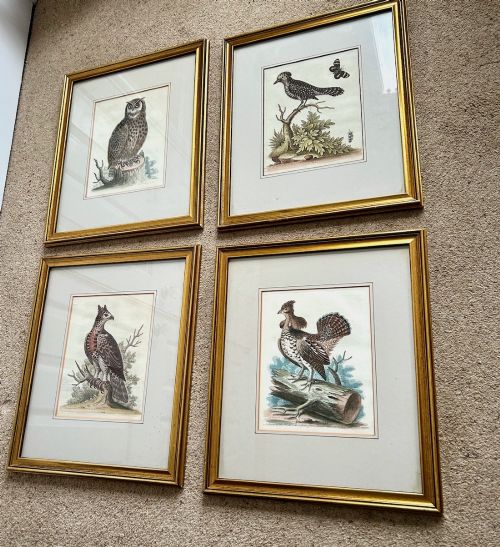
Buyers seeking vintage ornithological art encounter framed paintings, watercolour studies, wall art, and antique prints depicting various bird species. The selection spans the eighteenth century through the mid-nineteenth century, extending into Edwardian and mid-twentieth-century naturalist works.
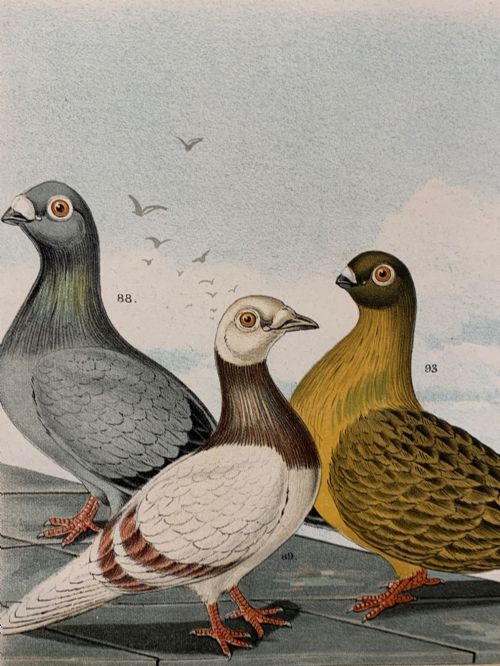
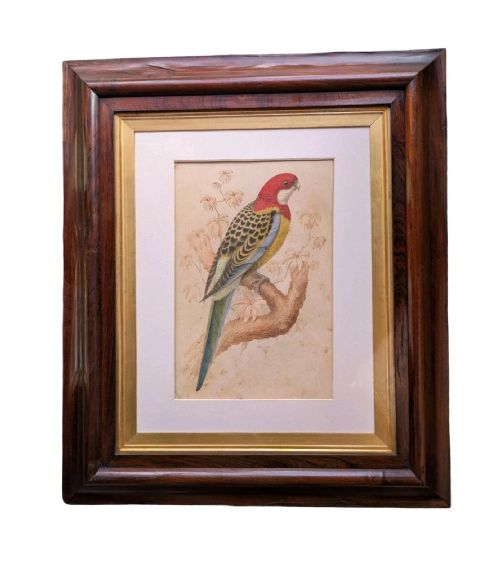
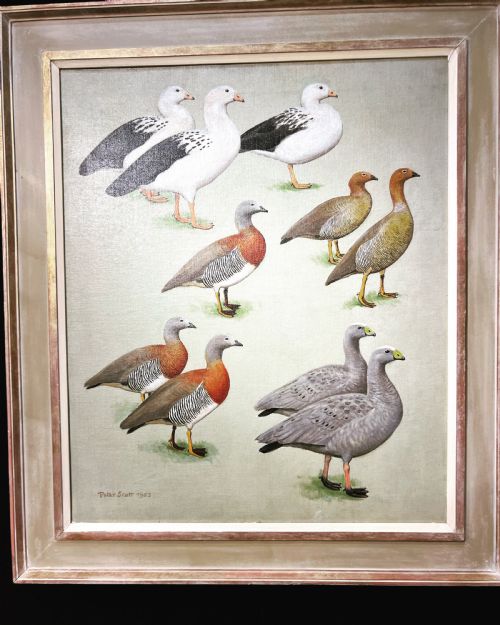
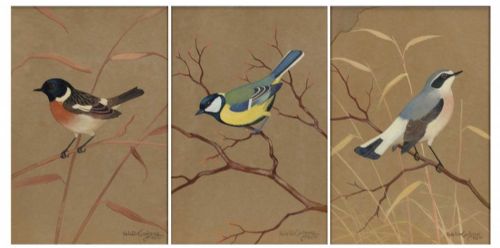
Common forms on this page include framed prints, detailed watercolours of garden birds and parrots, and multi-plate sets of tropical birds and pigeons. Pieces range from intimate pencil drawings to large decorative studies of ducks and falcons.
Materials and techniques
Works in this category rely upon paper supports inscribed with watercolour paint, ink, and pencil, often enhanced by hand-colouring. Engravings and lithographs provide the foundational lines for many printed plates subsequently finished by hand.
Framing materials incorporate wood and glass, occasionally featuring ebonised mouldings paired with deep giltwood mounts or gold leaf detailing to frame the paper works.
Listings feature works spanning the eighteenth, nineteenth, and twentieth centuries, executed in watercolour, ink, and hand-coloured engraving on paper.
Factors determining quality
Quality rests upon the precision of the draughtsmanship and the delicacy of the watercolour or hand-colouring applied to the paper. Original hand-coloured engravings and direct watercolour paintings by known artists command greater attention than standard reproduction prints.
The preservation of the paper support and the harmony of period framing, such as ebonised and giltwood surrounds, further separate standard decorative prints from exceptional collectors' items.
François-Nicolas Martinet·George Edwards·William Swainson·Charles F. Tunnicliffe·Ralston Gudgeon
The Vintage Ornithological Art Glossary
- Hand-coloured engraving
- An intaglio print pulled from a metal plate where colour is applied by hand after printing. This technique gives vintage bird plates their vibrant plumage.
- Lithography
- A planographic printing method using stone or metal plates to transfer inked images onto paper. It became widely utilised for mass-producing natural history illustrations in the nineteenth century.
- Watercolour
- A paint medium consisting of pigment suspended in a water-soluble vehicle. Artists employ this on paper to capture the subtle tones of bird feathers.
- Ebonised frame
- Wood stained or treated to imitate ebony wood. These dark frames often enclose antique bird watercolours.
- Giltwood mount
- A wooden mount covered with a thin layer of gold leaf or gilt paint. It provides a reflective border around framed artworks.
Vintage Ornithological Art: Frequently Asked Questions
How do I date vintage bird art?
Dating relies upon the paper type, printing technique, and stylistic markers inherent to specific periods like the eighteenth century or Edwardian era.
Signatures, artist dates, and framing styles also offer clues to the decade of creation.
Are these pieces original watercolours or prints?
The selection includes both unique painted watercolours and original printed engravings or lithographs.
Examining the surface under magnification reveals whether lines are inked print matrices or direct brushstrokes.
How should I display antique bird art?
Protect works on paper from direct sunlight to prevent fading of watercolours and hand-coloured inks.
Hang pieces in rooms with stable humidity levels to preserve the integrity of the paper and wooden frames.
What styles of bird art are available?
Styles range from Georgian and Victorian natural history illustration to twentieth-century British realism.
Each period reflects changing scientific interest and artistic approaches to avian observation.