


Vintage Ormolu Desk Lamps
These vintage ormolu desk lamps combine cast metal mounts with classic forms, bringing period character and warm illumination to a traditional study.
Vintage Ormolu Desk Lamps
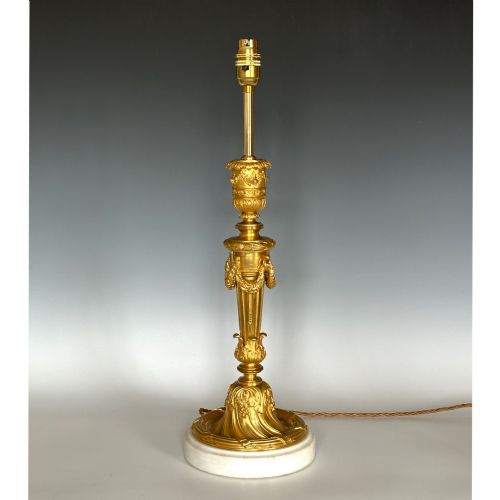
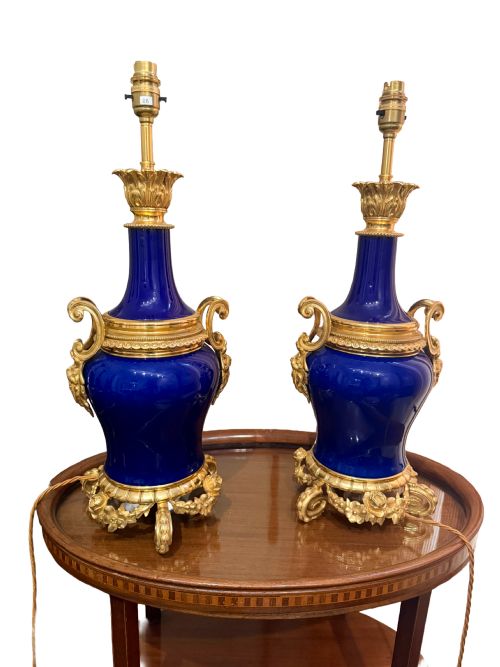
When you search for vintage ormolu desk lamps, you find lighting fixtures that utilise cast bronze with a bright gold-coloured finish, often paired with marble, porcelain, or crystal. These pieces trace their origins largely to nineteenth-century and early twentieth-century French workshops, reflecting styles from the Neoclassical, Louis XVI, and Rococo periods.
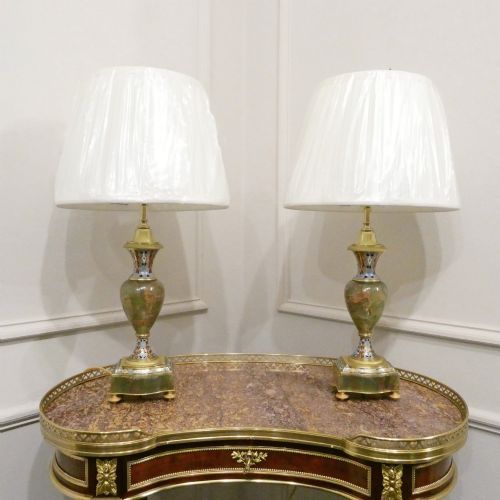
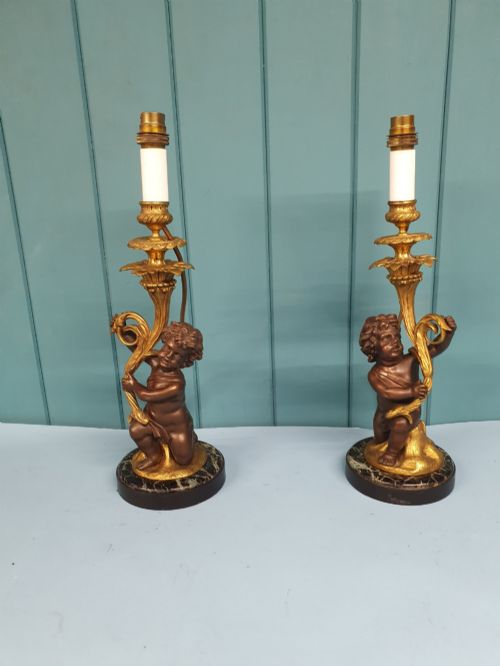
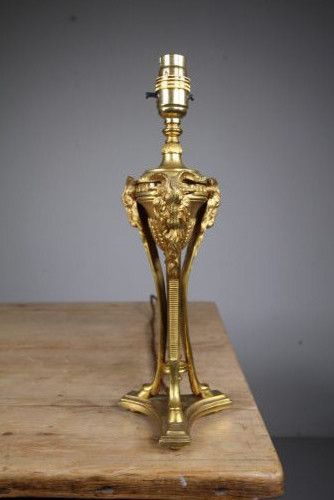
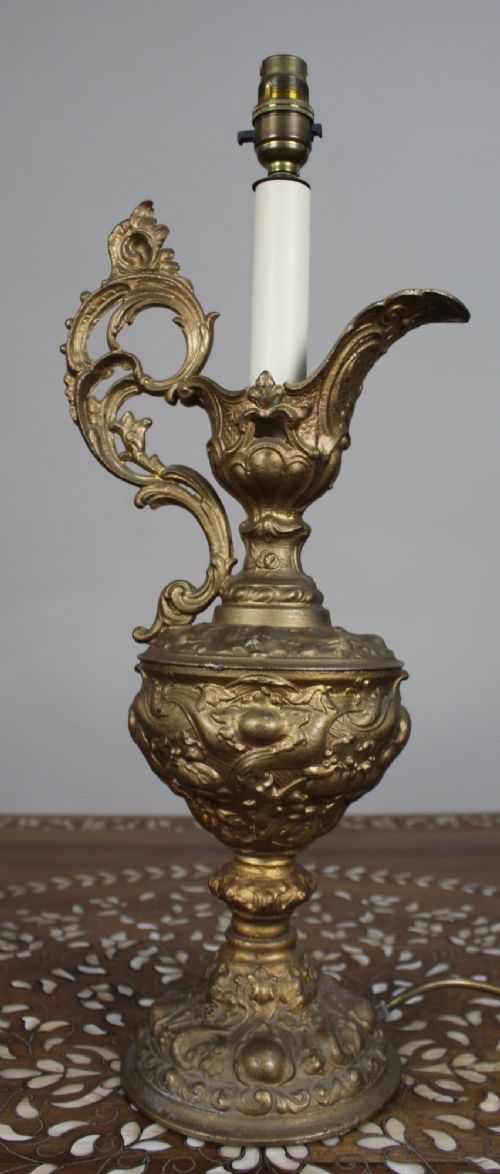
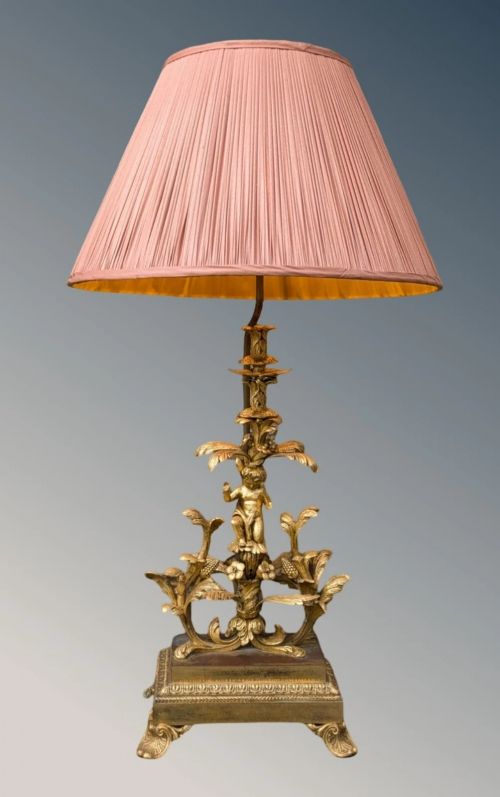
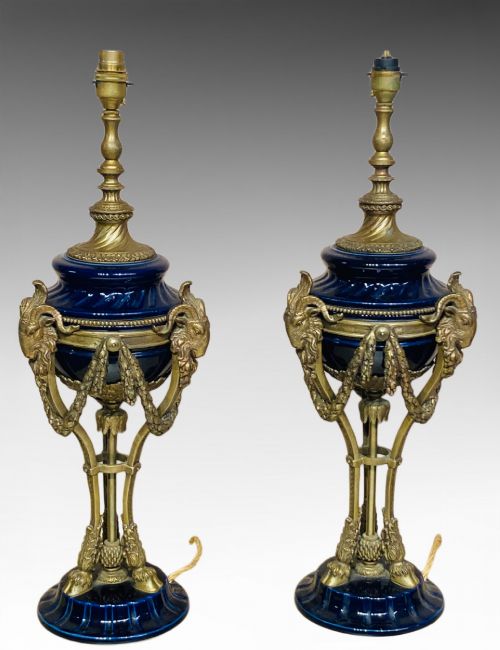
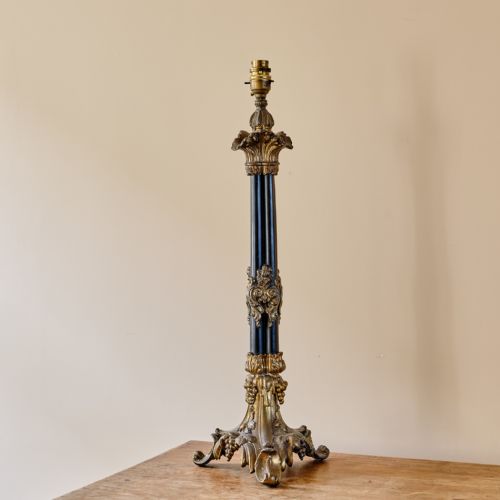
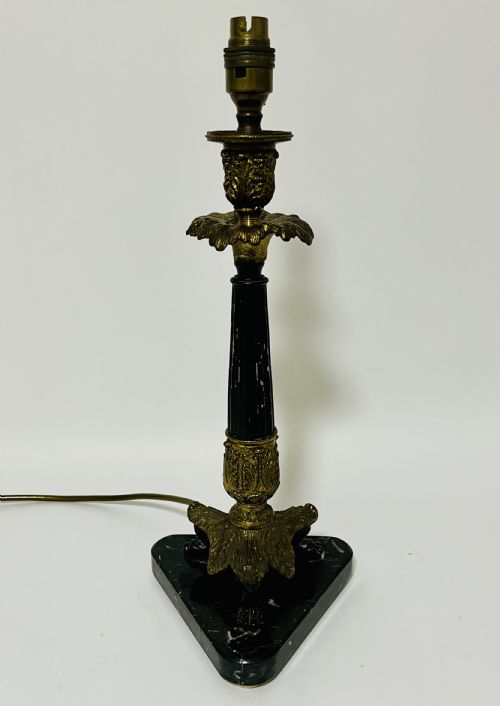
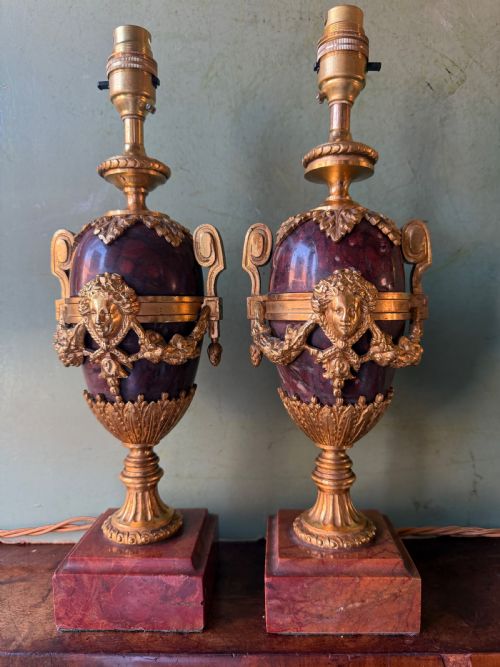
The selection on this page consists predominantly of table lamps, candlestick conversions, and column lamps rather than dedicated small-surface desk lights. Many incorporate figural elements such as cherubs or rams' heads alongside structural mounts.
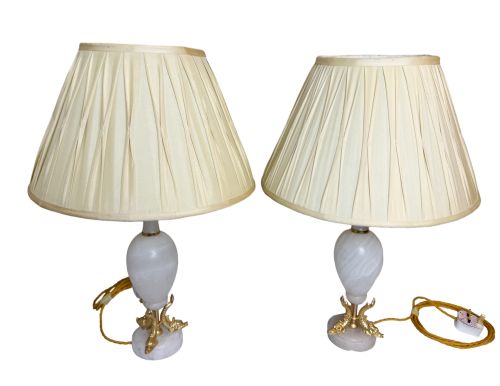
French designs dominate the selection, spanning the Victorian era through the early twentieth century. Buyers encounter pairs as well as single pieces, set upon bases of onyx, white marble, or rouge marble.
How they were made
The construction relies on the lost-wax casting of bronze, followed by mercury gilding or modern electroplating to achieve the distinctive ormolu finish. Artisans chased the metal surfaces by hand to sharpen the foliate scrolls, gadrooning, and figural details before assembly.
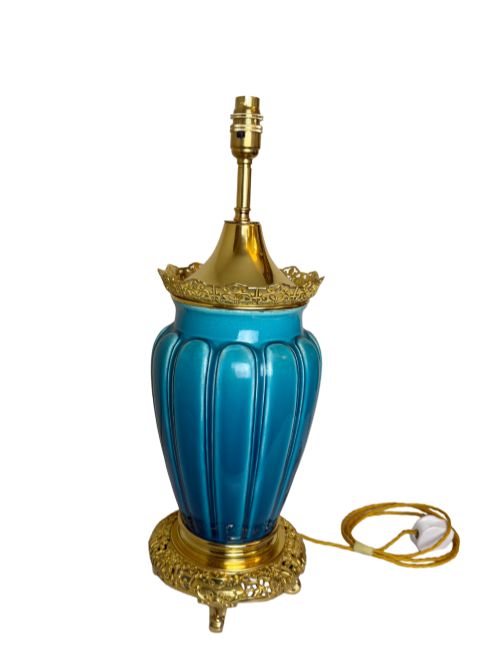
Many bodies combine cast metal with turned marble, carved onyx, or glazed porcelain sections. Threaded brass rods often hold the stacked components together through a central axis.
Wiring and lamp holders represent later adaptations, inserted into structures originally intended for candles or oil combustion.
The design styles represented span Neoclassical, Rococo Revival, French Empire, and Louis XVI periods.
What varies in quality
The crispness of the chased metalwork determines the visual impact of the piece. Superior examples exhibit deep, clean undercuts and sharp relief on acanthus leaves and cherub wings, whereas lesser castings appear soft and blurred.
The choice of secondary materials marks a distinct grade in manufacture. Solid white or rouge marble bases and hand-painted porcelain bodies elevate a piece above simple brass-plated alternatives.
Proportion and balance dictate the architectural success of the lamp. The most accomplished items maintain a harmonious relationship between the heavy metal mountings and the central column or urn.
The Vintage Ormolu Desk Lamps Glossary
- Ormolu
- Gilded bronze, produced by applying a gold amalgam to cast bronze and heating it to vaporise the mercury. This technique gives the metal a distinctive warm gold lustre.
- Champlevé
- An enamelling technique where troughs are dug into a metal surface and filled with vitreous enamel before firing. Pieces on this page pair this colourful enamel with bronze mounts.
- Louis XVI Style
- A neoclassical design vocabulary characterised by straight lines, symmetry, and classical motifs like urns and swags. It appears frequently in nineteenth-century French lighting.
- Candelabrum
- A branched candlestick designed to hold multiple lights. Many pieces in this category originate as candelabra subsequently converted for electrical wiring.
Vintage Ormolu Desk Lamps: Frequently Asked Questions
Are these lamps safe for daily use?
Most antique lamps require professional rewiring to meet modern electrical standards before regular use in a home.
Qualified electricians can easily update old internal cord assemblies while preserving the historic exterior metalwork.
How do I clean ormolu metalwork?
Dusting with a soft, dry cloth is sufficient for routine maintenance of gilt bronze surfaces. Avoid abrasive polishes that strip the thin gold layer from the metal.
Can I find matching pairs?
Several listings feature matched pairs of column and urn lamps suited for placement on a twin-pedestal desk or sideboard.
Pairs often originate from the same nineteenth-century French drawing room or salon set.
How do I date these pieces?
Stylistic clues such as Louis XVI revival motifs and the use of rouge marble point to the nineteenth and early twentieth centuries.
Casting weight, mounting construction, and wear patterns on the bronze help confirm the period of manufacture.