


Vintage Oriental Textile
A vintage oriental textile brings rich cultural heritage and tactile warmth into an interior through traditional tribal and regional craftsmanship.
Vintage Oriental Textile
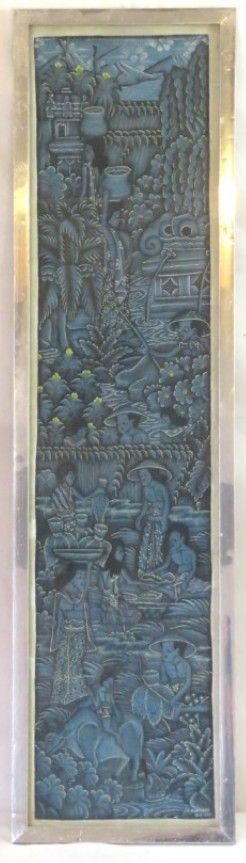
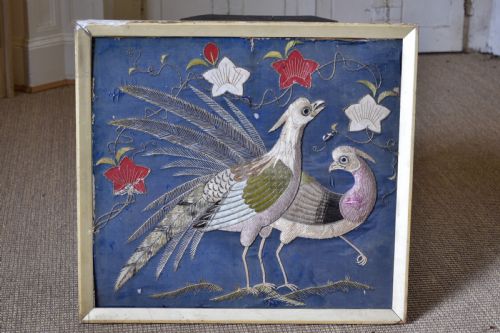
A vintage oriental textile encompasses a diverse range of hand-woven and embroidered utilitarian objects originating from Central Asia, Persia, the Caucasus, and the Ottoman Empire. Buyers looking at this selection encounter functional tribal items such as storage bags, bed covers, cushions, and wall hangings produced during the nineteenth and early twentieth centuries.
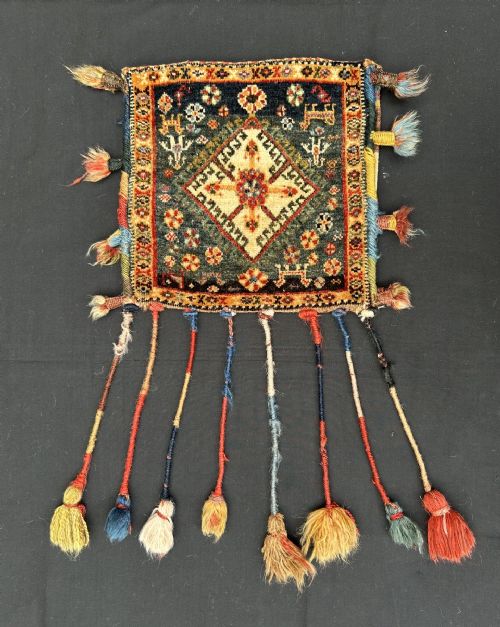
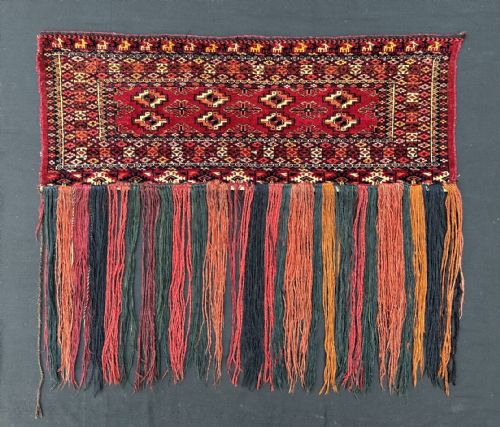
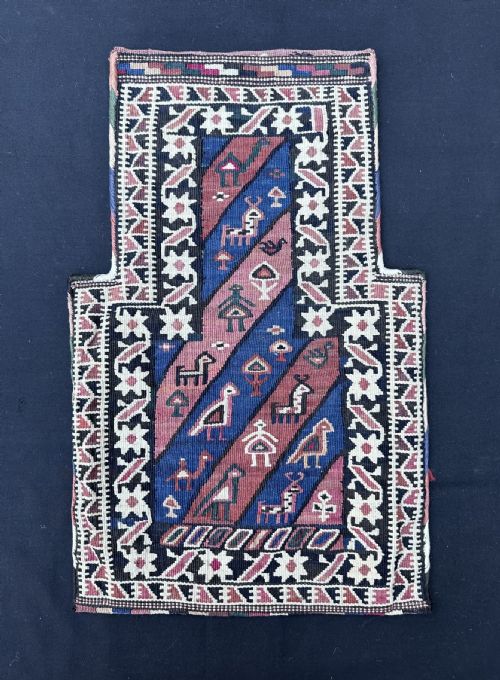
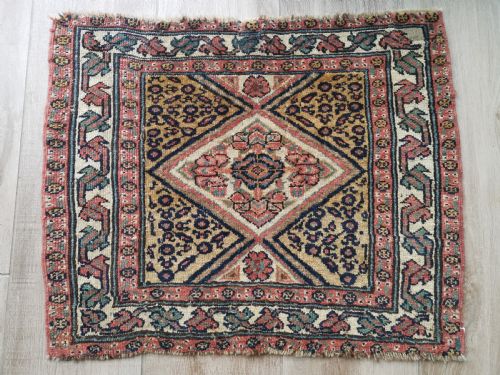
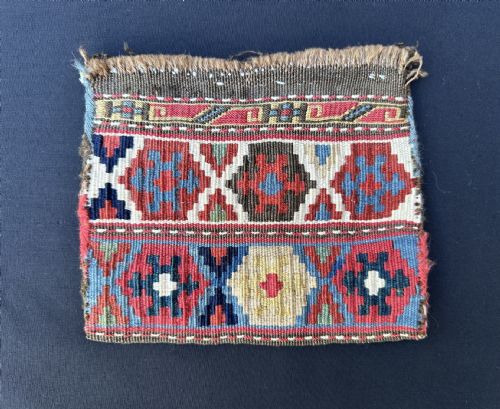
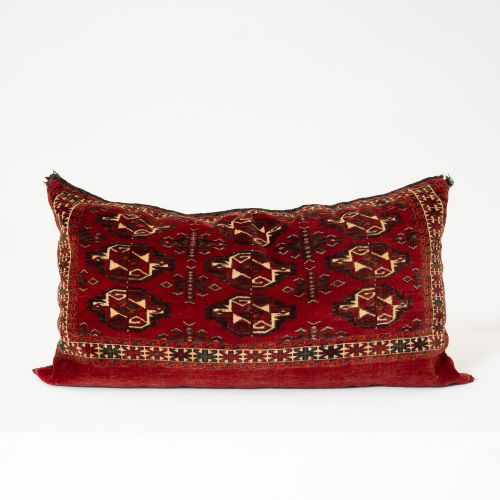
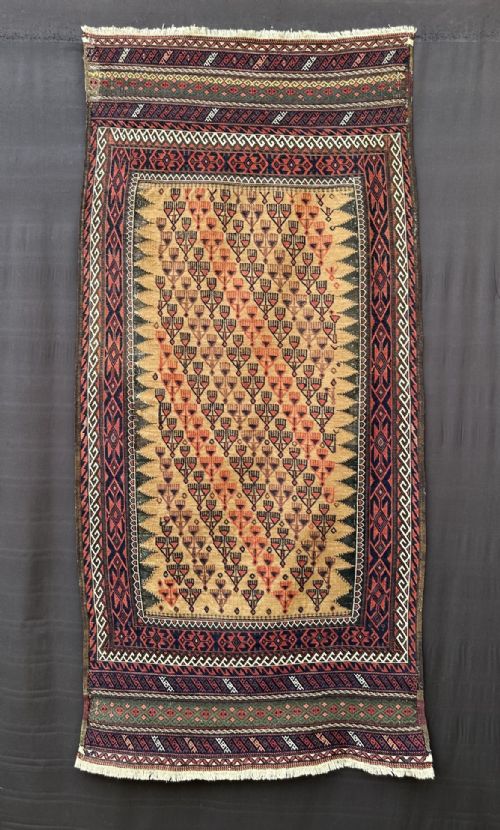
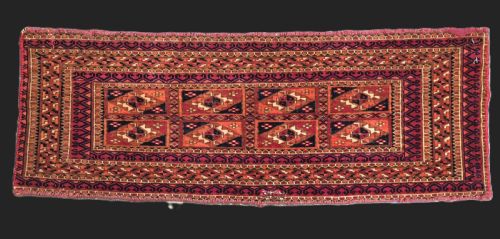
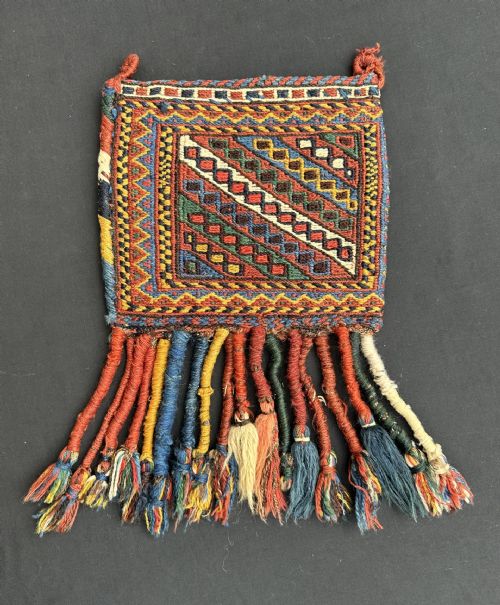
The most common pieces found in this category include nomadic torbas, chuvals, and saddle bags alongside embroidered suzanis and decorative fragments. These items reflect the specific regional weaving traditions and nomadic lifestyles of groups such as the Turkmen, Qashqai, Shahsavan, and Uzbek makers.
Many examples functioned as dowry items or household furnishings rather than commercial art, incorporating traditional motifs that denoted tribal identity and status. Surviving pieces provide tangible links to historical textile arts across the Near East and Central Asia.
Materials and construction
Makers utilised locally sourced animal and plant fibres, predominantly hand-spun wool, cotton, and silk, often combined with metallic thread and felt applique work. Natural dyes provided the deep reds, ivories, and dark grounds characteristic of nineteenth-century regional dyeing techniques.
Construction methods varied from pile carpet weaving and flat-woven sumac techniques to intricate needlework embroidery and padded quilting for garments like silk ikat chapan coats. Structural elements such as plain weave backs, hanging loops, and leather reinforcements demonstrate the practical purpose behind each creation.
Some nineteenth-century storage bags still retain their original hanging loops, ready to resume their duties after a mere century or two of rest.
Evaluating quality and execution
Quality in these textiles rests upon the fineness of the spin, the precision of the knotting or needlework, and the saturation and stability of the natural dyes. Superior examples display balanced compositions, rhythmic repetition of tribal motifs like guls or architectural elements, and crisp colour contrasts.
The integrity of the original structure also determines desirability, with well-preserved pile, intact borders, and minimal structural loss separating exceptional tribal weavings from heavily worn utility pieces.
The Vintage Oriental Textile Glossary
- Suzani
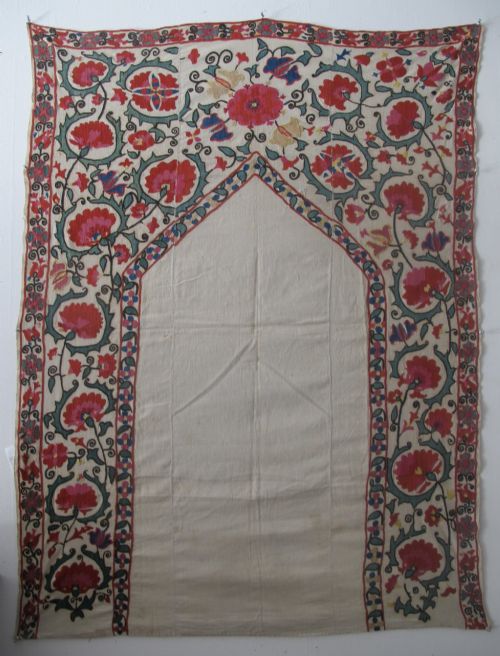
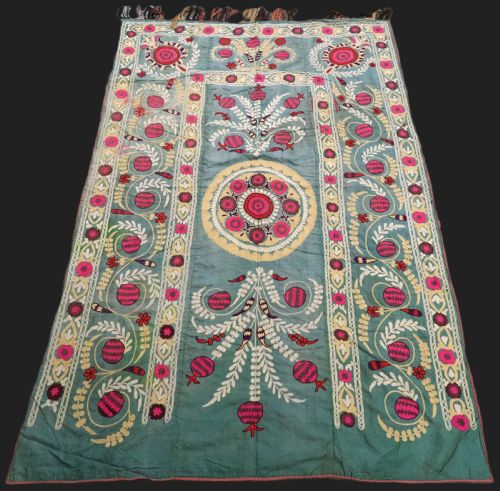
- An embroidered hanging or bed cover originating from Uzbekistan and Tajikistan, typically worked in silk on a cotton or linen ground with floral and architectural motifs.
- Gul
- A medallion or repeating primary design motif found frequently in Turkmen and Central Asian carpet-weaving traditions.
- Torba
- A small rectangular storage bag used by nomadic tribes for household possessions, usually featuring an elaborately decorated face.
- Sofreh
- A cloth or spread used during meals or dough preparation, often produced by nomadic groups in Persia and neighbouring borderlands.
- Chuval
- A large tent-storage bag made by Turkmen tribes, designed to hold bedding and household goods inside a yurt.
Vintage Oriental Textile: Frequently Asked Questions
What is a suzani?
A suzani is a large, decorative embroidered textile created primarily in Central Asia as part of a bride's dowry. These pieces feature bold floral and botanical designs worked in vibrant silk threads on a cotton or linen ground.
Historically used as wall hangings, bed covers, or wrapping cloths, they bring rich colour and texture to contemporary interiors when displayed on walls or used as soft furnishings.
How were tribal bags used?
Nomadic groups across Persia, Central Asia, and the Caucasus utilised woven bags like torbas, chuvals, and salt bags to store belongings inside portable tents and yurts. Each bag served a specific practical purpose, from holding household utensils to containing bedding.
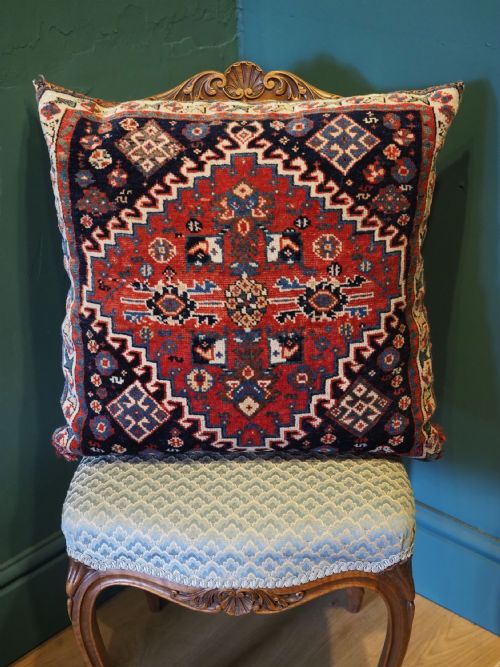
Today, collectors value these functional pieces as compact examples of tribal weaving, often displaying them as wall hangings or repurposed cushion covers.
How do I care for antique textiles?
Antique textiles require gentle handling to preserve fragile fibres, natural dyes, and historical stitching. Protection from direct sunlight prevents fading, while low-suction vacuuming through mesh helps remove surface dust without disturbing the weave.
Mounting heavier items onto breathable fabric supports their weight and allows safe display on interior walls without placing stress on the historical structure.
How do I identify regional styles?
Regional identification relies on recognising specific structural formats, colour palettes, and repeating geometric or floral motifs unique to each tribal confederation. Turkmen weaving often incorporates distinctive guls on deep red grounds, whereas Caucasian pieces display bold geometric medallions.
Familiarity with the materials, such as silk embroidery on cotton or wool pile on a wool foundation, further clarifies the geographic origin of a piece.