






Vintage Oriental Nesting Tables
Vintage oriental nesting tables offer compact tiered surfaces with striking painted or carved ornament that bring versatile display space to any room.
Vintage Oriental Nesting Tables
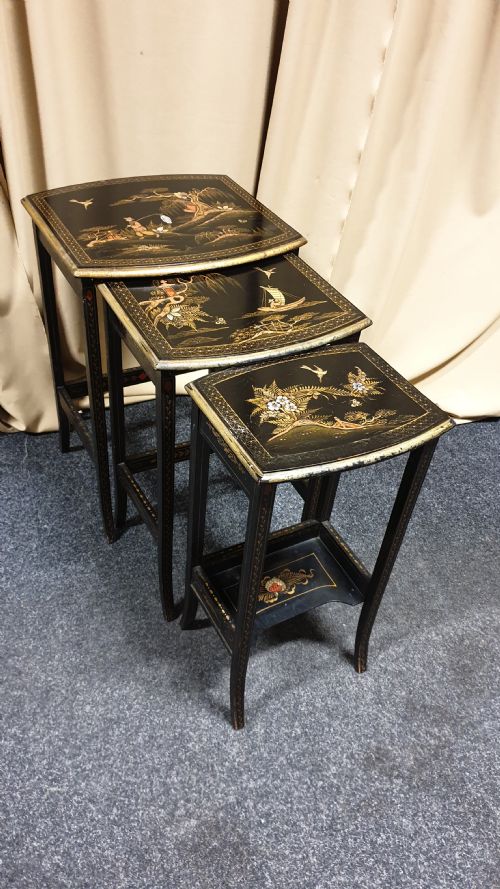
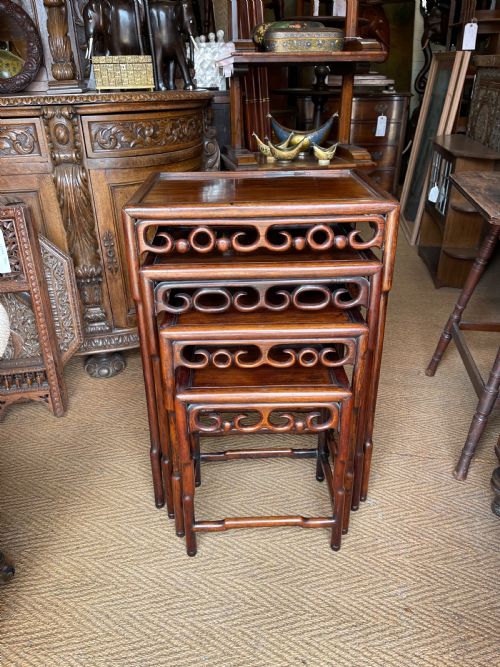
Vintage oriental nesting tables are sets of graduated tables designed to slide neatly beneath one another when not in use. The examples gathered under vintage oriental nesting tables typically comprise sets of three or four individual pieces.
These sets appear in various forms including nests of tables, coffee tables, and occasional tables. The dominant aesthetic draws from Chinoiserie, Chinese export, and broader oriental traditions spanning the nineteenth and early twentieth centuries.
Makers produced these tables to serve multiple functions around the home, functioning as tea tables, display stands, or movable side surfaces. Their clever stacking design makes them exceptionally practical for modern living spaces requiring flexible furniture.
How they were made
Craftsmen utilised dense timbers such as hardwood, rosewood, and teak to construct the frames of these tables. These sturdy woods supported intricate surface carving depicting figures, fauna, and geometric motifs.
Many surfaces feature lacquer finishes combined with gold leaf or gilt paint to create elaborate Chinoiserie decoration. Some twentieth-century variants incorporate glass tops to protect the delicate painted or carved surfaces underneath.
Vintage Oriental Nesting Tables Retail Price Guide 2026
Typical asking prices for vintage oriental nesting tables among the pieces listed under this phrase on Sellingantiques today, from the lower quarter to the upper quarter. They describe what is for sale here now, not the wider market.
Some early twentieth-century makers carved elephants directly into the teak frames, adding unexpected wildlife to the tea table.
What varies in quality
The sophistication of the carving and the precision of the lacquerwork define the upper tier of quality. Superior sets display crisp detail in the motifs and smooth, even graduated fits when the tables slide together.
The choice of primary timber influences both the weight and the durability of the piece. Dense rosewood and heavy hardwoods represent finer production standards compared to simpler secondary woods.
The Vintage Oriental Nesting Tables Glossary
- Chinoiserie
- European interpretation and imitation of Chinese and East Asian artistic traditions, often applied through lacquer and gilding. This style gained immense popularity during various revival periods.
- Graduated
- Describing tables built in decreasing sizes so smaller units fit precisely under larger ones. This engineering ensures the entire set occupies the floor space of only the largest table.
- Lacquer
- A durable resin finish applied in multiple layers to wood and polished to a hard sheen. It frequently serves as a dark background for hand-painted oriental scenes.
- Nest of tables
- A set of several smaller tables designed to stack together. They provide extra surface area when entertaining guests.
Vintage Oriental Nesting Tables: Frequently Asked Questions
How do I care for my nesting tables?
Dust regularly with a soft, dry cloth to protect delicate lacquer and gilt surfaces from abrasion. Avoid placing them in direct sunlight or near heat sources to prevent timber splitting.
Lift the tables rather than dragging them across the floor to protect the joints and feet. Use coasters beneath drinks to safeguard the polished wood or decorated tops from moisture rings.
Are these tables sturdy enough for daily use?
Most hardwood and rosewood sets were built to withstand regular domestic service as tea or side tables. Solid timber construction provides reliable structural integrity for everyday placement.
Lighter occasional tables with intricate carved details benefit from gentle handling. Stacking and unstacking them carefully preserves the joints where the legs meet the tabletops.
How can I tell different periods apart?
Nineteenth-century examples frequently rely on heavy hardwoods and traditional lacquered decoration. They often exhibit hand-carved details that reflect classic regional motifs.
Twentieth-century iterations from the 1910s to 1930s sometimes incorporate Art Deco influences or distinct carved elements like elephants. Examining the timber and the style of the ornamentation helps date the set.
Where should I place a nest of tables?
These sets excel beside a sofa or armchair where the smaller tables can be pulled out for cups or books. They require minimal floor space when stacked together against a wall.
Consider placing them in a corner as display surfaces for lamps or ornaments. Their tiered design allows them to adapt to changing spatial needs in living rooms or studies.