

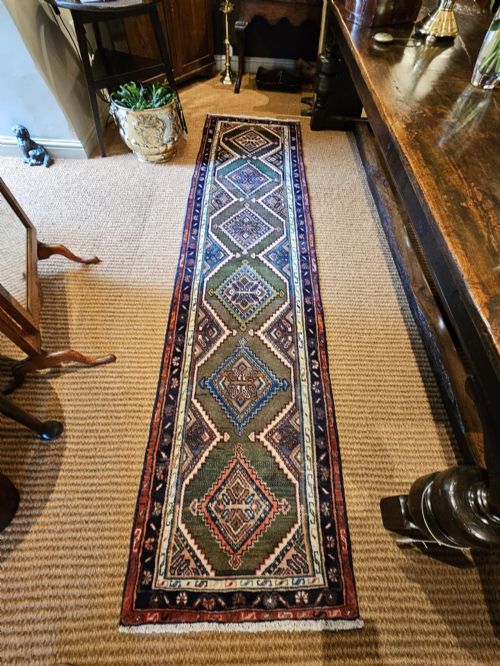


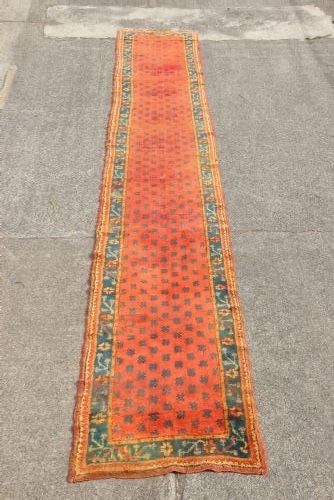

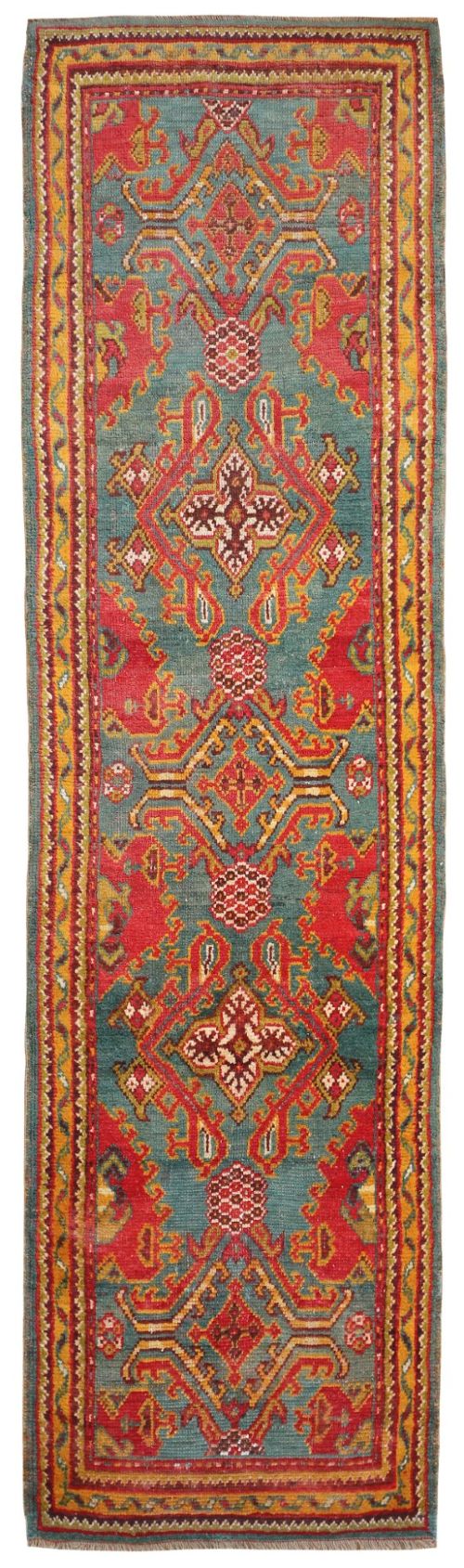
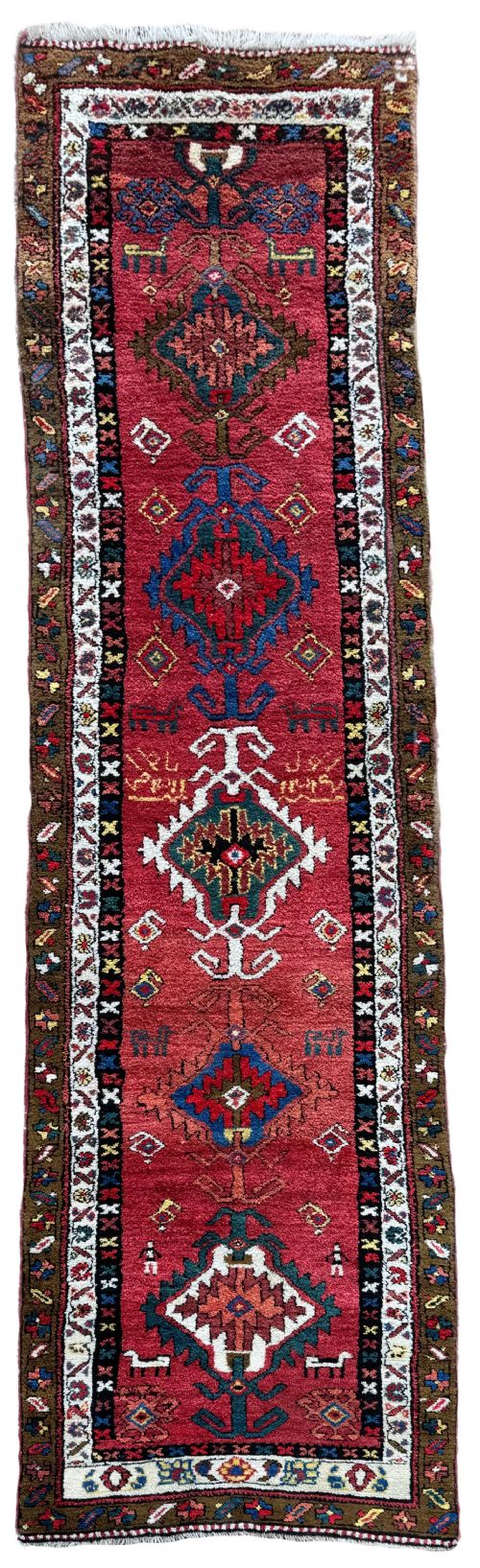
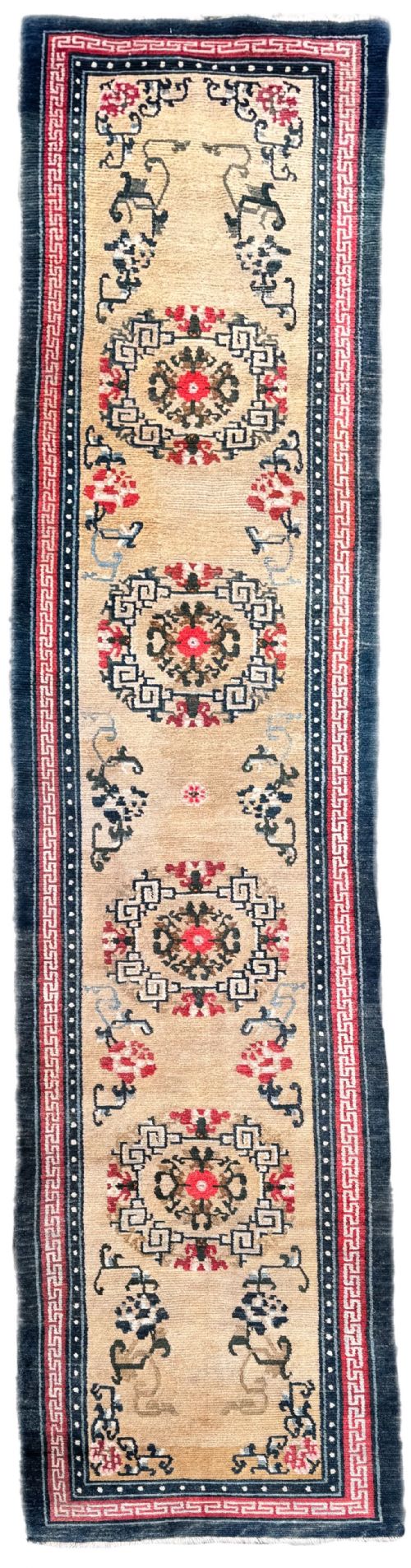

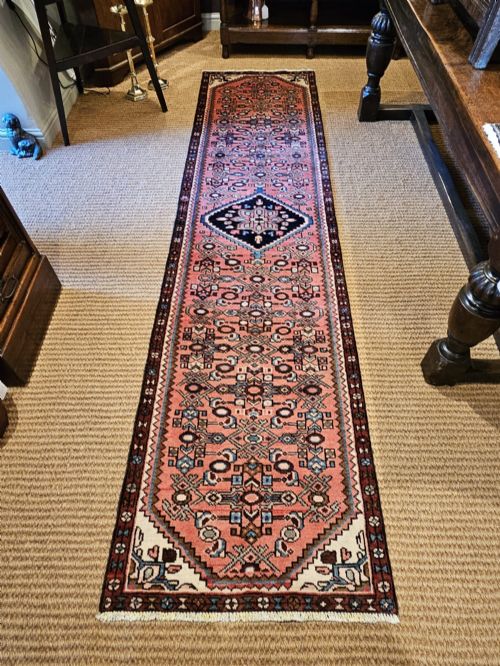
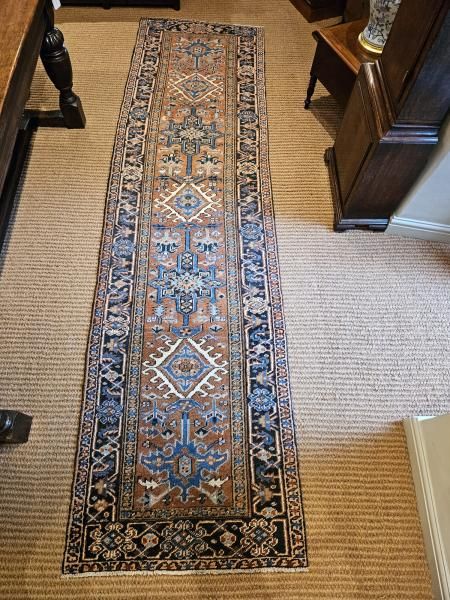
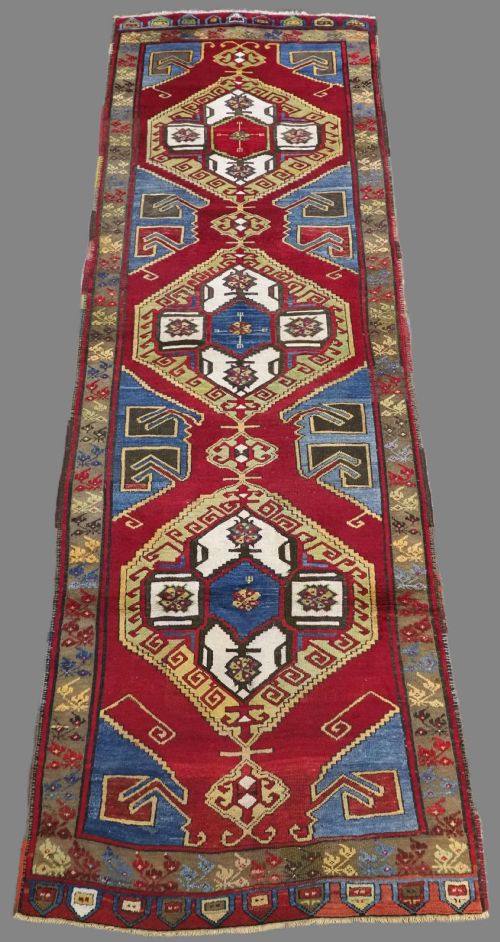
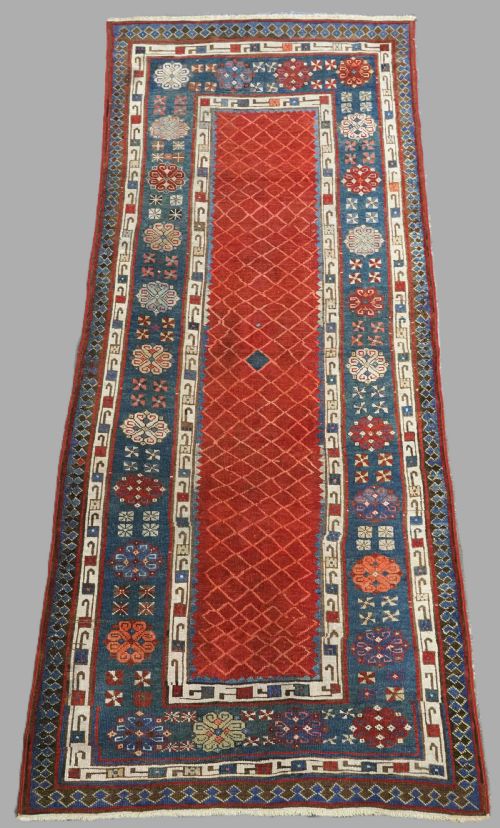

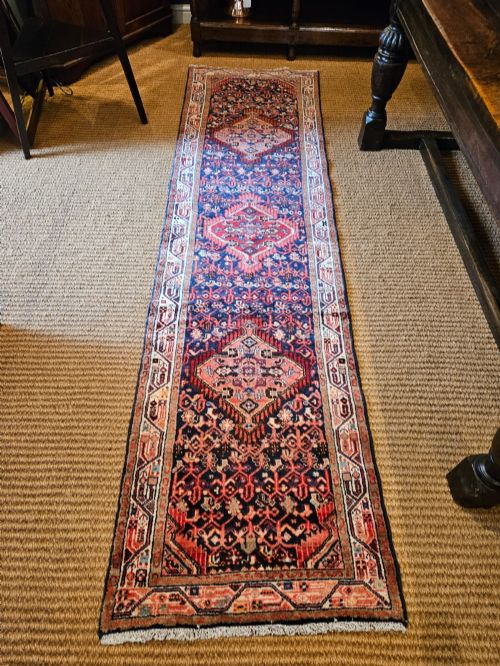
Vintage Oriental Hallway Rug
A vintage oriental hallway rug brings enduring pattern and warmth to a narrow space through handwoven wool and cotton.
Vintage Oriental Hallway Rug
A vintage oriental hallway rug is a long, narrow textile designed to span corridors, hallways, and landings. These floor coverings bridge practical utility and decorative tradition.
The selections span periods from the nineteenth century through the early twentieth century, including pieces originating from Persia, the Caucasus, and Anatolia. Narrow proportions dictate their specific function in domestic architecture.
Forms appear under various descriptions such as runner rugs, long rugs, and hallway runners. Buyers encounter tribal and traditional styles reflecting distinct regional weaving cultures.
Materials and construction
Makers utilised pure wool for the pile, providing durability and a soft underfoot texture suited to heavy foot traffic in corridors. Cotton frequently serves as the foundation warp and weft, giving the structure stability and strength.
Traditional handweaving techniques dominate these textiles, ensuring each piece possesses unique variations in proportion and design execution. Natural dyes and hand-spun fibres contribute to the depth of colour seen across Caucasian, Persian, and Anatolian examples.
Several runners display delightfully crooked geometries, proving human hands guided every knot along the corridor.
Distinctions in craftsmanship
Knot density and structural tightness set finer examples apart from coarser village or tribal weaves. Precision in geometric or floral detailing reveals the weaver's control over the medium.
The integrity of the foundation and the evenness of the wool pile determine how well a runner withstands continuous use. Age-related wear alters the appearance, where balanced pile reduction differs from structural compromise.
The Vintage Oriental Hallway Rug Glossary
- Runner
- A long, narrow carpet format specifically suited for hallways, stairs, and corridors. This shape directs movement through narrow architectural spaces.
- Pile
- The upright yarn loops or cut ends that form the surface of the rug. It provides cushioning and displays the woven pattern.
- Warp
- The stationary vertical threads stretched on a loom before weaving begins. These foundational threads support the entire structure of the textile.
- Weft
- The horizontal threads passed alternately over and under the warp threads. They lock the knots in place row by row.
- Tribal
- A designation for rugs woven by nomadic or village communities rather than urban workshops. These designs often rely on memory, local symbolism, and geometric motifs.
Vintage Oriental Hallway Rug: Frequently Asked Questions
Where should I place a long runner?
These pieces suit narrow hallways, corridors, and long landings where floor space benefits from linear pattern and warmth.
They protect wooden floorboards in high-traffic transition areas while defining the path through a home.
How do I measure for a hallway rug?
Measure the length and width of the available floor space, leaving a consistent margin of exposed boards or stone around the perimeter.
Account for door clearance to ensure the door swings freely over the thickness of the wool pile.
Are these runners made from pure wool?
The pieces utilise wool for the surface pile, offering resilience against daily foot traffic.
Cotton often forms the internal foundation structure to provide dimensional stability along the length.
How do I distinguish regional styles?
Caucasian and Anatolian pieces often display geometric medallions and bold tribal motifs. Persian rugs frequently incorporate intricate floral lattice designs or Heriz patterns.
Examining the colour palette and border structures helps identify the specific weaving origin.