

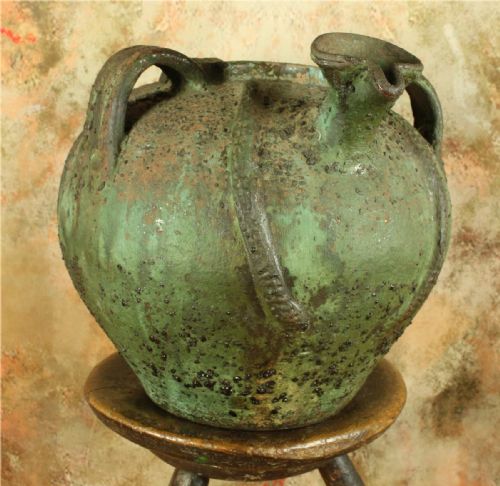


Vintage Olive Amphora
These vintage olive amphora vessels bring genuine rustic Mediterranean character into the home, offering robust earthy shapes shaped by centuries of agricultural tradition.
Vintage Olive Amphora
The versions most commonly met on this page take the form of large terracotta oil jars, painted pottery vessels, and three-handled jugs. They appear in styles such as rustic Mediterranean, French Country, and Anatolian folk, frequently paired with wrought iron stands or displaying traces of lime wash and ceramic glaze.
Materials and construction
Makers formed these robust vessels using local terracotta, earthenware, and heavy clay, shaping them by hand or wheel to achieve thick walls capable of withstanding agricultural use. Many pieces received practical surface treatments like lime wash or a simple ceramic glaze to seal the porous material against oil and moisture leakage.
Structural elements often included multiple loop handles for lifting and heavy rims designed for secure coverings. Some examples were later mounted in custom wrought iron stands to elevate the heavy jars for display.
Vintage Olive Amphora Retail Price Guide 2026
Typical asking prices for vintage olive amphora among the pieces listed under this phrase on Sellingantiques today, from the lower quarter to the upper quarter. They describe what is for sale here now, not the wider market.
Object forms include oil jars, three-handled jugs, water pots, and garden planters set on iron stands.
Judging quality in rustic vessels
Quality in these utilitarian jars rests in the integrity of the original form and the honesty of surface patination. Examples with undisturbed historic lime wash or authentic painted decoration display a depth of character that mass-produced reproductions simply cannot replicate.
The balance between the vessel's heavy body and its functional handles or collar dictates the visual harmony of the piece. Superior examples retain their original structural weight without excessive repair, showing clear evidence of regional tradition in their silhouette.
The Vintage Olive Amphora Glossary
- Terracotta
- A porous, unglazed or lightly glazed fired clay of a brownish-red hue. It forms the primary structural material for the vast majority of traditional Mediterranean storage jars.
- Lime wash
- A traditional white or tinted coating made from slaked lime and water, applied to the exterior of storage vessels. It helped reflect heat and protected the clay surface.
- Amphora
- A tall two-handled jar with a narrow neck, historically utilised across ancient and traditional societies for transporting and storing liquids.
- Glaze
- A vitreous coating fused to the ceramic body through firing, used to render porous earthenware completely waterproof for liquid containment.
- Wrought iron
- Iron beaten into shape by hand, frequently utilised to create supportive stands and mounts specifically fitted to heavy earthenware jars.
Vintage Olive Amphora: Frequently Asked Questions
How were these large jars used?
These vessels served primarily to store, settle, and transport agricultural liquids such as olive oil, wine, and water across Mediterranean farmsteads. Their thick clay walls helped maintain a stable internal temperature.
Many featured multiple handles to assist workers in tilting and moving the heavy containers safely during daily operations.
How do I live with an amphora?
These substantial jars suit placement in hallways, gardens, and generous living spaces where their rustic form can anchor a room. They require stable, level flooring due to their considerable weight.
Many owners display them empty as sculptural focal points, while others utilise them with wrought iron stands or as planters.
How can I tell the period?
Dating relies on examining the throwing marks, clay composition, and surface finishes such as historic lime wash or early painted decoration. Eighteenth-century pieces often display distinct hand-formed irregularities compared to later nineteenth-century examples.
Origin clues also emerge through regional styles like French Country, Portuguese earthenware, or Anatolian folk traditions.