
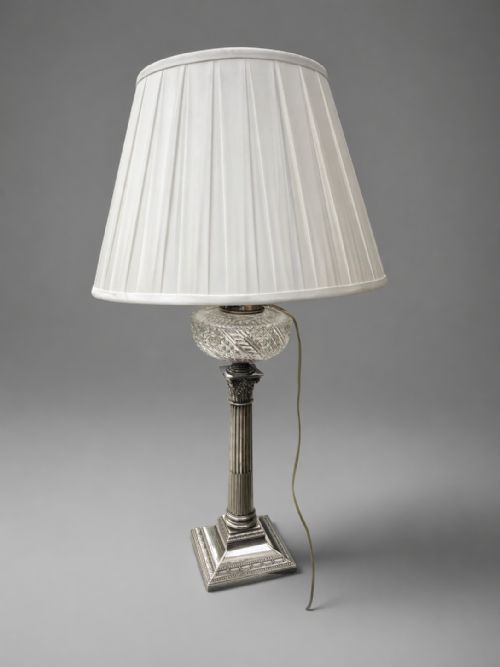


Vintage Oil Lamp Conversion
These vintage oil lamp conversion pieces combine period metalwork and glass with modern electric wiring.
Vintage Oil Lamp Conversion
When you search for a vintage oil lamp conversion, you examine domestic lighting that started life burning paraffin or oil before receiving electrical wiring. These domestic objects appear primarily as table lamps and floor standing models.
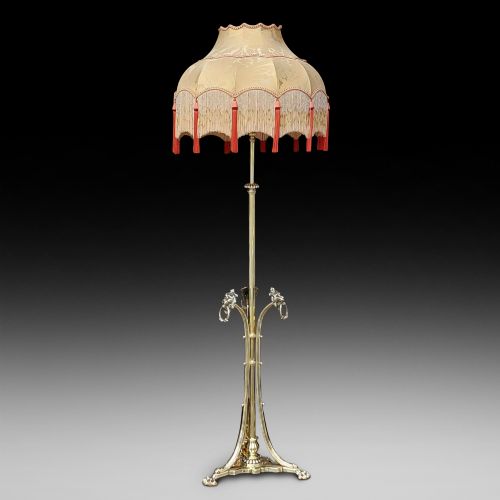
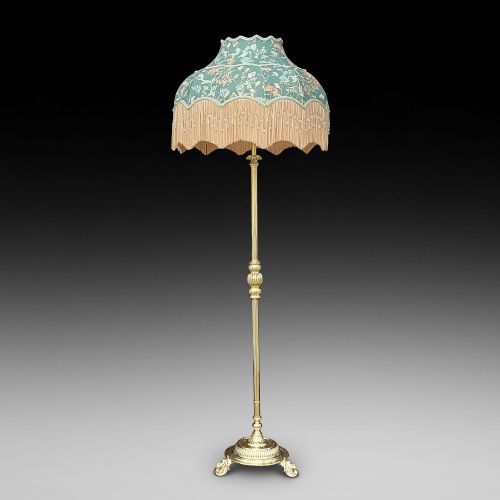
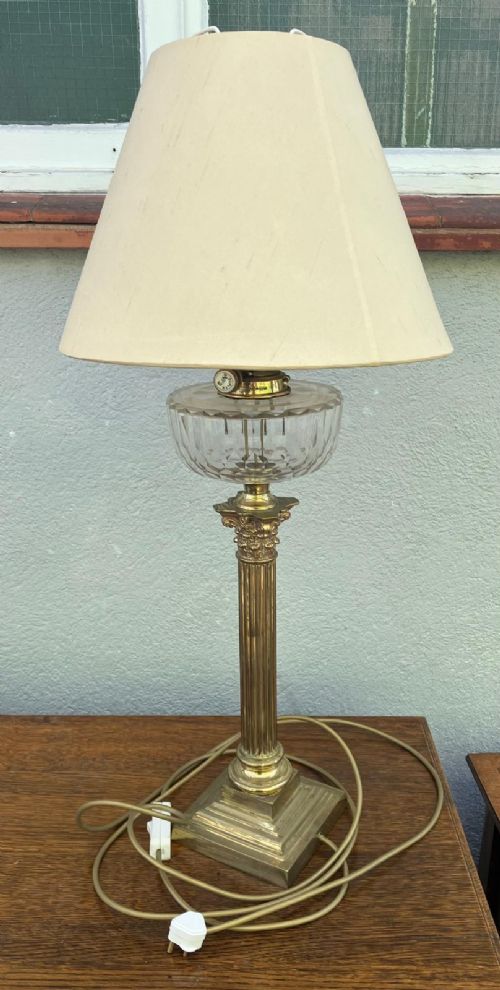
Victorian and Edwardian examples dominate the selection, spanning periods from the mid-nineteenth century through to nineteen hundred. You encounter adjustable standards, Corinthian columns, and heavy brass constructions designed for nineteenth-century parlours.
The form adapts period reservoirs, burners, and stems to hold bulb fittings. This gives a room the weight and presence of nineteenth-century metalwork combined with contemporary illumination.
How they were made
Maker workshops utilised brass, bronze, and wrought iron for the structural columns and telescopic standards. Metal casting, repoussé work, and turning formed the heavy bases and capitals.
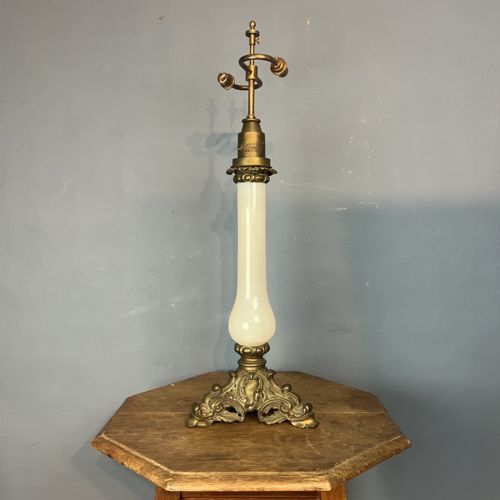
Glass elements incorporate opaline glass, cut glass, and frosted glass for the reservoirs and shades. Ceramic and faience sections add colour and pattern, frequently paired with gilt brass mounts and fabric components.
Listings feature nineteenth century and Edwardian periods utilising brass, bronze, glass, ceramic, and wrought iron.
What varies in quality
Quality rests on the weight of the metal casting and the crispness of the architectural detailing in the columns and bases. Heavier gauge brass and deeply chased bronze separate standard production from substantial statement pieces.
The integration of the electrical conversion relative to the original oil mechanism determines the success of the piece. Fine examples retain the character of the burner and reservoir while accommodating wiring securely.
Mc Gary·Joseph Hinks·Hinks·Messenger
The Vintage Oil Lamp Conversion Glossary
- Standard lamp
- A tall floor lamp designed to stand on the floor rather than a table. These often feature telescopic adjustment mechanisms.
- Opaline glass
- A pale, opaque glass often tinted in soft colours, popular in nineteenth-century lighting reservoirs and shades.
- Repoussé
- A metalworking technique where the metal is hammered from the reverse side to form a raised design in relief.
- Faience
- Tin-glazed earthenware used for the decorative bodies of nineteenth-century table lamps.
- Corinthian column
- An architectural column style featuring ornate capitals decorated with acanthus leaves, frequently utilised on nineteenth-century metal lamp standards.
Vintage Oil Lamp Conversion: Frequently Asked Questions
Are these lamps safe to use at home?
Yes, these items undergo conversion to run on modern electricity, making them suitable for domestic interiors.
Buyers should check that the internal wiring meets current safety standards upon acquisition.
How do I date a converted oil lamp?
Dating relies on the style of the metalwork, manufacturer stamps, and the materials used in the base and reservoir.
Victorian and Edwardian pieces display distinct architectural motifs and manufacturing techniques specific to their decades.
Where were these lamps placed originally?
Table models sat on heavy Victorian sideboards, desks, and occasional tables in principal rooms.
Floor standing versions illuminated dark corners of nineteenth-century drawing rooms and libraries.
What is a telescopic standard lamp?
This design includes an adjustable shaft that raises or lowers the overall height of the lamp.
Makers built these mechanisms to let users direct the light downwards over seating areas.