


Frosted Globe Lamp
A frosted globe lamp offers soft, diffused illumination, uniting glass and metal in Victorian and Art Deco forms that collectors seek.
Frosted Globe Lamp
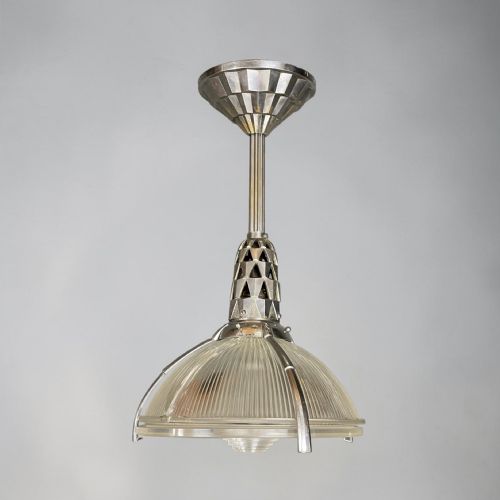
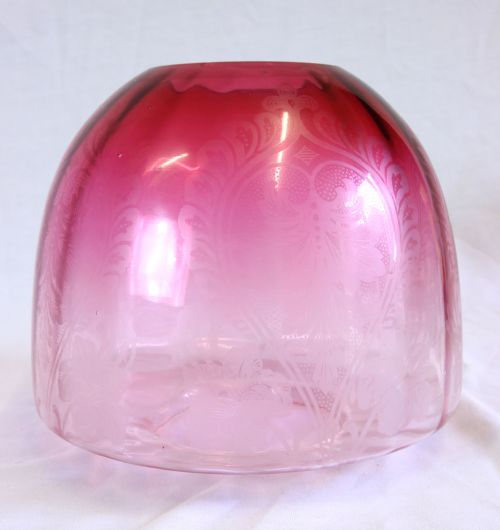
A frosted globe lamp brings together spherical shades and sturdy bases across the Victorian, Edwardian, and Art Deco periods. Buyers searching for a frosted globe lamp will frequently encounter table lamps, ceiling fixtures, and converted oil lamps spanning from the late nineteenth century into the nineteen-thirties.
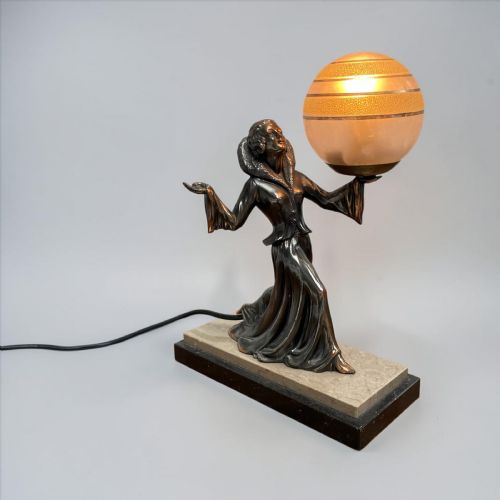
The selection here encompasses several distinct decorative traditions, ranging from heavy brass Victorian oil lamps to French Art Deco figural pieces featuring bronze, marble, and chrome. Ceiling lighting and globe shades also appear alongside figural lady lamps and night lights.
Origin points visible in these pieces include English and French workshops, utilising materials such as patinated metal, spelte, and ceramic alongside the defining frosted glass elements.
What separates the finest examples
Quality rests in the crispness of the casting detail on figural bases and the evenness of the frosting across the glass globe. Superior pieces maintain original patination on the metal components and retain matching glass elements without replacement parts.
The integration of materials dictates the overall success of the piece, where heavy marble plinths, solid bronze figures, and complex etched crystal demonstrate higher workmanship than simpler utilitarian lighting.
Listings combine Victorian brass oil lamps with French Art Deco bronze figures and chrome ceiling globes.
Émile-Jacques Ruhlmann·Messengers·Harrods
The Frosted Globe Lamp Glossary
- Frosted glass
- Glass treated by acid-etching or sandblasting to create a textured, translucent surface that diffuses light. This treatment softens the glare of the internal bulb or flame while maintaining high light transmission.
- Font
- The oil reservoir portion of a lamp, often manufactured from coloured glass or ceramic. It sits above the base and beneath the burner and shade.
- Spelter
- A zinc alloy frequently used as a cost-effective substitute for bronze in decorative figures during the nineteenth and early twentieth centuries. It accepts patination well to simulate heavier metals.
- Opaline glass
- An opaque or semi-translucent glass, often pastel in tone, used for globes and shades to give a milky appearance. It became popular for both Victorian oil lamps and Art Deco lighting.
Frosted Globe Lamp: Frequently Asked Questions
How do I clean frosted glass globes?
Use warm soapy water and a soft cloth, avoiding abrasive pads that can scratch the delicate etched or frosted surface.
Dry thoroughly with a lint-free towel before reattaching the globe to the metal gallery.
Are these lamps converted from oil?
Many Victorian and nineteenth-century examples began life as oil lamps before undergoing conversion to electricity at a later date.
Other pieces, particularly from the Art Deco period, were manufactured specifically for electric bulbs from the outset.
How do I date an Art Deco lamp?
Examine the materials for characteristic nineteen-thirties elements such as chrome plating, mottled opaline glass, and synthetic or marble bases.
Figural subjects like greyhounds, seagulls, and stylised female nudes also point firmly toward this interwar era.
Can I replace a broken glass globe?
Replacement globes require careful matching of the fitter rim diameter to ensure the shade sits securely in the original brass gallery.
Finding period-correct etched or frosted glass matching the exact opening size demands patience.