

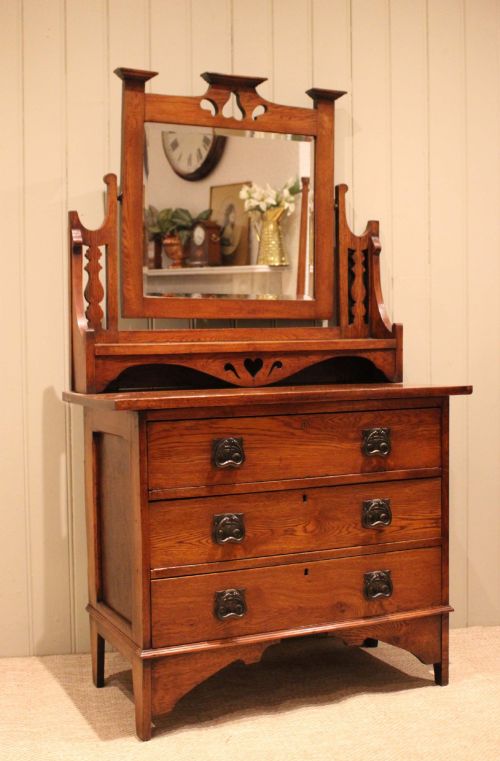
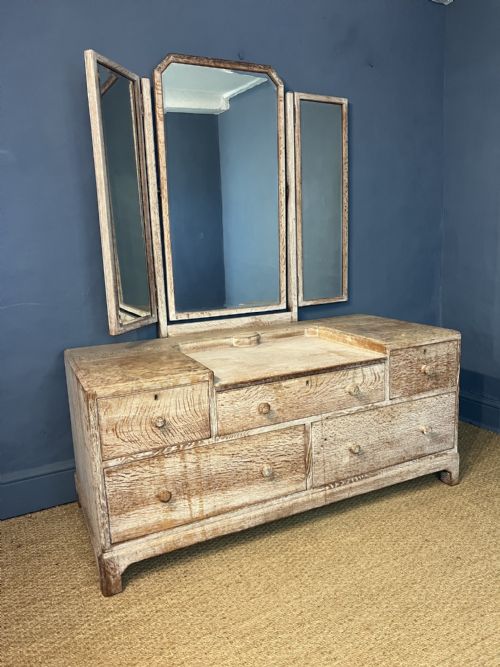

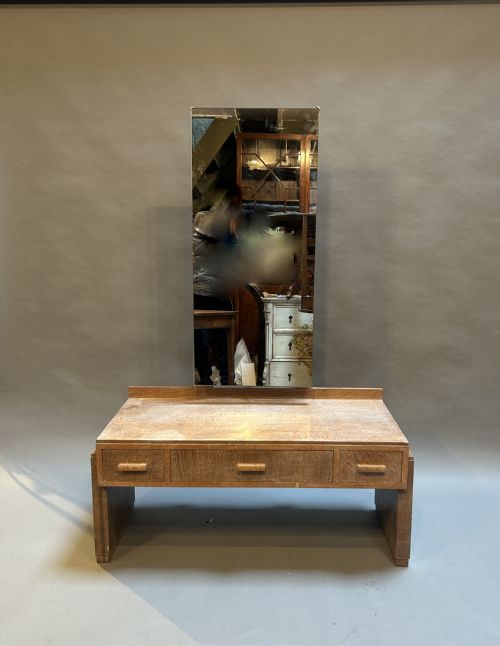


Vintage Oak Vanity Unit
These vintage oak vanity unit pieces combine period utility with honest craft, offering a solid focal point for a bedroom or bathroom.
Vintage Oak Vanity Unit
A vintage oak vanity unit is typically encountered on this page in the form of dressing tables, washstands, and shaving stands dating from the late nineteenth century through to the 1930s. Buyers searching for this phrase often find versatile timber pieces originally designed for washing or grooming that now adapt well to modern bathrooms and bedrooms.
The selection ranges from Arts and Crafts and Cotswold School creations to Art Deco and Victorian designs, reflecting the shifts in domestic utility across several decades. Most examples utilise solid oak or limed oak, occasionally paired with marble tops, brass fittings, or glass mirrors.
Makers and workshops from London and regional centres produced these items in various configurations, from simple washstands to twin pedestal dressing chests. The pieces bridge the gap between antique character and functional daily use in contemporary spaces.
What varies in quality
Quality rests in the integrity of the timber construction, the crispness of any carved or inlaid decoration, and the retention of original hardware such as brass handles and glass mirrors. Pieces from known workshops exhibit superior joinery and thoughtful proportions compared to standard commercial production.
Vintage Oak Vanity Unit Retail Price Guide 2026
Typical asking prices for vintage oak vanity unit among the pieces listed under this phrase on Sellingantiques today, from the lower quarter to the upper quarter. They describe what is for sale here now, not the wider market.
Early gentlemen took their morning routines seriously enough to warrant dedicated shaving stands with adjustable tilting mirrors.
Heals·Shapland and Petter·James Shoolbred·Harris Lebus of London
The Vintage Oak Vanity Unit Glossary
- Limed oak
- A wood treatment popular in the early twentieth century that leaves a white or pale pigment in the grain of the oak. This finish gives the timber a lighter, softer appearance.
- Arts and Crafts
- A design movement valuing handcraft, traditional materials, and simple forms over mass production. Pieces from this style often display honest construction and minimal, elegant ornamentation.
- Washstand
- A piece of furniture designed for holding a basin, jug, and washing accessories before plumbed bathrooms were common. Many now serve as vanity units with stone or marble tops.
- Marquetry
- The art of applying pieces of veneer to a structure to form decorative patterns. It adds surface texture and visual depth to drawer fronts and tabletops.
- Shaving stand
- A specialist piece of furniture featuring an adjustable mirror and small surfaces for shaving gear. These compact items suit modern cloakrooms and smaller bathrooms.
Vintage Oak Vanity Unit: Frequently Asked Questions
Can I use an antique washstand as a modern basin vanity?
Many buyers adapt period washstands with marble or wood tops to hold modern countertop basins and plumbing fixtures. The solid timber construction provides a sturdy base for conversion.
Care should be taken to seal the wood properly against water splashes to preserve the antique finish during daily use.
How do I care for limed oak surfaces?
Limed oak requires gentle cleaning with a dry or barely damp cloth to avoid stripping the characteristic white pigment from the grain. Avoid harsh chemical cleaners and excessive moisture.
Periodic application of a suitable wax helps nourish the timber and protects the finish from everyday wear.
What is the difference between an Edwardian and a 1930s dressing chest?
Edwardian dressing chests often feature traditional detailing such as swing mirrors, brass handles, and darker polished oak surfaces. They tend to reflect revival styles or late Victorian proportions.
In contrast, 1930s pieces, particularly those influenced by the Cotswold School or Art Deco, favour cleaner lines, limed oak finishes, and geometric forms.
Are marble tops on vintage washstands original?
Most marble tops found on Victorian and Arts and Crafts washstands are original to the piece, chosen for its water-resistant properties. They provide a durable, cool surface for washing accessories.
Inspecting the underside and fit can help confirm that the stone slab corresponds to the era of the timber base.