
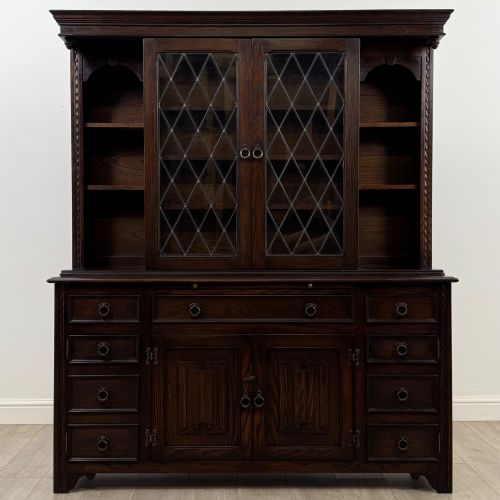
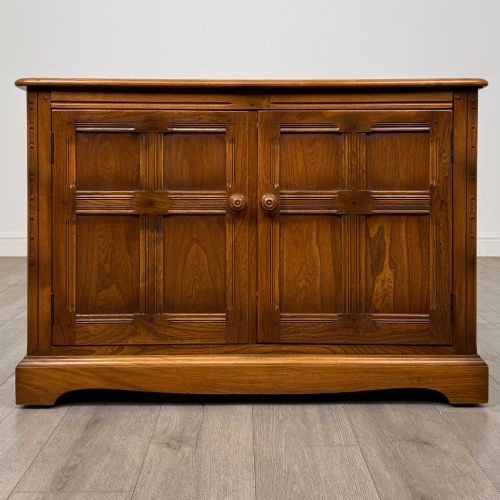
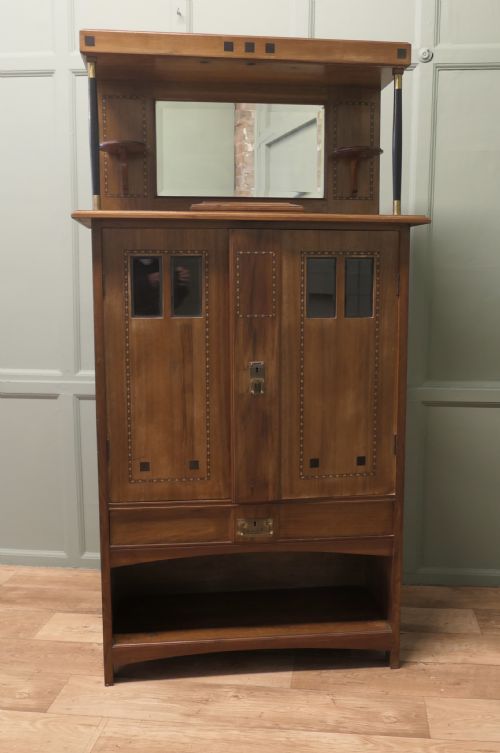
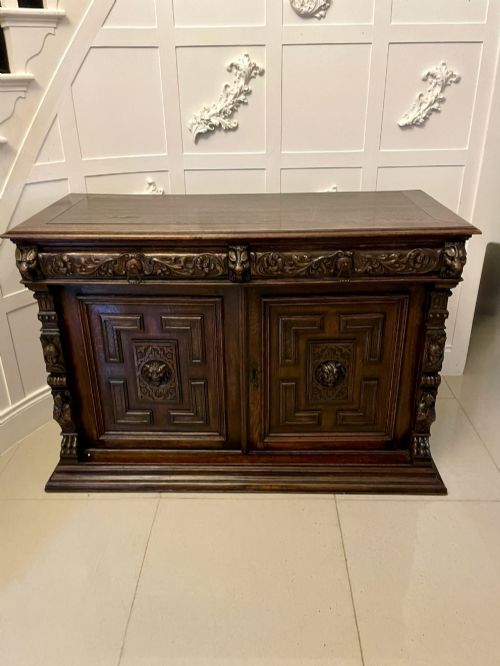
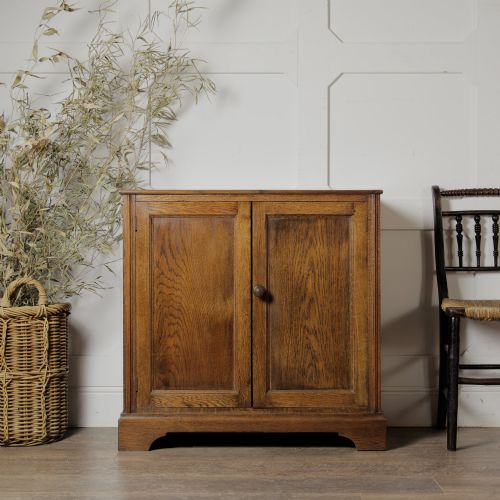
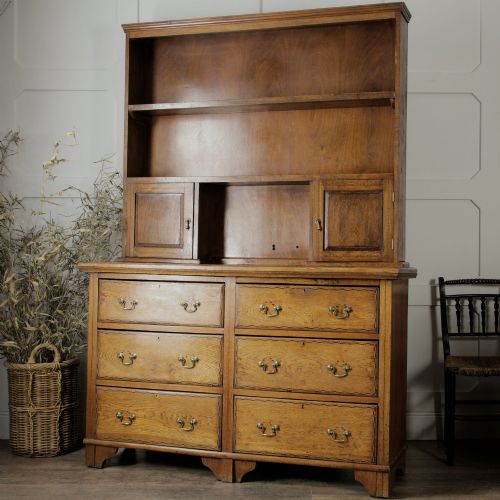
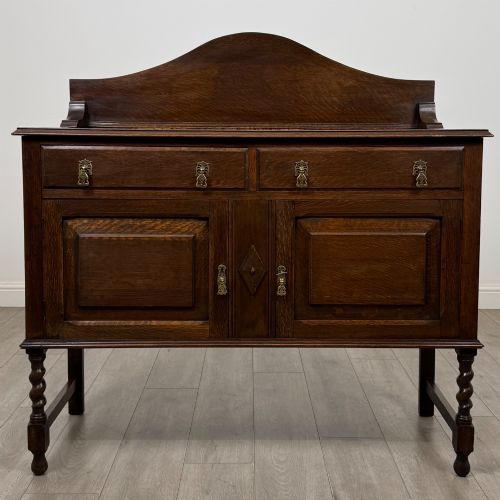
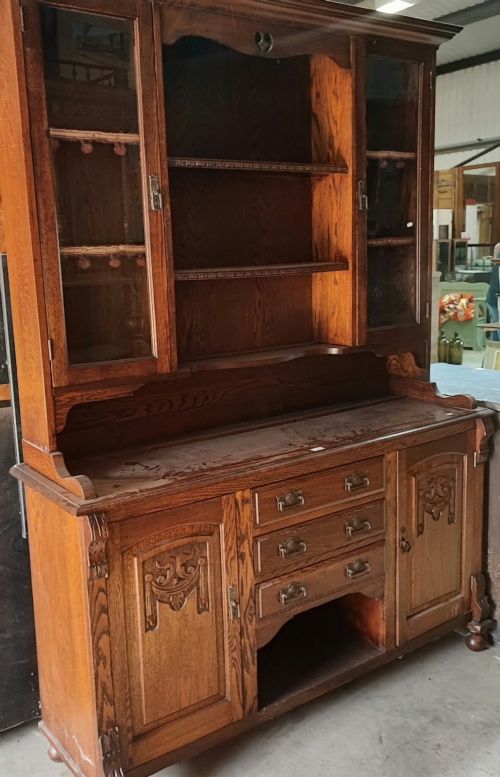
Vintage Oak Sideboard Cabinet
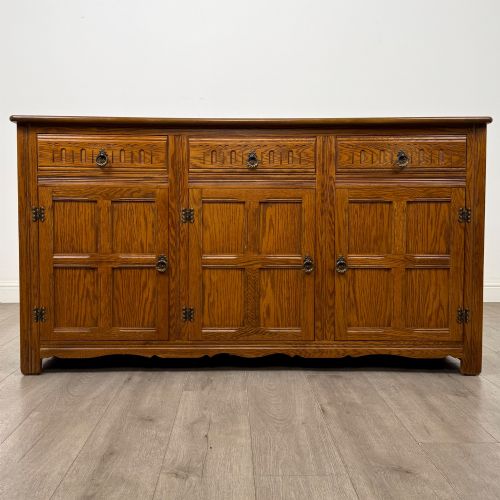
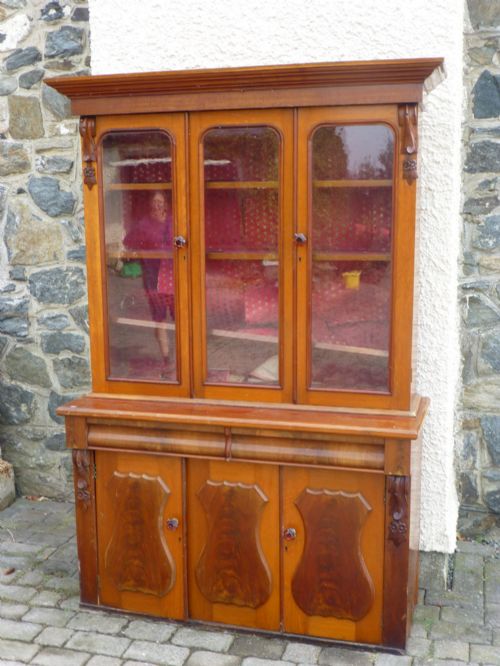
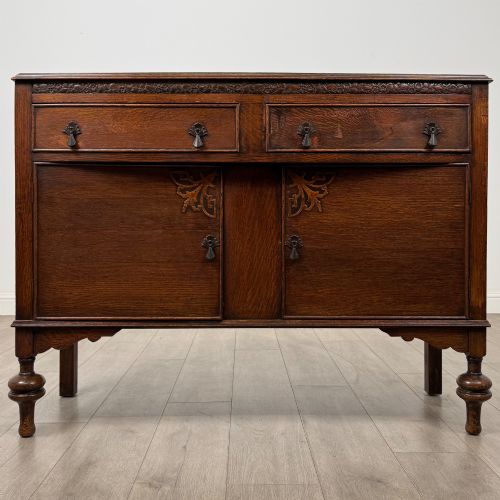
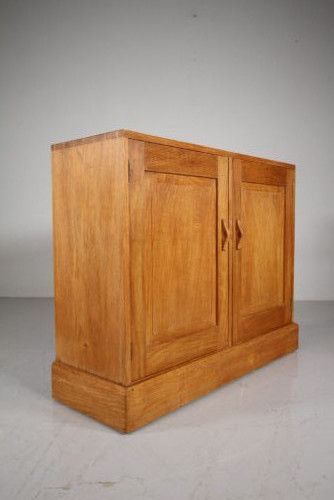
A vintage oak sideboard cabinet brings sturdy utility and rich grain to a dining room or hallway.
Vintage Oak Sideboard Cabinet
A vintage oak sideboard cabinet provides substantial storage through cupboards, drawers and surface display space. These items serve dining rooms and hallways, holding tableware, linens and household goods.
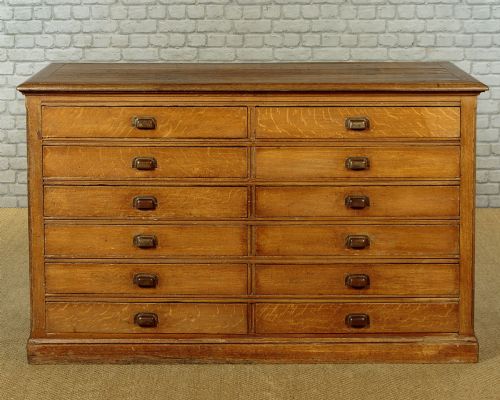
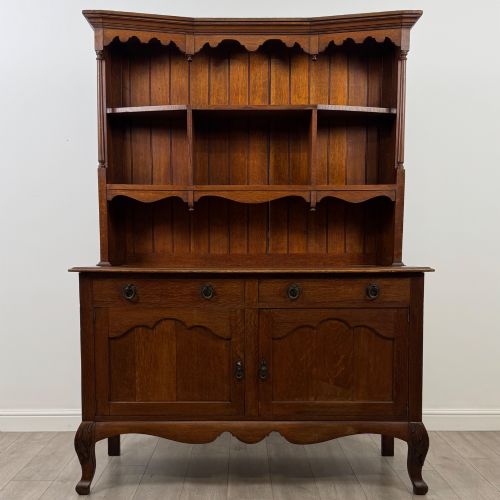
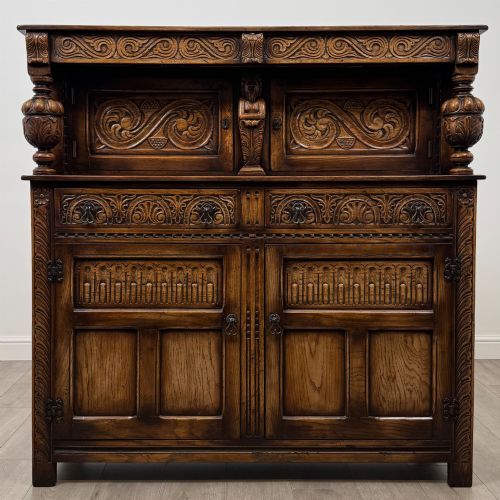
Edwardian pieces and early twentieth-century examples dominate the selections here, frequently constructed in solid or golden oak. Forms range from low cupboards and dresser bases to glazed display cabinets and court cupboards.
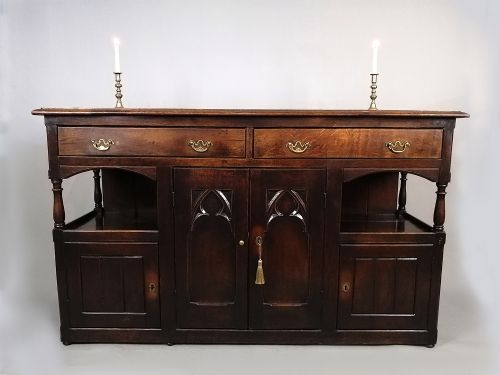
Revival styles appear regularly alongside simpler utilitarian forms. Buyers encounter Jacobean, Tudor and Gothic influences expressed through carved panels and barley twist legs.
How they were made
Makers utilised solid oak, tiger oak and golden oak alongside secondary timbers like mahogany and fruit wood. Brass, iron and glass hardware finish the doors and drawers.
Construction relies on traditional joinery techniques to handle the weight of dense timbers. Carving, linenfold panels and applied mouldings add decorative texture to doors and friezes.
Materials include solid oak, golden oak, brass, iron, glass and burr walnut.
What varies in quality
The depth of carving and the selection of timber dictate the tier of a piece. Golden oak and tiger oak selections display more animated grain patterns than plain utility boards.
Design integrity separates standard production from workshop pieces associated with specific movements like the Cotswold School or named cabinet makers.
Gomme·Peter Waals
The Vintage Oak Sideboard Cabinet Glossary
- Golden oak
- A bright, warm tone of oak timber popular in Edwardian furniture production. It often receives a clear finish to highlight the natural grain.
- Barley twist
- A turned wooden furniture leg resembling a twisted rope. This detail appears frequently on Edwardian sideboards and cupboards.
- Court cupboard
- A short, enclosed wooden cabinet used for storing food and utensils. These pieces typically feature carved upper sections supported by short posts.
- Linenfold
- A style of wood carving that imitates folded fabric. It appears commonly on cupboard doors from the Edwardian period onwards.
- Dresser base
- The lower section of a kitchen dresser featuring cupboards and drawers without the upper plate rack. These function well as independent sideboards.
Vintage Oak Sideboard Cabinet: Frequently Asked Questions
What is a sideboard cabinet used for?
A vintage oak sideboard cabinet provides storage for dining accessories such as plates, cutlery and table linen. The top surface acts as a serving area during meals or a display space for lamps and decorative objects.
Lower cupboards and banks of drawers keep household items organised out of sight. Their sturdy construction suits daily use in dining rooms, kitchens and living spaces.
How do I date an oak sideboard?
Dating relies on stylistic clues, construction methods and timber characteristics. Edwardian pieces often feature golden oak finishes and applied carvings, while earlier nineteenth-century examples show darker patination and heavier proportions.
Revival styles such as Jacobean or Gothic borrow decorative vocabulary from older eras but betray their twentieth-century origins through internal fixings and secondary woods.
Are these cabinets made of solid oak?
Many examples utilise solid oak throughout the frame, doors and drawer fronts. Some pieces incorporate oak veneers over secondary timbers to stabilise wide panels and prevent warping.
Hardware details like brass handles, iron hinges and glass door panels help differentiate periods. Internal drawer construction also reveals the primary and secondary woods employed by the maker.
How do I fit one in a hallway?
Measuring the available floor space and depth is essential before placing a cabinet in a narrow hallway. Low cupboards and shallow dresser bases offer generous storage without blocking walkways.
Consider the clearance needed to open cupboard doors and pull out drawers fully. Selecting a piece with a low profile prevents the hallway from feeling crowded.