







Vintage Oak Monks Seat
These vintage oak monks seat pieces combine fold-over tables and hall benches to anchor a hallway with solid timber presence.
Vintage Oak Monks Seat
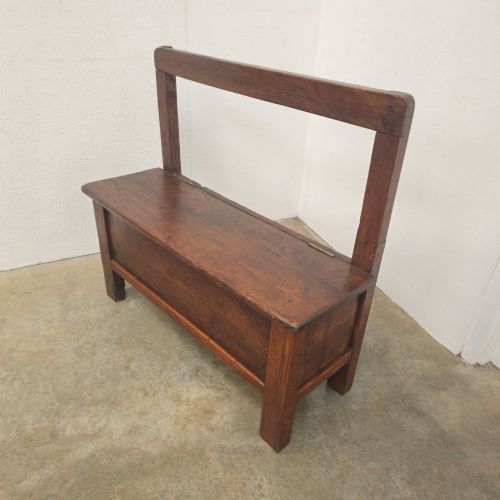
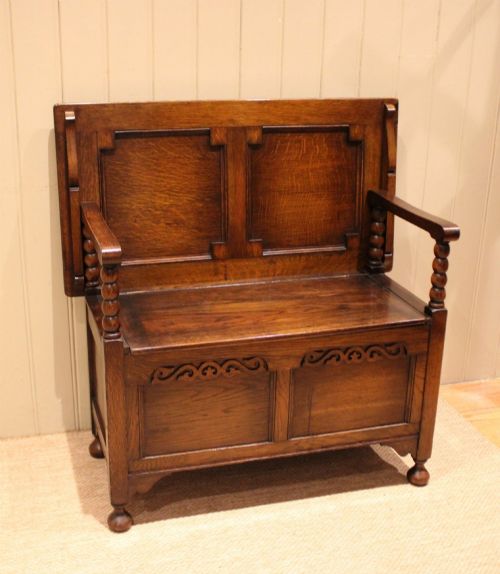
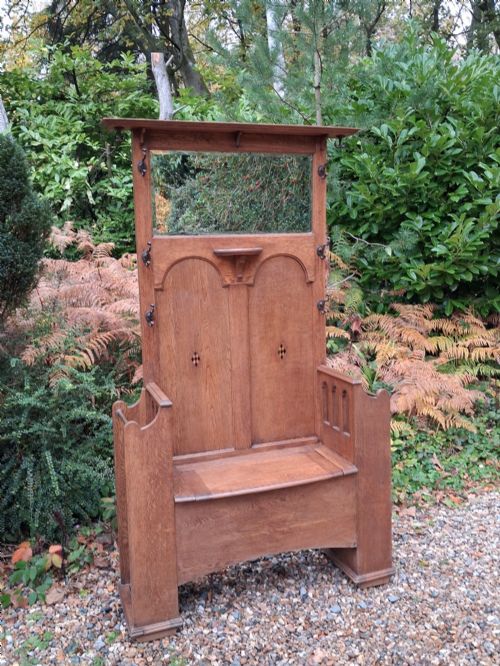
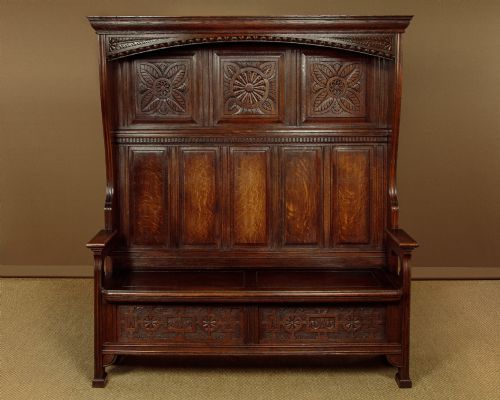
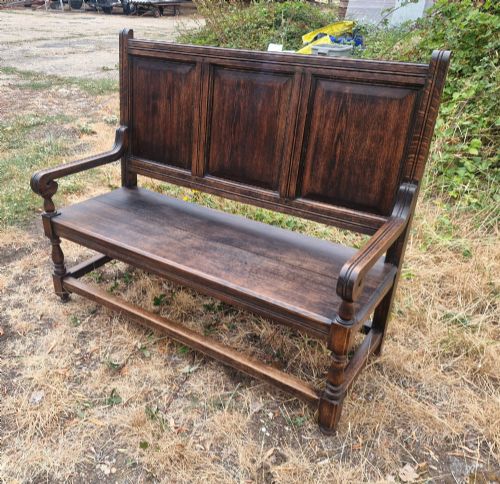
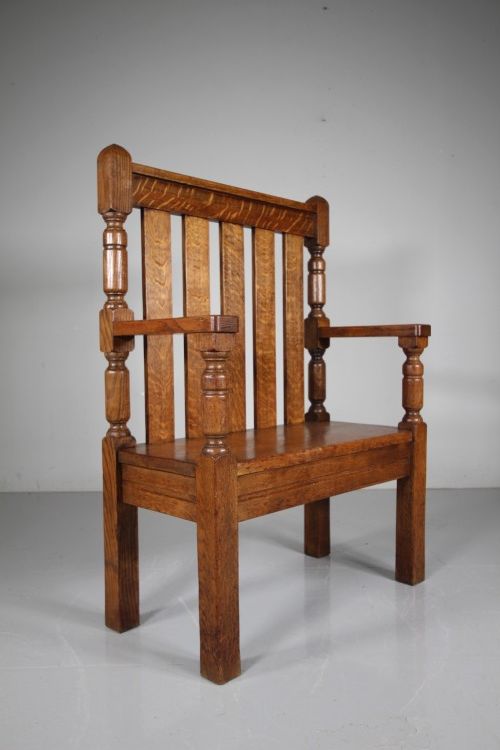
A vintage oak monks seat takes several forms, appearing as traditional monks benches, hall benches, settles, and hall stands. These versatile items function as seating with lift-up storage or convert into table surfaces through a fold-over top mechanism.
The selection on this page spans the 18th century through the 1930s, capturing periods such as the Edwardian era, Victorian Gothic Revival, Arts and Crafts, and Jacobean Revival. Pieces range from small hall seats to large carved settles and armchair variants.
Solid oak and dark oak dominate the construction, often enhanced by canopy tops, panelled backs, and carved details. Buyers most frequently encounter early 20th century examples alongside late 19th century interpretations of earlier styles.
How they were made
Makers utilised solid oak, selecting timber for its strength and prominent grain pattern, sometimes finished in dark tones. Construction relied on traditional joinery methods to support heavy use as both benches and tables.
Metal hardware such as brass and iron hinges, pivots, and latches enabled the fold-over top mechanisms and lift-up seat compartments. Fabric upholstery appears alongside carved wooden panels and occasional glass elements.
Vintage Oak Monks Seat Retail Price Guide 2026
Typical asking prices for vintage oak monks seat among the pieces listed under this phrase on Sellingantiques today, from the lower quarter to the upper quarter. They describe what is for sale here now, not the wider market.
Listings feature solid oak and dark oak variants spanning the 18th century, Victorian period, and Arts and Crafts movement.
What varies in quality
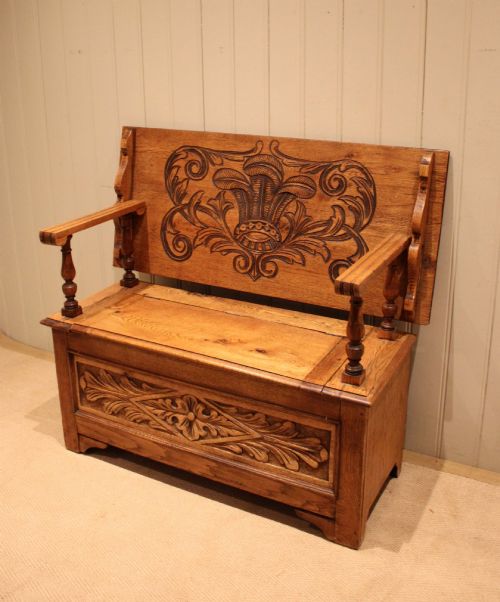
The depth and execution of carved ornamentation set finer examples apart from simpler utilitarian pieces. Crisp detailing on panels, canopy tops, and arms demonstrates superior craftsmanship.
The integration of the conversion mechanism dictates the overall success of the design. Smooth operation of the fold-over top and well-fitted storage compartments mark higher grade execution.
Liberty
The Vintage Oak Monks Seat Glossary
- Monks bench
- A dual-purpose wooden seat featuring a hinged back that folds down flat to form a table top. This historic form provides both seating and a surface for dining or reading.
- Settle
- A high-backed wooden bench with solid arms and a closed base designed to block drafts in hallways or parlours. These often incorporate panelled construction and lift-up storage beneath the seat.
- Canopy top
- An architectural overhang projecting above the back of a bench or hall seat. This feature echoes larger medieval furniture forms and frames the upper section of the piece.
Vintage Oak Monks Seat: Frequently Asked Questions
How does a monks bench convert into a table?
The upper back section of the seat pivots on hinges, swinging forward and resting over the armrests to create a flat table surface. This clever dual-purpose design allowed smaller homes to maximise living space.
Transforming the piece requires simply lifting and rotating the back panel until it rests securely in the horizontal position. The sturdy oak construction ensures the surface remains stable for daily use.
Where should I place a hall bench?
These pieces suit entrance halls, boot rooms, and wide corridors where guests arrive and outdoor items accumulate. Their substantial wooden backs protect walls while offering a convenient spot to sit.
Placement should account for the clearance needed if the top folds over or the seat compartment opens. Ensuring adequate floor space allows the dual-purpose mechanics to function without obstruction.
How do I distinguish Edwardian pieces from earlier work?
Edwardian examples tend to show lighter oak tones, cleaner lines, and simplified panel construction compared to heavily carved Victorian or revival pieces. Makers of this period often balanced traditional forms with domestic practicality.
Earlier 19th century items frequently display darker finishes and heavier Gothic or Jacobean Revival ornament. Examining the interior construction and timber seasoning helps confirm the manufacturing era.