

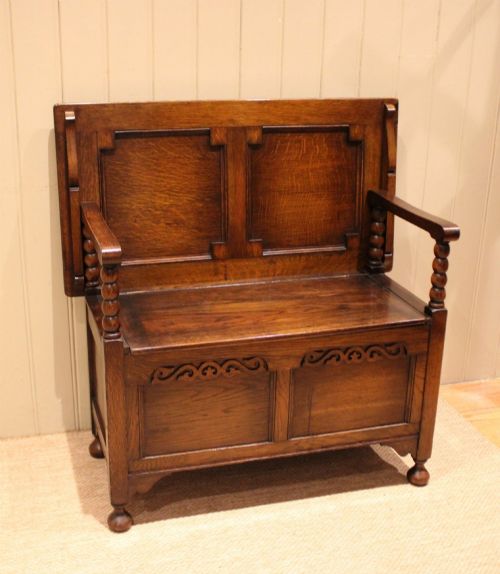




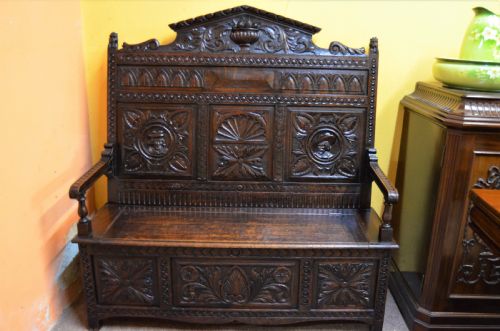


Convertible Oak Table Bench
A convertible oak table bench offers dual function as a seat and a surface, bringing centuries of clever domestic design into modern rooms.
Convertible Oak Table Bench
A convertible oak table bench functions as a seat and transforms into a table by folding or tilting the top over. The selection spans sturdy nineteenth century creations, early twentieth century revivals, and occasional seventeenth century examples.
Makers drew on various traditions including Jacobean revival, Victorian gothic, and art nouveau styles. The resulting forms range from simple panelled boxes with lift up seats to heavily carved armchairs with drawers.
Materials and construction methods
Carpenters relied on solid oak and heavy timber combined with iron or metal hardware for hinges and pivots. These robust materials allowed the top to convert smoothly between a vertical backrest and a horizontal table surface.
Construction techniques involve traditional joinery such as panelling and pegged joints. Many surfaces feature hand carving or dark polish finishes that highlight the natural grain of the wood.
Convertible Oak Table Bench Retail Price Guide 2026
Typical asking prices for convertible oak table bench among the pieces listed under this phrase on Sellingantiques today, from the lower quarter to the upper quarter. They describe what is for sale here now, not the wider market.
Current listings feature oak and iron pieces spanning from the seventeenth century through to the art deco period.
Quality factors in convertible seating
Superior examples display crisp hand carving, substantial timber thickness, and original iron mechanisms that operate without binding. Finer pieces maintain balanced proportions whether used as a bench or a table.
Simpler production from later decades often employs lighter construction and machine finishing. The depth of the carving and the integration of storage drawers distinguish better workshops from mass output.
The Convertible Oak Table Bench Glossary
- Monks bench
- A dual purpose seat with a hinged back that folds down to form a table top. This form maximised living space in traditional dwellings.
- Chair table
- An early form of seating featuring a solid wooden seat and a pivoting backrest. It functions as an armchair when upright and a table when tilted.
- Jacobean revival
- A nineteenth and twentieth century style imitating seventeenth century English furniture. It utilises dark oak, geometric moulding, and strapwork carving.
- Settle
- A wooden bench with a high back, solid arms, and enclosed storage beneath the seat. It shielded occupants from drafts in older homes.
- Hall seat
- A compact piece of furniture placed in an entranceway for putting on shoes or storing small items. These often incorporate lift up lids.
Convertible Oak Table Bench: Frequently Asked Questions
How does the table top convert?
The upper back section pivots on wooden pins or metal hinges, tilting forward over the armrests to rest horizontally.
This action transforms the backrest into a flat table surface while keeping the base stable as a seat.
Where were these pieces used?
Historical examples served primarily in hallways, cottage living spaces, and parlours where space remained at a premium.
Their dual function allowed households to dine and sit without needing separate furniture items.
How do I date an oak bench?
Dating relies on examining the joinery, the style of carving, and the type of metalwork used in the hinges. Seventeenth century pieces show hand pegged joinery, while revival pieces from the nineteenth and twentieth centuries display machine cut elements.
Are these benches comfortable?
Most antique pieces feature upright wooden backs and solid seats intended for brief seating rather than lounging. Adding a textile cushion is common for everyday use.