


Vintage Oak Linen Chest
These vintage oak linen chest pieces are robust storage items built to hold household textiles, offering heavy timber construction and practical compartments.
Vintage Oak Linen Chest
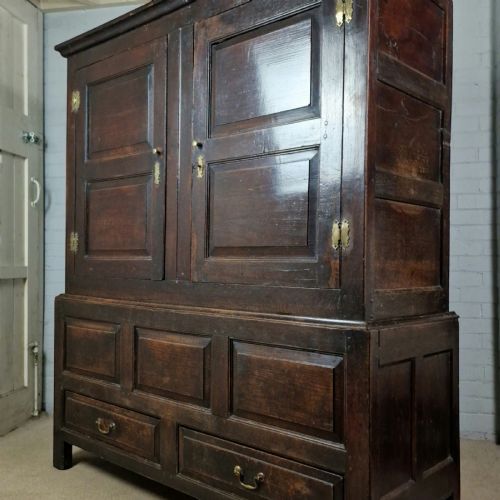
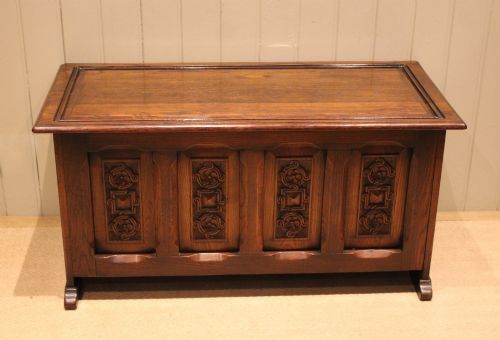
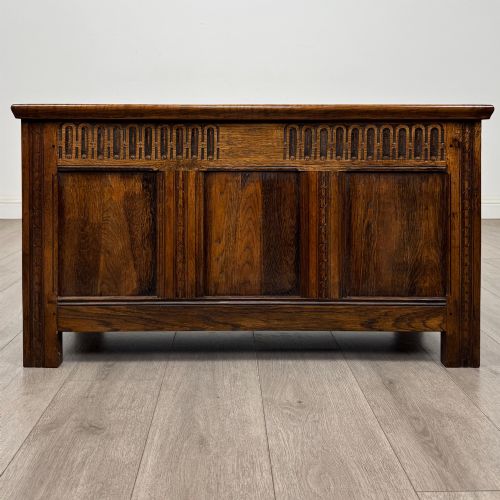
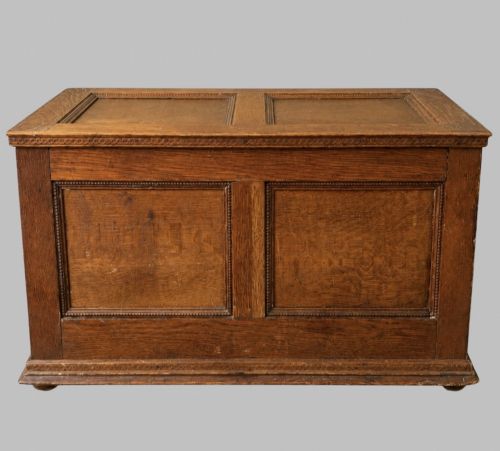
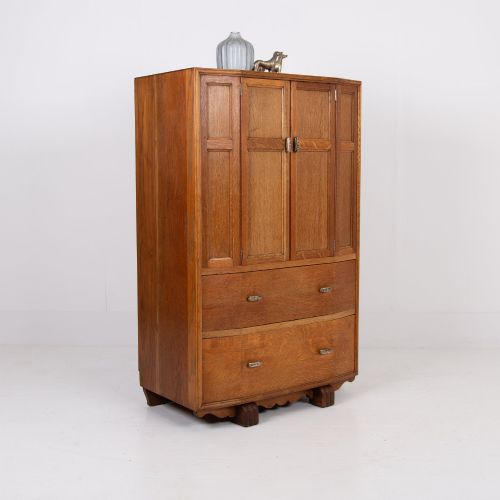
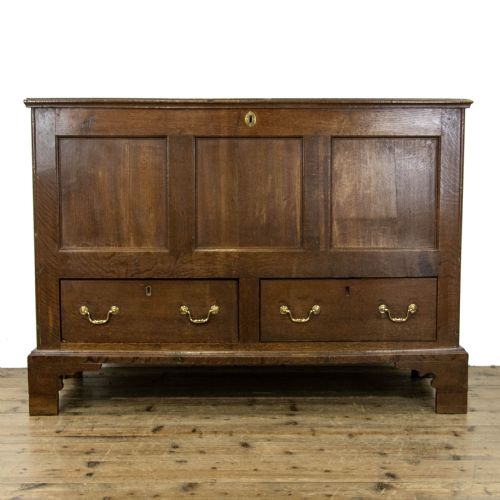
When you search for a vintage oak linen chest, you are looking at substantial storage furniture designed to preserve household fabrics and garments. The items on this page range from simple blanket boxes and coffers to tall press cupboards, mule chests, and two-stage cabinets.
The versions you are most likely to meet here span the eighteenth, nineteenth, and early twentieth centuries. These encompass Georgian designs, Edwardian examples, and 1930s interpretations, often reflecting English country or revival styles.
Many of these pieces combine hanging space or shelving with lower drawers, functioning as both chest and wardrobe. Their forms vary from plain four-panel coffers to elaborate cross-banded press cupboards.
How they were made
Makers built these pieces primarily from solid English oak, frequently utilising panelled construction to accommodate the natural movement of the timber. Boards were joined using traditional framing methods that gave the carcasses exceptional rigidity.
Hardware such as hinges, handles, and escutcheons are typically forged from brass or iron, adding structural reinforcement as well as functional detail. Selected examples incorporate decorative elements like carved panels or cross-banded veneers.
Listings on this site include oak furniture spanning from the eighteenth century through to Art Deco and 1930s modernism.
What varies in quality
The primary distinction across these pieces lies in the selection of the timber and the depth of the cabinetmaker's joinery. Superior examples display carefully matched oak grain, tight panel fits, and well-executed secondary woods within the drawer linings.
Proportion and decorative restraint also separate the better items from standard utility pieces. Crisp carving, balanced hardware placement, and intact original structural members indicate a higher standard of manufacture.
Whytock and Reid of Edinburgh
The Vintage Oak Linen Chest Glossary
- Mule chest
- A storage chest featuring one or more drawers at the base beneath a hinged lid compartment. This form bridges the gap between the traditional coffer and the modern chest of drawers.
- Press cupboard
- A tall piece of furniture designed for storing folded linen and garments, usually featuring doors that enclose interior shelves or sliding trays. Early versions often incorporate upper and lower sections.
- Coffer
- A heavy wooden box with a lid, used originally for storing valuables, documents, or textiles. These items typically feature panelled construction and sturdy feet or stile supports.
- Cross-banding
- A decorative border technique where veneer strips are applied across the grain of the surrounding wood. This creates a contrasting frame around drawer fronts or cupboard doors.
- Livery cupboard
- An antique storage cabinet historically used for keeping food or household provisions, later adapted for general domestic storage. These pieces frequently feature panelled doors and sturdy oak construction.
Vintage Oak Linen Chest: Frequently Asked Questions
What is a linen press?
A linen press is a tall cupboard specifically designed to store folded sheets, tablecloths, and garments. These pieces often feature interior sliding shelves or trays behind large cabinet doors.
Lower sections frequently incorporate drawers for additional storage, making them versatile furniture items for bedrooms and dressing rooms.
How do I care for oak furniture?
Oak benefits from a stable indoor environment away from direct heat sources and sudden humidity changes. Applying a natural wax polish occasionally helps nourish the timber and maintain its surface.
Avoid using silicone-based sprays, which can build up on the wood and attract dust over time.
What is the difference between a coffer and a mule chest?
A coffer is essentially a large box with a hinged lid for general storage. It consists only of the top compartment.
A mule chest adds one or more drawers beneath the main storage compartment, combining the functionality of a box and a chest of drawers.
How do I identify a Georgian oak piece?
Georgian oak items often display hand-cut dovetail joints on drawer construction and heavy brass hardware. The timber frequently shows a deep, aged patina developed over centuries.
Proportions tend to be robust and functional, reflecting traditional English country house cabinetry methods of the eighteenth century.