


Vintage Oak Hanging Cabinet
A vintage oak hanging cabinet keeps small treasures secure on the wall while bringing rich timber grain into a room.
Vintage Oak Hanging Cabinet
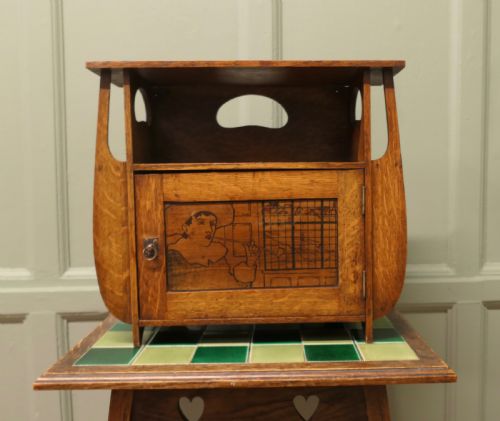
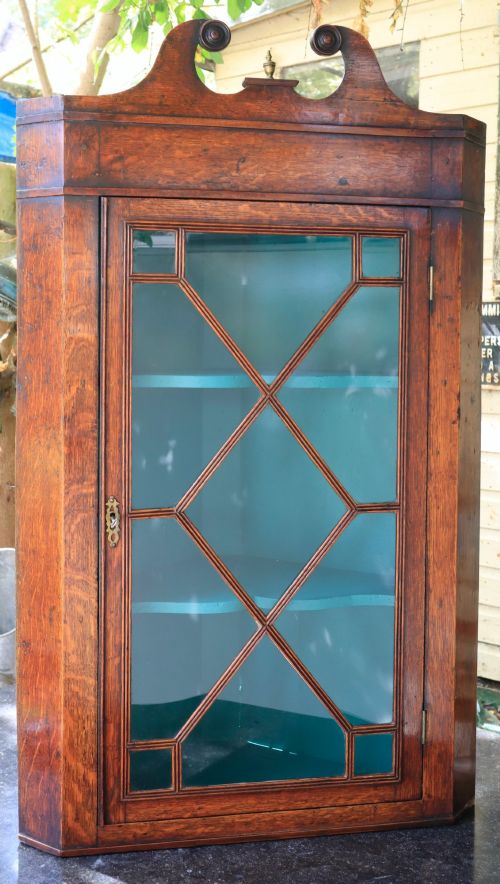
A vintage oak hanging cabinet takes the form of a wall-mounted cupboard designed to save floor space while storing domestic provisions or displaying valued items. These pieces emerge in various domestic contexts, spanning provincial workshops and formal urban parlours.
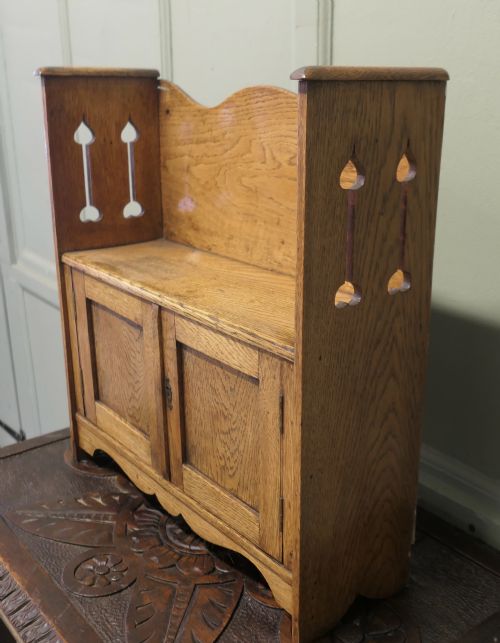
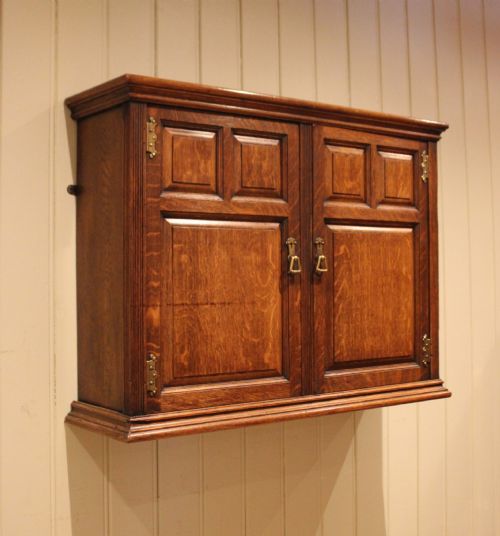
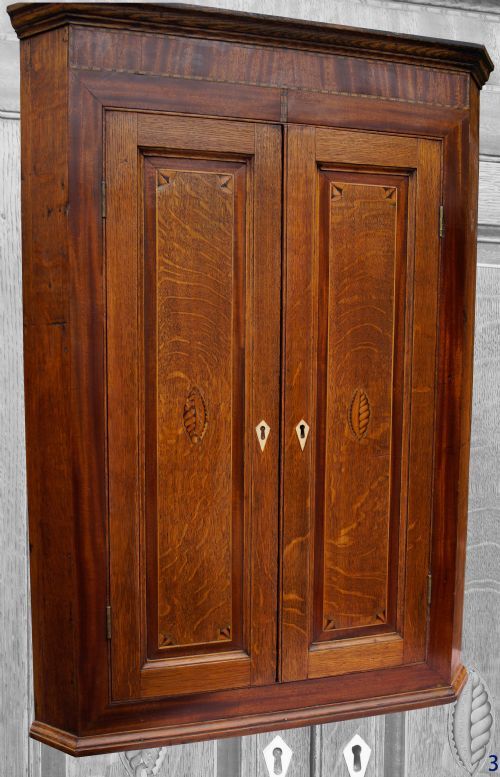
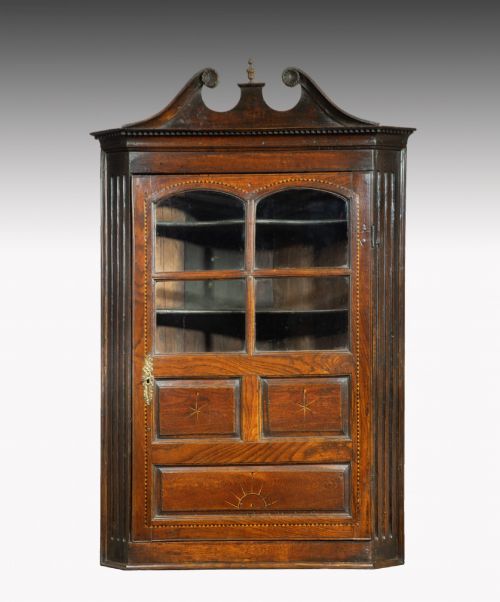
The selection here centres heavily on corner units and flat wall cupboards originating from the eighteenth, nineteenth, and early twentieth centuries. Buyers encounter Georgian hanging corner cupboards alongside Arts and Crafts wall cabinets and smaller utilitarian spice boxes.
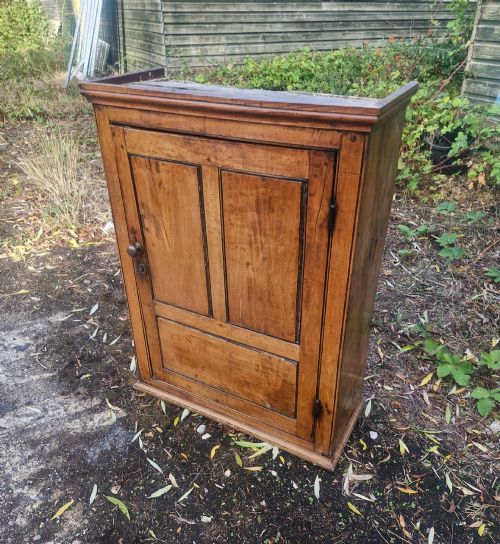
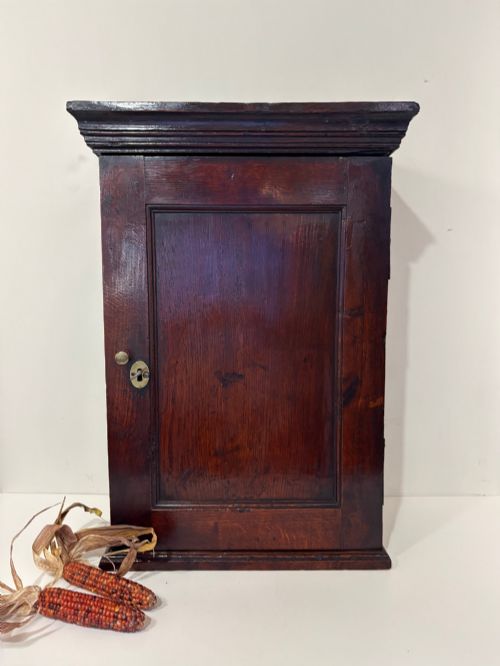
Construction relies primarily on sturdy timber frameworks, often featuring single panelled doors, brass hinges, and internal shelving tailored for domestic use. Many retain their original brass or iron hardware and mounting brackets for wall attachment.
How they were made
Cabinet makers built these wall units using solid oak boards for the main body, frequently incorporating secondary timbers such as pine for internal shelves and back panels. Panels were often raised or fielded to allow the wood to move naturally with changes in atmospheric humidity without splitting.
Joinery involved traditional mortise and tenon frames alongside dovetailed joints for drawers and small compartments, secured with hand-forged iron or brass fixings. Certain pieces include applied wood inlay, glazed viewing doors, or hand-carved decorative motifs reflecting prevailing regional styles.
Listings feature oak combined with pine, brass, glass, and iron across Georgian, Victorian, and Edwardian periods.
What varies in quality
The standard of a vintage oak hanging cabinet rests upon the selection of timber quarter-sawn grain, the integrity of the original joints, and the crispness of any carved detailing. Pieces retaining their untouched surface patina and original brass hardware command greater appreciation among collectors.
Provincial utilitarian boxes and simpler spice cabinets demonstrate straightforward construction, whereas formal Georgian and Arts and Crafts examples display more sophisticated proportion, finer mouldings, and deliberate stylistic ambition in their door panels.
The Vintage Oak Hanging Cabinet Glossary
- Corner cupboard
- A specialised cabinet built with a triangular footprint designed to fit neatly into the right-angle intersection of two room walls.
- Raised panel
- A central wooden board whose edges are bevelled to fit thinner into a surrounding groove, adding depth and structural stability to a cabinet door.
- Bowfront
- A convex, outwardly curved cabinet front that softens room angles and demands precise curved joinery from the maker.
- Hanging box
- A small, shallow wall-mounted container historically used for spices, keys, or kitchen implements rather than heavy storage.
- Glazed display
- A cabinet door fitted with glass panes to exhibit ceramics or glassware while protecting the contents from dust.
Vintage Oak Hanging Cabinet: Frequently Asked Questions
How do I hang a heavy oak cabinet safely?
Wall-mounted oak cupboards require secure anchoring directly into brickwork or sturdy wall studs using appropriate steel brackets, as the combination of solid timber and stored contents creates substantial weight.
Most period cabinets feature internal fixing points or original hanging lugs designed for this purpose, though modern hidden fixings can provide additional security without altering the exterior appearance.
What rooms suit a hanging corner cupboard?
These compact units excel in kitchens, hallways, and dining spaces where floor space is limited but vertical wall areas remain underutilised. Their triangular shape turns unused corners into functional display points for everyday items or decorative ceramics.
Bedrooms and bathrooms also accommodate smaller key cabinets and mirrored shaving shelves from the Edwardian era.
How do I tell an 18th-century cupboard from a later revival piece?
Eighteenth-century examples typically display hand-sawn timber marks, pegged mortise and tenon joints, and forged iron hardware that reveals slight irregularities from manual production. Timbers show deep natural patination and shrinkage patterns acquired over centuries of domestic use.
Revival pieces from the Victorian or Edwardian periods often utilise more uniform machine-sawn components, standardised brass screws, and cleaner internal surfaces.
How should I clean and maintain vintage oak?
Maintain the timber surface by dusting regularly with a soft, dry cloth and applying a traditional beeswax polish sparingly once or twice a year to nourish the dry wood. Avoid modern silicone sprays and keep cabinets away from direct heat sources and damp walls to prevent timber warping and finish degradation.