
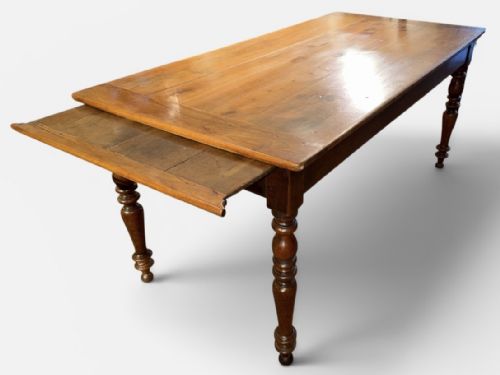


Vintage Oak Extendable Table
A vintage oak extendable table offers sturdy utility and rich grain, grounding a dining room with timeless character and adaptable surface area.
Vintage Oak Extendable Table
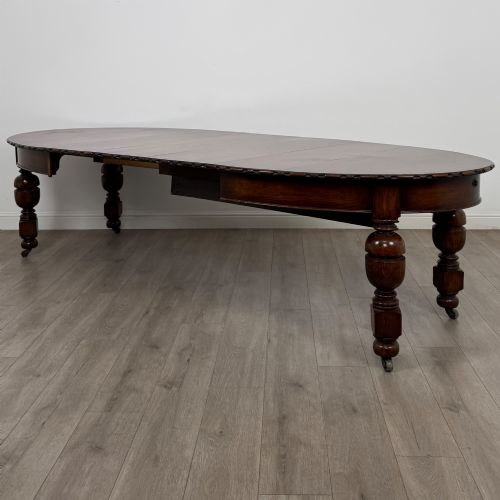
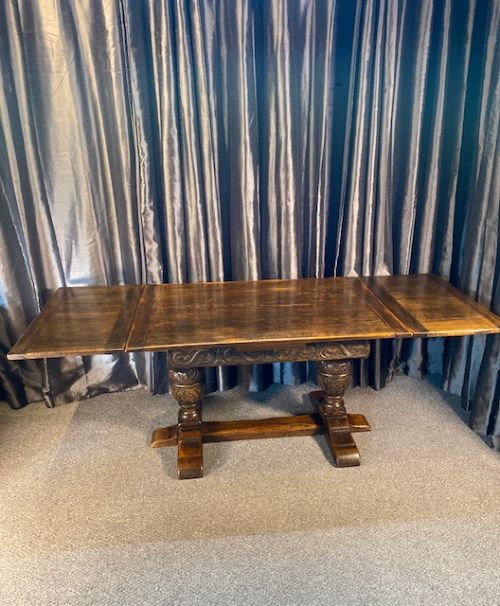
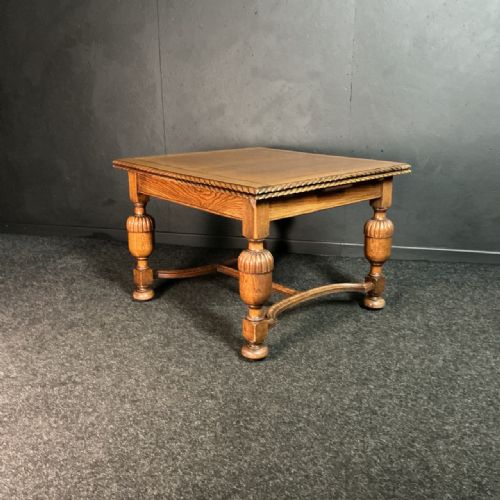
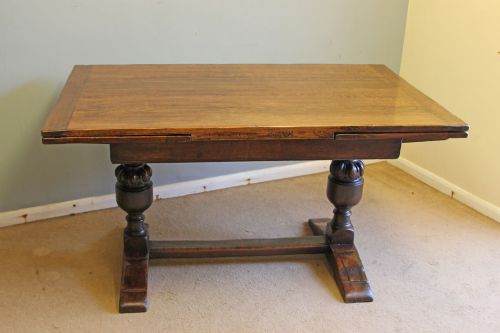
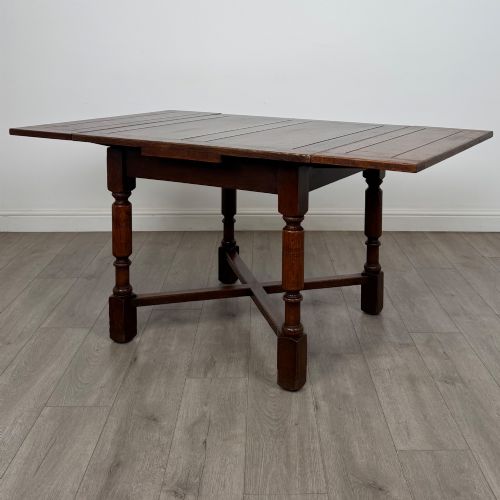
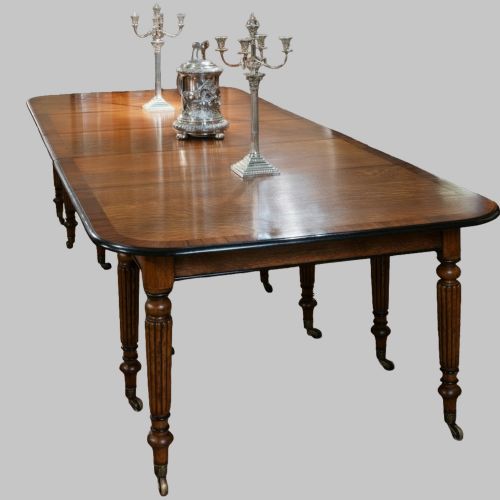
A vintage oak extendable table meets the demand for flexible dining space through traditional mechanisms like draw leaves, drop leaves, and gateleg frames. These pieces span from the late 17th century through the Edwardian era up to the 1960s, encompassing styles such as Jacobean Revival, Arts and Crafts, and English Country House.
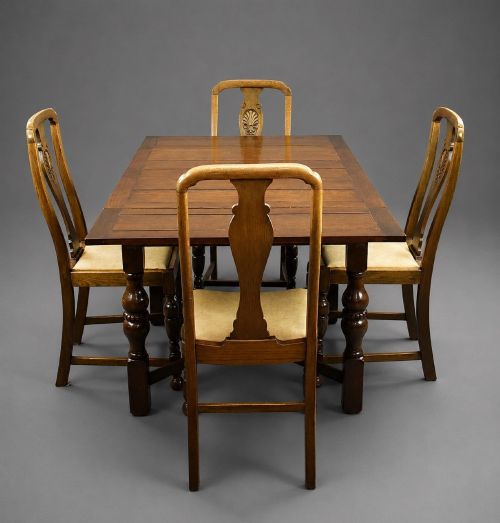
Shoppers will most frequently encounter early twentieth century and Edwardian examples rendered in solid oak. These commonly take the form of draw-leaf dining tables or gateleg configurations, often accompanied by matching chairs or featuring barley twist legs.
Materials and construction
Construction relies heavily on solid oak timbers, occasionally paired with brass hardware, fruitwood accents, or parquetry surfaces. Joinery techniques support the movement required in extendable designs, particularly the sliding leaves of draw-leaf mechanisms and the hinged flaps of drop-leaf and gateleg tables.
Surface finishes highlight the natural grain of the wood, sometimes shaped through revival styles that emulate earlier centuries or functional arts and crafts philosophies.
The listings show oak extendable tables spanning the 1700s, 19th Century, Edwardian period, and mid-century 1960s, utilising brass, fruitwood, and parquetry.
Craftsmanship and proportion
Quality separates through the integrity of the extending mechanism and the selection of timber. Superior pieces exhibit smooth operation in their draw leaves and sturdy stability in gateleg actions, ensuring the table remains level when fully extended.
Detailing also dictates distinction, where finely turned legs, such as barley twists, or thoughtful parquetry patterns elevate the piece beyond plain utilitarian forms.
Maple and Co
The Vintage Oak Extendable Table Glossary
- Draw leaf
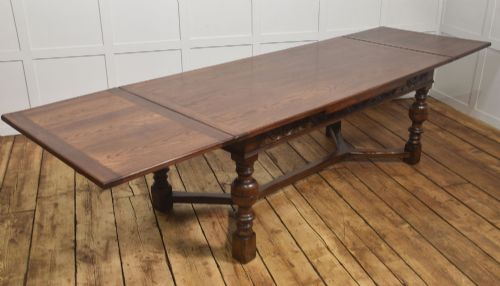
- A table equipped with sliding leaves stored beneath the main top that pull out to extend the surface length.
- Gateleg table
- A table with hinged leaves supported by legs that swing out like a gate to hold the flaps in place.
- Barley twist
- A decorative turning on furniture legs resembling a twisted rope, common in early twentieth century oak pieces.
- Parquetry
- A geometric mosaic of wood pieces used for decorative effect on tabletops.
- Refectory table
- A long, narrow dining table traditionally used in communal dining halls and adapted for domestic spaces.
Vintage Oak Extendable Table: Frequently Asked Questions
How do draw leaf tables work?
Draw leaf tables feature two hidden leaves stored directly beneath the main tabletop. When guests arrive, these leaves simply pull outward from each end while the centre section drops slightly into place.
This mechanism allows the table to expand quickly without requiring loose boards to be stored separately elsewhere in the home.
Where should I place a gateleg table?
Gateleg tables function well in smaller spaces because their drop leaves fold down completely against the sides. You can tuck one against a wall with both flaps lowered when daily dining space is not required.
Pulling the table into the centre of the room and raising both leaves prepares the furniture to seat multiple guests comfortably.
How do I identify Edwardian oak furniture?
Edwardian oak pieces often draw inspiration from earlier periods like the Jacobean revival, showing turned supports and substantial framing. The timber generally displays a warm, medium brown tone with visible medullary rays characteristic of quarter-sawn oak.
Makers of this era balanced historical styling with practical family use, producing sturdy tables suited to everyday dining.
What maintenance does solid oak require?
Solid oak surfaces respond best to regular dusting with a soft cloth and occasional treatment with suitable beeswax or furniture polish. Avoiding excessive moisture and direct heat sources protects the timber and finish from drying or warping over time.
Good maintenance preserves the natural grain and colour depth of the wood through decades of daily use.