
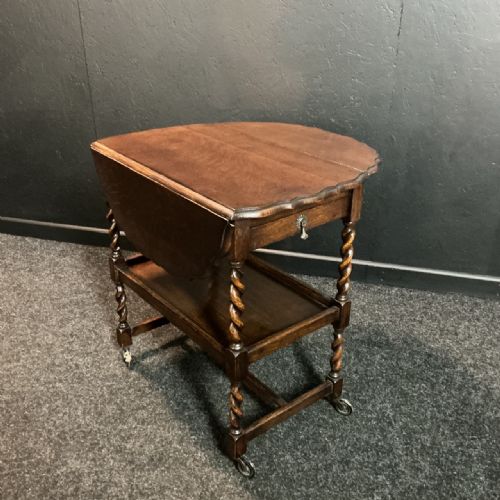


Vintage Oak Drink Table
These vintage oak drink table pieces are sturdy serving furniture built to hold glasses and bottles securely within reach.
Vintage Oak Drink Table
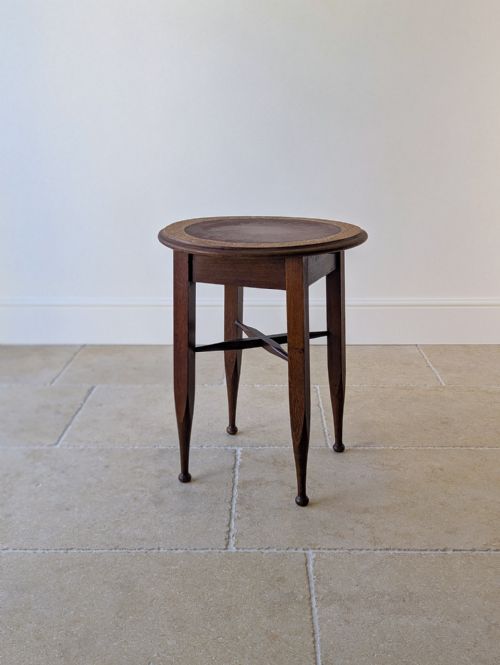
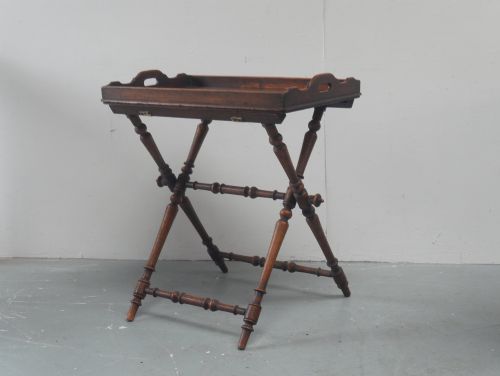
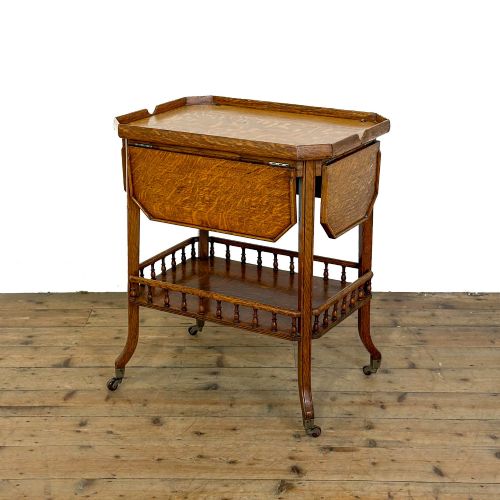
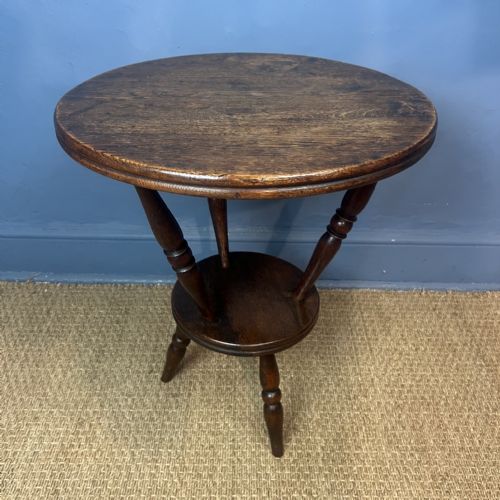
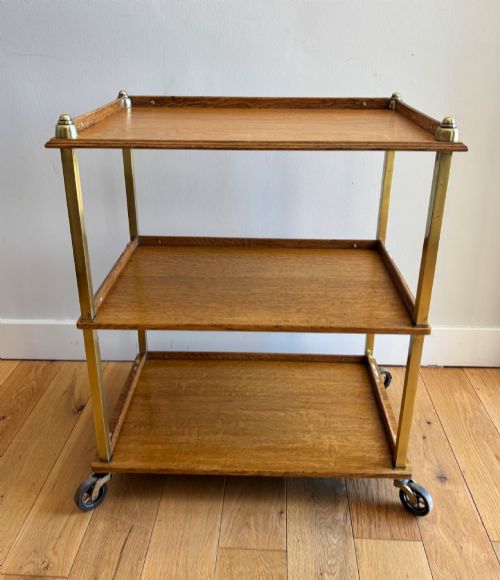
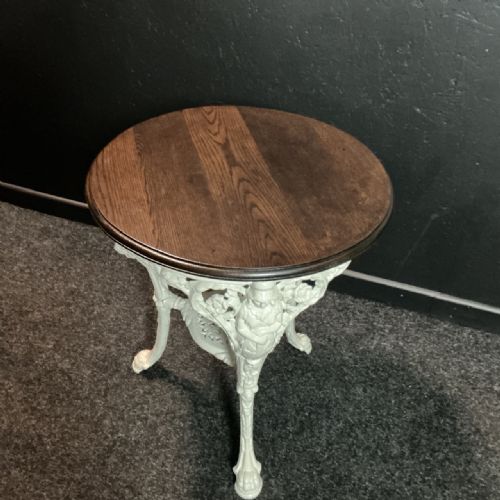
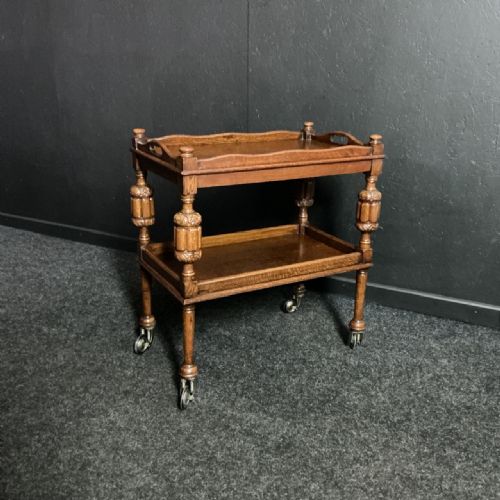
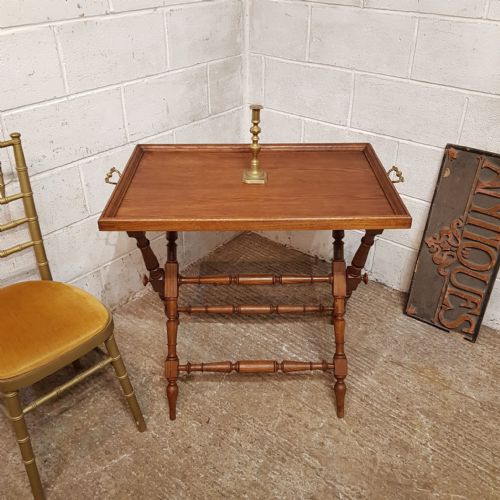
A vintage oak drink table typically takes the form of a portable butler tray on a folding stand, a tea trolley on wheels, or a compact occasional table. These pieces emerge across the Victorian and Edwardian periods up through the 1920s and 1930s, reflecting changing domestic habits around hospitality and informal entertaining. The selection includes multi-tiered trolley designs, circular cricket tables, and specialised serving trays with dedicated stands.
Buyers most frequently encounter Edwardian and 1920s oak examples, often featuring folding mechanisms, drop leaves, or lift-off trays designed for practical utility. The forms range from simple rustic country pieces to more finished Jacobean Revival and Arts and Crafts designs. Oak serves as the primary structural timber across these functional serving items.
Distinguishing quality in oak drink furniture
Quality rests upon the selection of timber grain, the tightness of joints, and the integrity of moving parts like folding X-frames or wheel attachments. Finer examples display thoughtful proportions, solid brass hardware, and careful hand-carved ornamentation rather than hasty mass production.
The degree of preservation in the original timber finish and the smooth operation of lift-off trays or drop leaves separate utilitarian workshop pieces from finer domestic furnishings.
One remarkably specific container hides inside an Edwardian bottle storage barrel, bound in brass like a miniature seafaring cask ready for clandestine spirits.
The Vintage Oak Drink Table Glossary
- Butler Tray
- A shallow wooden serving tray, sometimes with hinged sides, designed to rest upon a separate folding stand. This form allows the tray to be lifted off and carried independently.
- Tea Trolley
- A small movable table on wheels, featuring two or three tiers for transporting tea services, decanters, and glassware between rooms. Many include drop leaves to expand the surface area.
- Cricket Table
- A small, lightweight circular table with three splayed legs, traditionally offering stability on uneven farmhouse floors. These often appear in compact oak versions suitable for drinks or occasional use.
- Etagere
- A set of open shelves or tiers used for displaying or serving items. In drink furniture, this structure provides accessible storage across multiple horizontal levels.
- Barley Twist
- A decorative turning technique resembling a spiral rope, frequently utilised on the vertical support legs of Edwardian and 1920s tea trolleys and tables.
Vintage Oak Drink Table: Frequently Asked Questions
What is a butler tray stand?
A butler tray stand is a collapsible wooden frame designed to support a removable serving tray at a comfortable height for pouring drinks. The folding X-frame construction allows the entire base to be stored flat when not in use.
These stands were paired with shallow wooden trays fitted with cutout handles for easy lifting. Together they functioned as portable side tables during Victorian and Edwardian gatherings.
How do I date an oak trolley?
Dating an oak trolley involves examining the hardware, wheel types, and stylistic influences such as Arts and Crafts simplicity or 1920s Art Deco lines. Earlier Victorian examples tend to feature heavier turned legs and fixed joinery.
By the Edwardian era and the 1920s, mechanical improvements introduced folding top mechanisms, rubber-tired wheels, and lift-off tray designs. The presence of specific revival styles also helps narrow down the decade of production.
Were these tables used for tea or alcohol?
Serving furniture accommodated both afternoon tea services and evening alcoholic drinks depending on the household habits of the period. Trolleys with multiple tiers held teapots, cups, and saucers during the day.
By evening, the same surfaces transported decanters, glasses, and bottles. Sturdy oak construction and brass gallery rails ensured bottles remained secure during transport.
How should I care for vintage oak?
Vintage oak benefits from minimal intervention, requiring only occasional dusting with a soft cloth and treatment with appropriate furniture wax to nourish the wood. Keeping pieces away from direct heat sources prevents the timber from drying and splitting.
Because these are functional serving surfaces, using coasters helps protect the historic finish from moisture rings. Preserving the original patina maintains the character of the piece.