



Vintage Oak Desk Organiser
These vintage oak desk organisers are practical desktop containers made to keep correspondence and writing equipment orderly, ideal for bringing traditional utility to a modern study.
Vintage Oak Desk Organiser
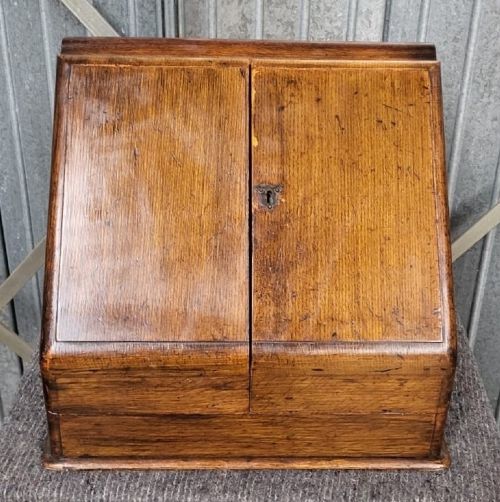
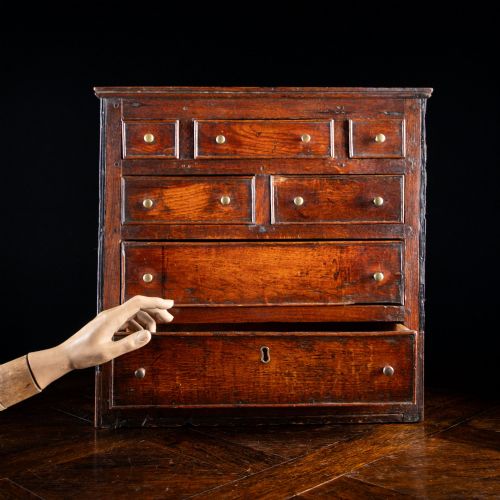
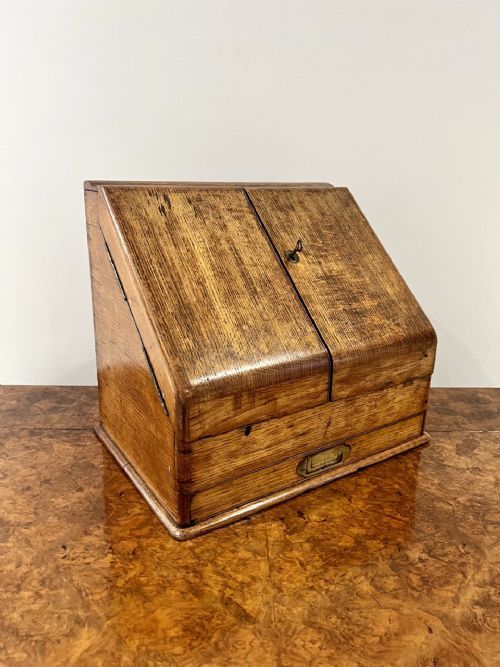
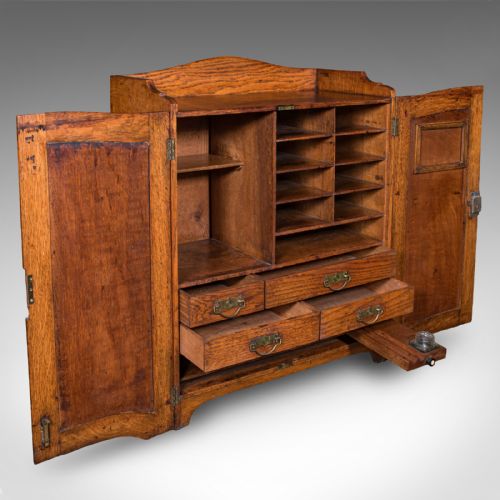
A vintage oak desk organiser is a functional desktop accessory designed to hold stationery, letters, books, and writing implements. The selection ranges from stationery boxes and letter racks to inkstands, revolving bookcases, and clerks' cupboards.
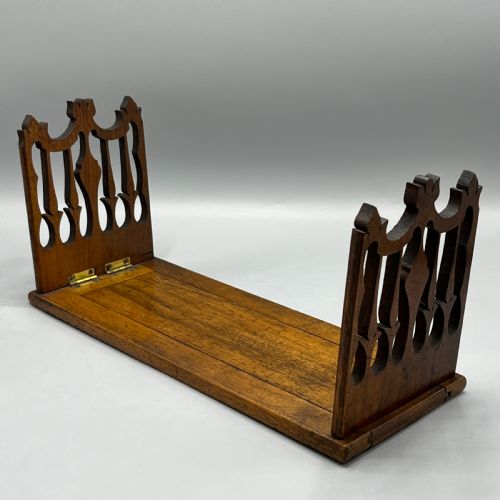
Most pieces seen here belong to the Victorian and Edwardian eras, alongside examples from the Georgian period and the year 1920. Forms span simple drop-front cabinets, fall-front tidies, and extending book slides.
These accessories originate from domestic and professional settings, including country houses and clerk's offices. They serve to sort paper and pens while adding period character to a desk surface.
What varies in quality
Quality in these pieces is dictated by the refinement of the joinery and the selection of the timber grain. Finer examples display thoughtful proportion, harmonious brass hardware, and careful detailing such as secret drawers or fully working mechanisms.
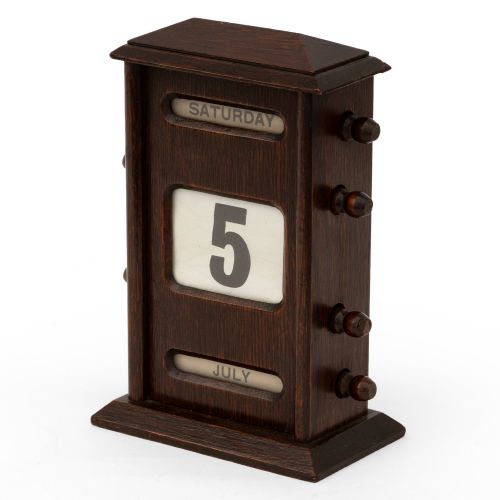
The sophistication of the internal arrangement separates standard utility items from superior desk furniture. Pieces featuring complex pigeonholes, fall-front actions, or integrated perpetual calendars represent more ambitious craftsmanship.
Vintage Oak Desk Organiser Retail Price Guide 2026
Typical asking prices for vintage oak desk organiser among the pieces listed under this phrase on Sellingantiques today, from the lower quarter to the upper quarter. They describe what is for sale here now, not the wider market.
The selection includes oak pieces spanning from the Georgian period through the Victorian and Edwardian eras up to 1920.
The Vintage Oak Desk Organiser Glossary
- Stationery box
- A desktop container designed specifically for holding writing paper and envelopes, often featuring a sloping or fall-front lid. These boxes keep correspondence protected from dust.
- Inkstand
- A tray or stand holding one or more inkwells, frequently accompanied by a pen groove and a small compartment for stamps or wafers. They form the central writing accessory of a nineteenth-century desk.
- Fall-front
- A hinged front panel that drops down to reveal internal compartments, pigeonholes, and drawers. This mechanism provides quick access to writing materials while concealing them when closed.
- Book slide
- An adjustable rack designed to hold a small selection of books upright on a desk or table, often extending to accommodate more volumes. They keep reference books close at hand.
- Revolving bookcase
- A small desktop or table bookcase mounted on a pivot mechanism allowing it to spin freely. This enables easy selection of books from any angle.
Vintage Oak Desk Organiser: Frequently Asked Questions
What is a stationery box?
A stationery box is a lidded wooden container built to store writing paper, envelopes, and small correspondence items neatly on a desk. They often feature compartments and sloped lids designed for easy access.
In period offices and homes, these boxes kept loose paper clean and organised. Today, they serve a similar function while offering traditional decorative appeal.
How do I use an inkstand?
An inkstand is placed on a desk to hold glass inkwells and writing implements in a dedicated tray. It provides a stable base for dipping pens.
While modern writing relies less on bottled ink, an inkstand makes a striking decorative centrepiece on a wooden desktop or shelf.
What is a clerk's cupboard?
A clerk's cupboard is a small, enclosed wooden cabinet designed for storing business papers and writing tools securely. These pieces often feature panelled doors and internal shelving.
They bring an authentic archival presence to a study and work well for storing modern notebooks and documents out of sight.
How do I date an oak desk accessory?
Dating these items involves observing the prevailing design style, such as Arts and Crafts, Art Nouveau, or Victorian Gothic Revival. Materials, construction techniques, and brass hardware styles also offer clear chronological clues.
Examining internal fittings and any incorporated mechanisms helps narrow down the period of manufacture between the Georgian era and the early twentieth century.