


Vintage Oak Collector Chest
A vintage oak collector chest brings orderly charm to a room, offering compact drawer storage suited for small treasures and papers.
Vintage Oak Collector Chest
A vintage oak collector chest comprises multi-drawer cabinets, tabletop spice chests, and miniature chests of drawers designed for organised storage. These small-scale pieces originate from periods spanning the eighteenth century through the interwar decades, taking forms intended for offices, studies, and specialised trades.
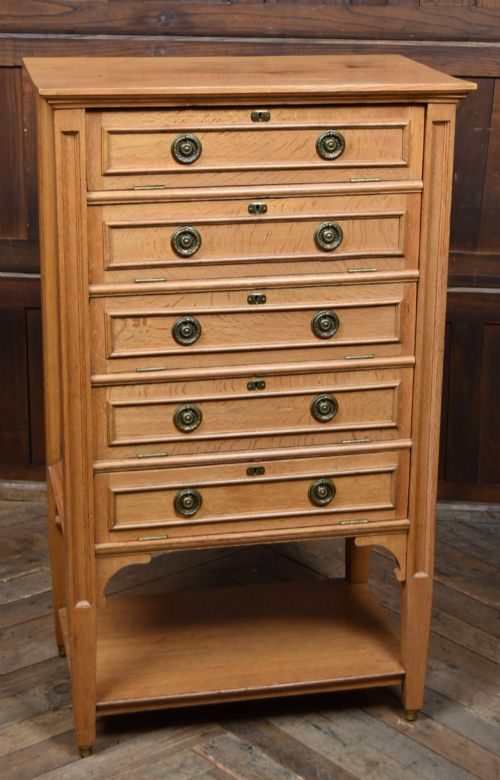
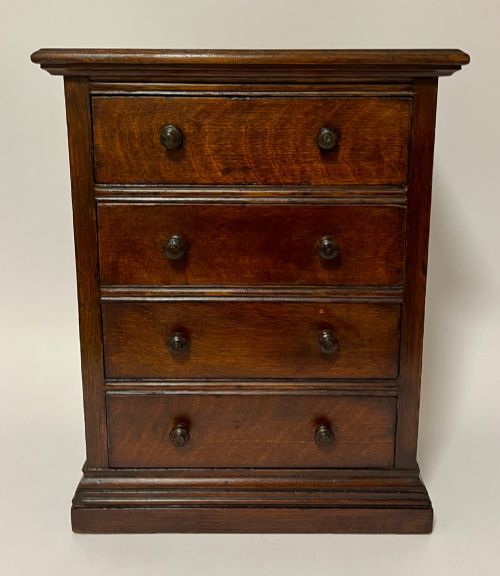
The selection here includes Edwardian filing cabinets, Victorian specimen cases, and 1930s watchmaker cabinets alongside rustic Georgian spice chests. Buyers encounter blonde oak Wellington chests and compact miniature chests measuring under fifty centimetres wide.
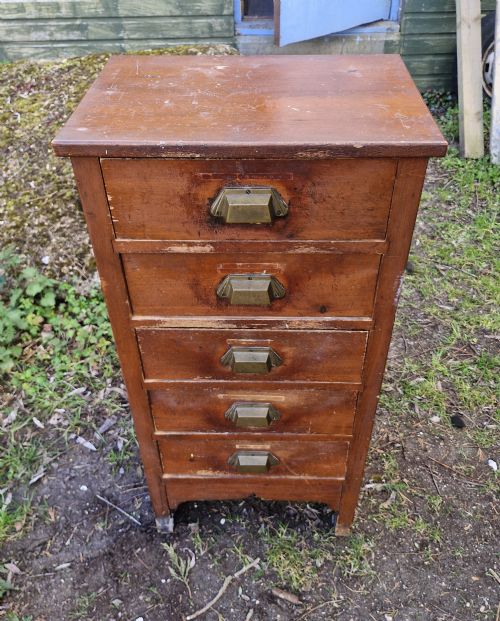
Most examples serve specific archival or commercial functions, such as ticket dispensing boxes, dentist cabinets, and banker chests. Their fitted drawers and secure locks reflect a practical utility that translates easily into modern domestic settings.
How they were made
Hardware includes brass handles, drop pulls, and key locks that secure banks of multiple small drawers. Glass panels appear on cabinet doors to display contents, supported by iron and metal fittings on industrial commercial pieces.
Listings span from the 18th century through Victorian, Edwardian, and 1930s interwar periods, utilising oak, brass, glass, and pine.
What varies in quality
Quality rests in the precision of the drawer construction and the selection of timber figures. Figured English oak and well-matched grain patterns distinguish superior pieces from standard utilitarian office furniture.
Original hardware, working keys, and intact glass doors elevate an example above later replacements. The complexity of the internal arrangement, from six drawers to sixty-six, dictates the ambition of the original design.
Manoah Rhodes & Sons Ltd·Maple & Co
The Vintage Oak Collector Chest Glossary
- Wellington chest
- A tall, slender chest of drawers secured by a locking side flap that bars the drawers from opening. This Victorian form provides compact vertical storage.
- Spice cabinet
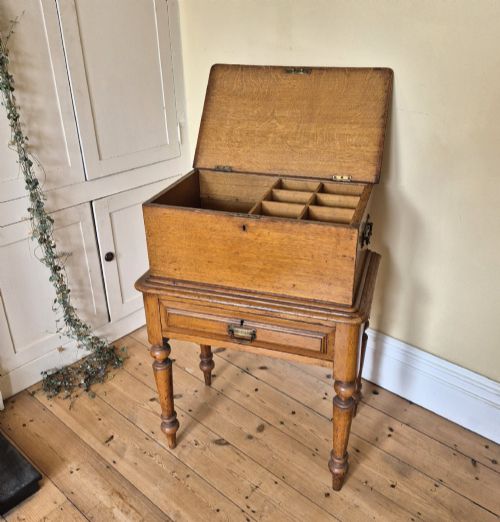
- A small wall-hanging or tabletop chest containing multiple tiny drawers for storing culinary herbs and spices. Georgian examples often display panelled doors and brass knobs.
- Specimen case
- A shallow-drawer cabinet designed for organising natural history collections, minerals, or small artefacts. These pieces feature tight-fitting dustproof drawers.
- Watchmaker cabinet
- A specialised workstation or multi-drawer chest built to house delicate horological tools and watch components. They date frequently to the early twentieth century.
- Tabletop chest
- A miniature chest of drawers proportioned to sit on a desk or table rather than stand on the floor. They replicate the details of full-sized case furniture in miniature.
Vintage Oak Collector Chest: Frequently Asked Questions
What were collector chests originally used for?
These cabinets served professionals and enthusiasts for organising small items like stamps, coins, botanical specimens, and watch parts.
Offices and railways also utilised them for filing tickets, documents, and correspondence securely.
How do I date an oak collector chest?
Dating relies on construction methods, hardware styles, and the specific proportions associated with periods like the Georgian era or the 1930s.
Railways, offices, and trade workshops also adopted distinct cabinet designs during specific decades.
Are these chests suitable for modern homes?
Their compact footprints make them ideal for tabletops, sideboards, or desks in living spaces and studies.
The multiple small drawers provide practical storage for jewellery, stationery, and modern knick-knacks.
What is the difference between a filing cabinet and a spice cabinet?
Filing cabinets from the Edwardian and interwar periods feature shallow drawers proportioned for paper documents and tickets.
Spice cabinets date earlier, typically to the eighteenth or nineteenth century, offering smaller compartments with rustic oak surfaces.