



Vintage Nest of Three
A vintage nest of three offers interlocking surfaces that slide away to save floor space, embodying practical ingenuity across Edwardian and Art Deco designs.
Vintage Nest of Three
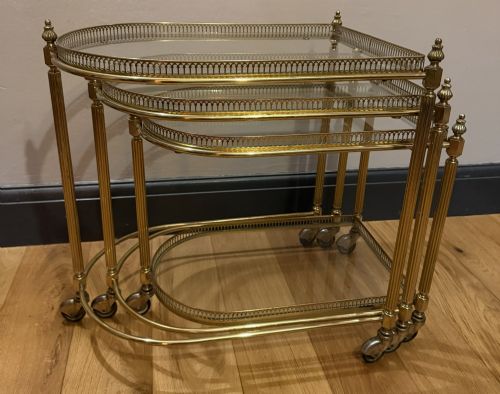
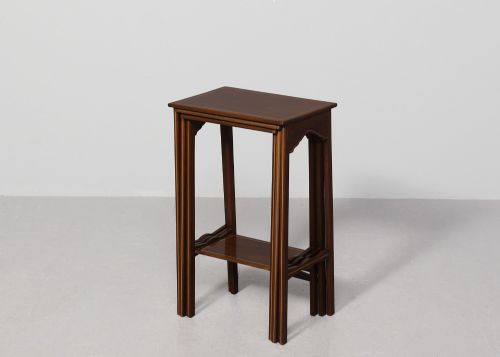
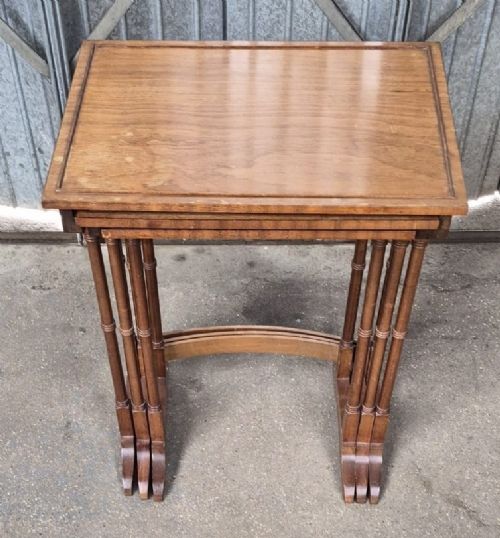
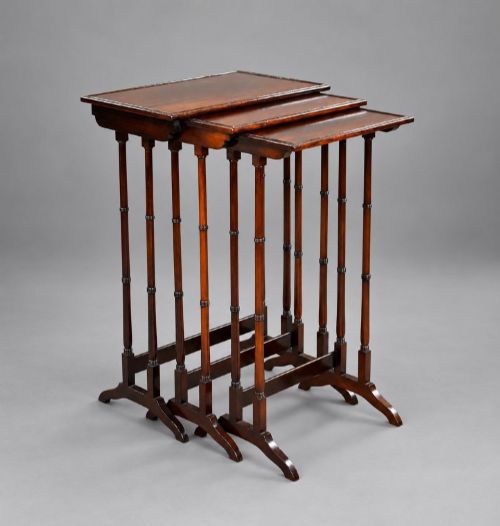
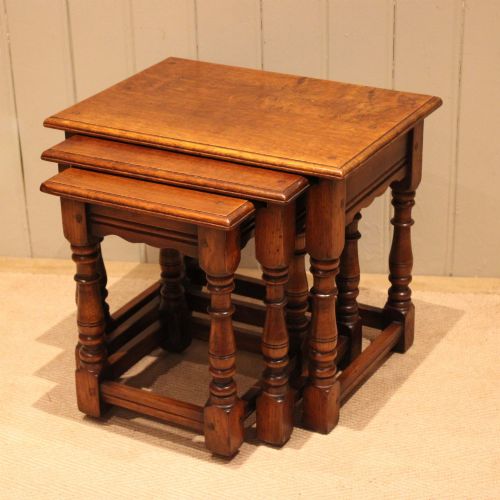
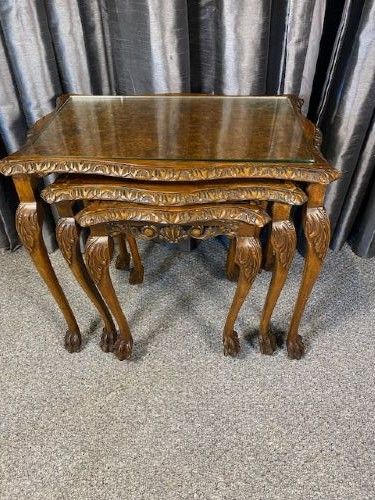
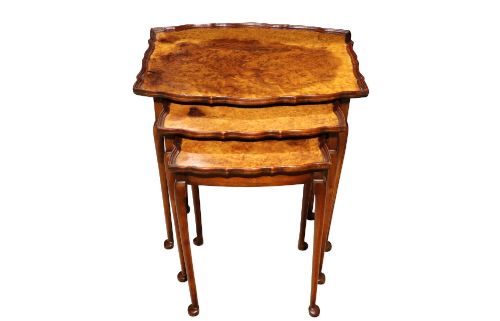
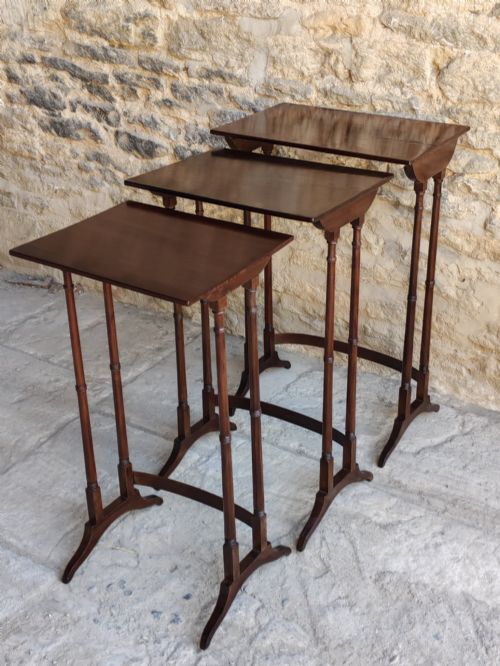
A vintage nest of three consists of graduating tables that slot neatly beneath one another when floor space is at a premium. The selection spans Edwardian, 1920s, and Art Deco periods, ranging from straightforward occasional pieces to elaborate inlaid forms.
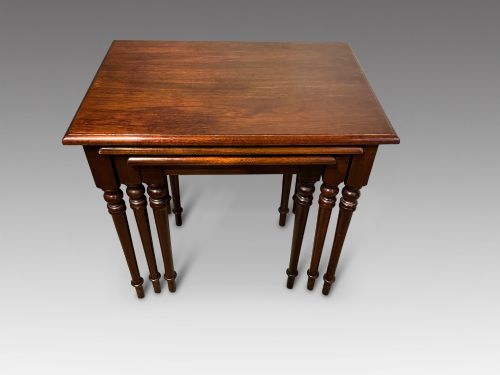
Edwardian mahogany examples dominate the selection, often featuring slender legs and rectangular or oval tops designed for drawing rooms. Alongside these, buyers find walnut, oak, and rosewood iterations that reflect changing domestic tastes through the early twentieth century.
The assortment also includes specialised variants such as Chinoiserie decorated surfaces, parquetry tops, and carved teak sets. Makers like Émile Gallé and Heal's appear among the pieces, bringing distinct stylistic signatures to the grouping.
How they were made
Cabinetmakers utilised solid hardwoods and fine veneers, with mahogany, oak, and walnut forming the structural core of most sets. Surfaces frequently display decorative elements such as boxwood stringing, marquetry, and parquetry patterns set into the timber.
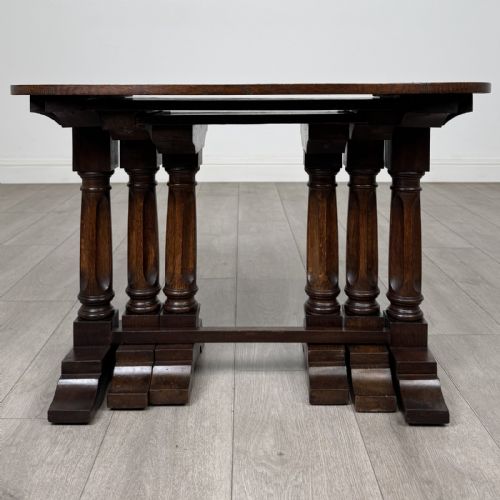
Construction techniques adapted to the compact nature of the form, requiring precise joinery to ensure the smaller tables slide smoothly into the largest frame. Turned barley twist supports, shaped aprons, and glass inserts appear across different periods and styles.
Vintage Nest of Three Retail Price Guide 2026
Typical asking prices for vintage nest of three among the pieces listed under this phrase on Sellingantiques today, from the lower quarter to the upper quarter. They describe what is for sale here now, not the wider market.
One notable Art Deco coffee table set arrives carved entirely with elephants.
What varies in quality
Quality rests upon the selection of timber and the precision of the veneer work visible across the tabletops. Higher-grade examples display carefully matched grain patterns, subtle inlay, and robust underframes that withstand frequent withdrawal.
Construction depth dictates overall merit, separating standard mass-produced occasional furniture from workshop-attributed pieces that employ superior carving and balanced proportions.
Émile Gallé·Heal's·Waring & Gillow
The Vintage Nest of Three Glossary
- Nest of Tables
- A set of graduating tables designed to fit one beneath another to save space. They serve multiple functions in sitting rooms and parlours.
- Parquetry
- A geometric mosaic of wood pieces used for decorative surfaces on tabletops. It creates intricate patterns utilising contrasting timbers.
- Chinoiserie
- European decorative art influenced by Chinese artistic traditions, often featuring painted lacquer and gilt motifs. This style appears on selected twentieth-century tables.
- Barley Twist
- A turned column resembling a spiral rope, common in oak furniture supports. It adds texture and vertical interest to table legs.
- Veneer
- A thin layer of fine wood applied to a base timber to provide a decorative exterior surface. Burr walnut and rosewood frequently employ this technique.
Vintage Nest of Three: Frequently Asked Questions
How do I date a nest of tables?
Dating relies upon timber selection, hardware, and stylistic markers such as Edwardian inlay or Art Deco geometry. Construction methods also provide clues to the manufacturing decade.
Comparing leg profiles and edge treatments helps separate turn-of-the-century craftsmanship from later twentieth-century production.
Where were these tables used originally?
These tables served primarily in drawing rooms and sitting rooms for holding tea, books, or decorative items. Their compact nature allowed servants or hosts to deploy them quickly when guests arrived.
When not needed, they returned to a single footprint against a wall or beside a sofa.
Are all sets made of solid wood?
Many examples combine solid frames with wood veneers on the primary surfaces to display decorative grain patterns like burr walnut or mahogany. Secondary timbers often include oak or softwood for internal framing.
Veneering was a standard technique to achieve visual richness without excessive weight.
How do I care for polished wood surfaces?
Maintenance involves dusting with a soft cloth and applying traditional wax polish periodically to nourish the timber. Direct sunlight and excessive heat should be avoided to prevent veneer lifting or fading.
Using coasters protects the polish from moisture rings.