



Vintage Nautical Silver
These vintage nautical silver pieces bring maritime history into a room through items designed for ocean liners, ships and coastal life.
Vintage Nautical Silver
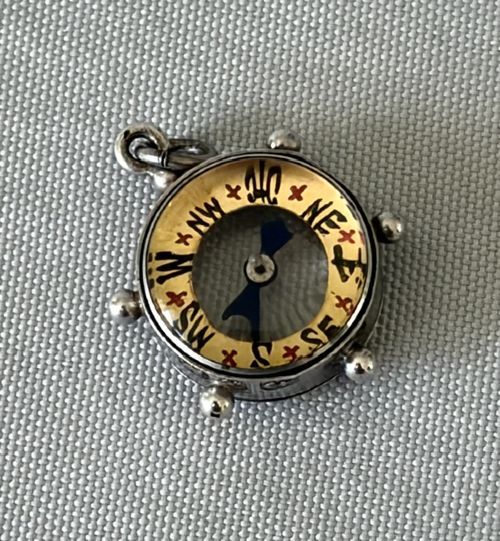
Vintage nautical silver covers objects connected to ships, sailing and maritime themes produced across the Victorian, Edwardian and twentieth-century periods. When searching for vintage nautical silver, buyers encounter items ranging from functional marine instruments and desk accessories to tablewares and decorative ornaments.
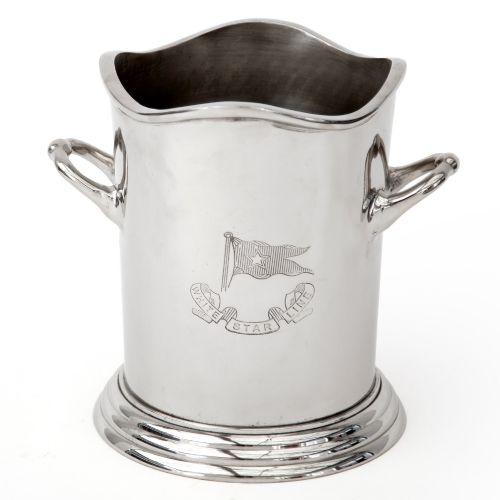
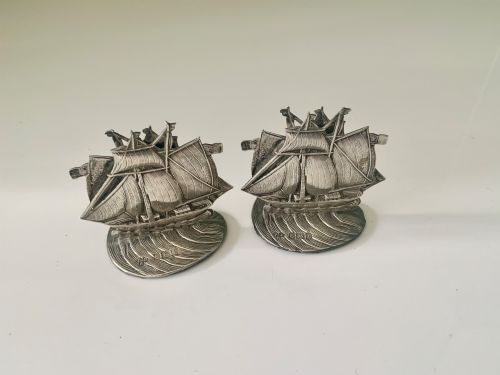
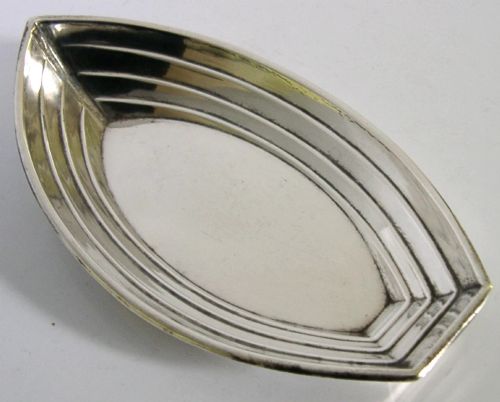
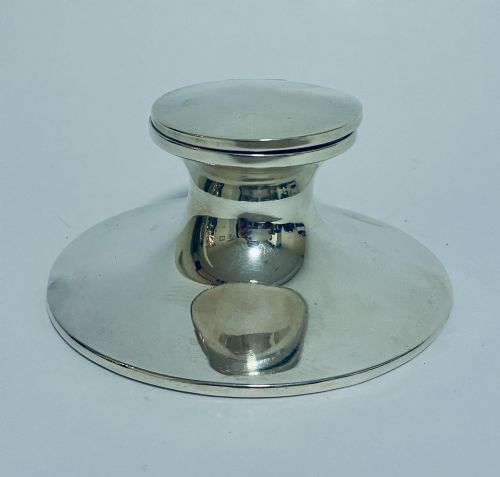
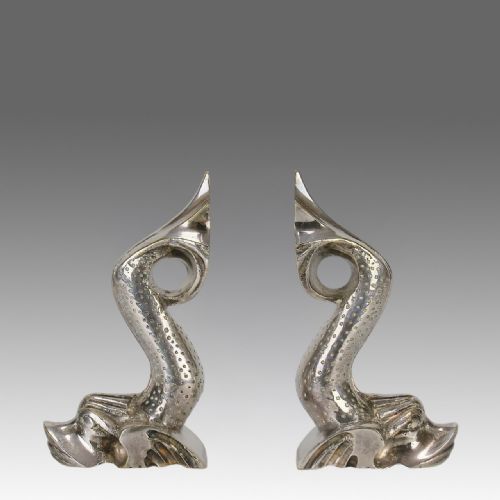
The selections on this page span table lamps, clocks, wine coolers, menu holders, dishes, inkwells and bookends. Common forms include silver-plated wine coolers, gimbal lamps in nickel or silver, capstan inkwells, and novelty items like rowing boat dishes or galleon menu holders.
Origins stretch from British workshops to continental makers and American firms, capturing the aesthetics of maritime travel, shipping lines and yacht clubs. Pieces date from the nineteenth century through the Art Deco era and mid-century modern design.
Materials and construction methods
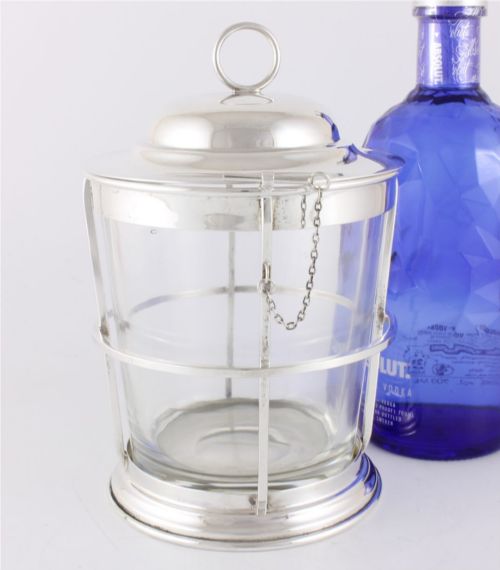
Makers utilised solid sterling silver, silver plate, nickel plate, chrome and silvered metal over brass or other base metals. Glass and brass frequently combine with silver plating in items such as ship lantern ice buckets, gimbal lamps and decanter accessories.
Techniques range from traditional silversmithing and casting for heavy tablewares to specialised plating methods used for industrial marine hardware. Enamel work, glass blowing and precision movement assembly appear in smaller personal items, clocks and barometers.
Object forms include functional marine instruments like chronometers and barometers alongside decorative novelties like rowing boat dishes and yacht brooches.
Quality and craftsmanship distinctions
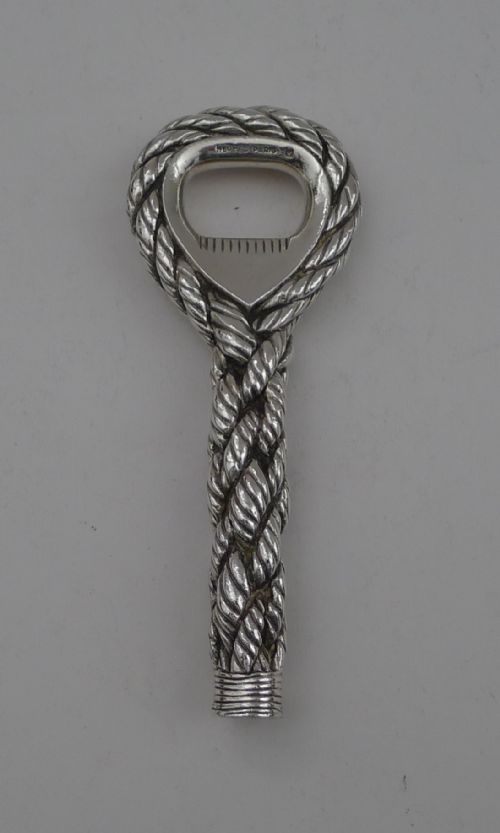
Quality rests in the weight of the metal, the crispness of maritime casting details such as cordage or hulls, and the integrity of the underlying structure. Superior pieces maintain robust silver plating or solid gauges of sterling silver without thinning from excessive polishing.
The reputation of the maker or retailer, alongside the complexity of the mechanism in items like clocks, barometers and gimbal lamps, elevates a piece. Original components, uncompromised glass inserts and legible hallmarks or signatures separate standard decorative items from finer works.
F Abella and Sons·Kenrick and Sons·Wallace Sailing·Pascall Atkey of Cowes·Gay Vicarino·James Murray·Ross of London
The Vintage Nautical Silver Glossary
- Gimbal
- A ringed pivoting device that keeps ship lamps and chronometers level despite the roll of a vessel. It allows objects to hang true at sea.
- Capstan
- A nautical deck winch shaped like a truncated cone, inspiring heavy inkwells designed with the same sloping profile. They sit flat on a desk.
- Silver Plate
- A thin layer of silver bonded to a base metal such as copper or nickel. It offers the appearance of solid silver at a different scale of production.
- Twin Fusee
- A clock movement using a chain and cone-shaped pulley to maintain even tension as the mainspring unwinds. This mechanism ensures accurate timekeeping.
- Sterling Silver
- An alloy consisting of silver and other metals, usually copper, standardised for purity. It carries official hallmarks denoting its composition.
Vintage Nautical Silver: Frequently Asked Questions
What defines vintage nautical silver?
Vintage nautical silver includes items made from sterling silver, silver plate and nickel that relate to maritime history, ships and sailing. These range from functional desk accessories to decorative tablewares.
Objects often incorporate themes of galleons, yachts, lighthouses and ocean liners, produced from the Victorian era through the mid-twentieth century.
How were gimbal lamps used?
Gimbal lamps were suspended on pivoting rings aboard ships to counteract the rolling motion of the ocean. This mechanism kept the flame vertical and steady.
On land, these heavy nickel or silver-plated lamps serve as striking lighting pieces that retain their mechanical marine heritage.
How do I care for silver plate?
Silver plate requires gentle cleaning with a soft cloth and specialised silver polish to avoid wearing through the thin metal layer. Regular dusting prevents tarnish buildup.
Keep pieces away from damp environments and harsh chemicals to preserve the underlying metal and any glass or enamel components.
How can I tell the period?
Periods are identified through hallmarks, style markers such as Art Deco geometry or Victorian ornamentation, and the specific materials utilised. Documentation and maker signatures also help establish dates.
Stylistic shifts reflect changing manufacturing techniques and the evolution of luxury travel aboard ocean liners and private yachts.