


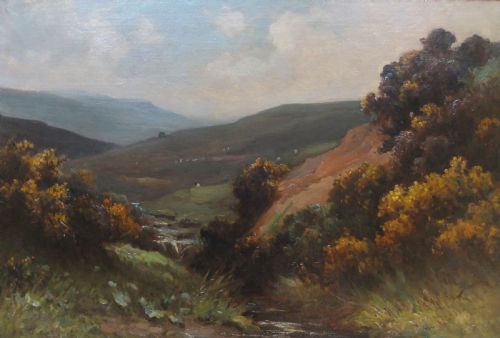


Vintage Moorland Oil Painting
These vintage moorland oil painting works capture vast heather expanses and remote hillsides through brushwork developed across the nineteenth and twentieth centuries.
Vintage Moorland Oil Painting
A vintage moorland oil painting portrays open upland terrain, expansive skies, and remote countryside scenes typical of British regional landscapes. These works frequently depict livestock such as sheep, ponies, or hunting dogs moving across rugged terrain.
The pieces on this page emerge from distinct periods spanning the Victorian era through the mid-twentieth century, including British Impressionism and the Scottish School. Such artworks represent regional landscapes from Yorkshire, Dartmoor, Cornwall, and Scottish highlands.
Most examples you encounter combine traditional canvas or wood panel supports with original gilt wood framing. The compositions range from intimate studies on board to substantial framed scenes of British sporting and pastoral life.
How they were made
Artists applied oil paint using traditional brushes and palette knives onto prepared surfaces of woven canvas, rigid wood panels, or artist boards. The physical support often dictates the texture and preservation of the pigment layers over decades.
Makers housed these canvases within heavy timber frames, frequently finished with gold leaf or gilt wood mouldings that complement the natural tones of the landscape.
Numerous moorland scenes include stubborn flocks of sheep seemingly placed by the artist solely to test the limits of white paint.
What varies in quality
Quality rests in the confidence of the brushwork and the artist's ability to render atmospheric light and distant horizon lines. Stronger examples display deliberate pigment application that conveys weather and texture rather than flat colour.
The handling of natural subjects, particularly animals and changing moorland weather, separates routine decorative works from accomplished regional art. Original framing matching the period of the painting also elevates the integrity of the piece.
Tom Campbell·Charles Walter Simpson·Owen Bowen·John A Houston·Florence Hess·Joseph Farquharson·John Charles Tunnard·Ernest Higgins Rigg·Peter Jackson·Robert Cleminson·Fred Lawson·Lewis Creighton·Brian Richardson·Curt Rabethge
The Vintage Moorland Oil Painting Glossary
- Oil paint
- A slow-drying paint made of pigment particles suspended in a drying oil, typically linseed oil. This medium allows artists to blend tones and build rich textures on canvas or panel.
- Wood panel
- A rigid flat support made from timber used by painters before and alongside stretched canvas. Panels offer a stable surface that preserves fine brush detail over centuries.
- Gilt wood
- Timber frames or decorative elements coated with a thin layer of gold leaf or metallic gold paint. These frames enhance the visual depth of the oil painting they enclose.
- British Impressionism
- A painting style developed in the late nineteenth and early twentieth centuries focusing on loose brushstrokes and natural light. Artists working in this manner prioritized capturing transient weather and open-air effects.
- Verso
- The back side of a painting canvas, board, or panel. Signatures, titles, and old gallery labels often appear here.
Vintage Moorland Oil Painting: Frequently Asked Questions
How do I date a moorland oil painting?
Examine the materials used for the support, such as stamped artist boards or specific canvas weaves typical of the Victorian period or mid-twentieth century.
Signatures, framing styles, and inscriptions on the verso also provide reliable chronological markers for these regional landscapes.
Where were these landscape paintings created?
Artists painted these scenes across notable British uplands, including the Yorkshire Dales, Dartmoor, Cornwall, and the Scottish Highlands.
Plein-air sketching formed the basis for many studio works depicting local sheep farming and sporting estates.
How should I hang and light an oil painting?
Position the artwork away from direct sunlight and steady heat sources to protect the oil pigment and wooden panel or canvas support.
Use dedicated picture lights with low heat emission to illuminate the surface without causing gradual fading or varnish degradation.
What is the difference between canvas and board?
Canvas provides a flexible woven textile surface stretched over a wooden frame, yielding slight give beneath the brush.
Board offers a rigid, solid backing made from wood or compressed pulp, often utilised for smaller portable outdoor studies.