

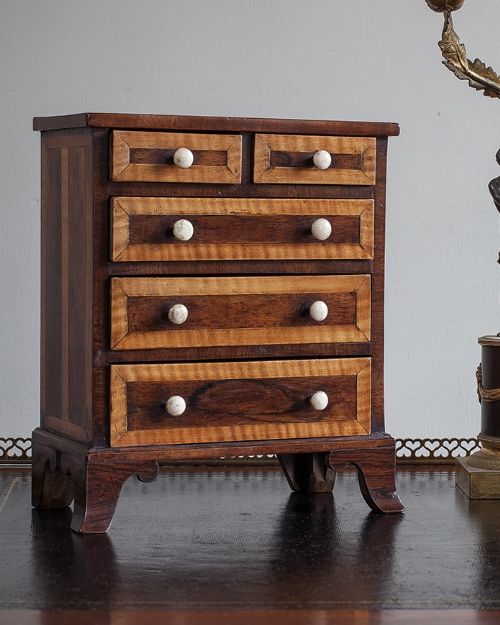
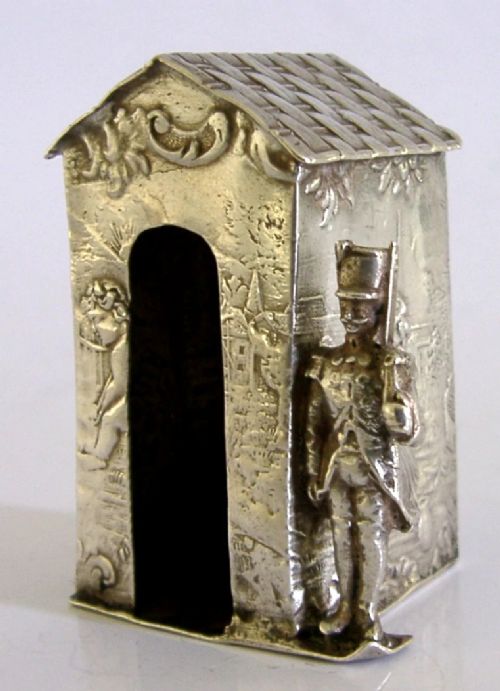
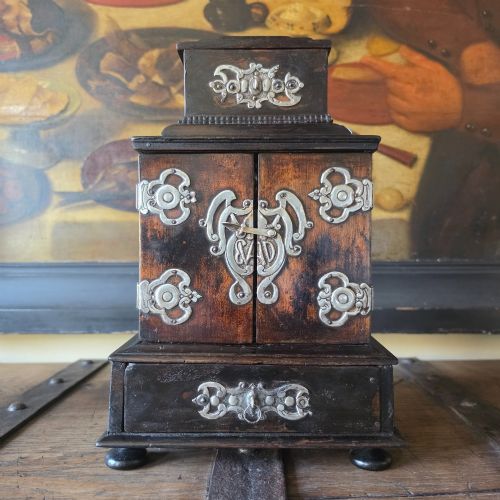

Vintage Miniature Cabinet
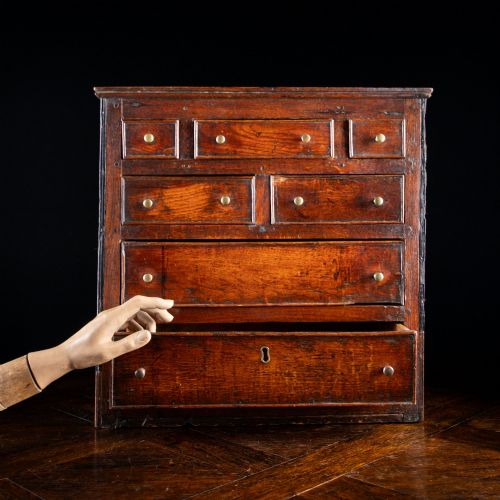
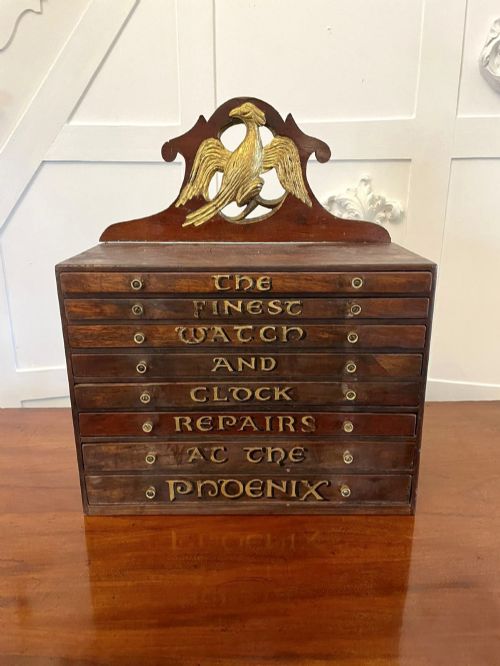
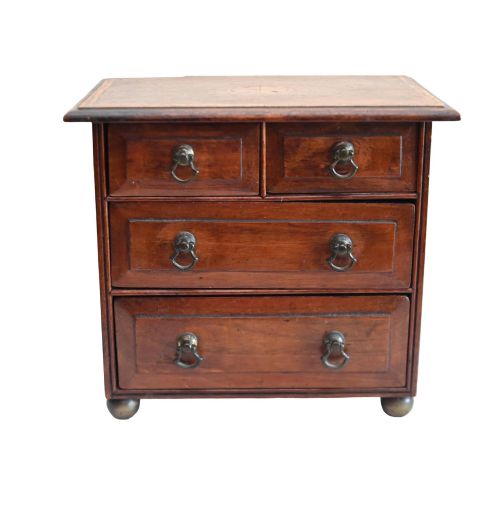
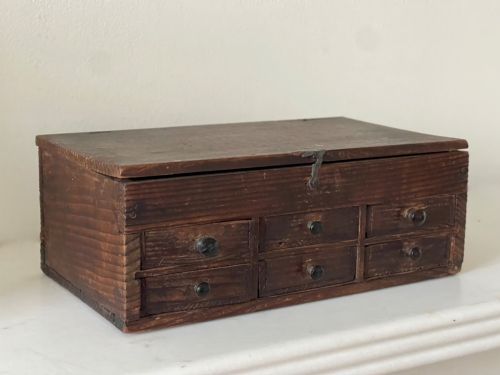
A vintage miniature cabinet condenses grand architectural forms into tabletop scale, offering collectors compact repositories for curiosities and precious small objects.
Vintage Miniature Cabinet
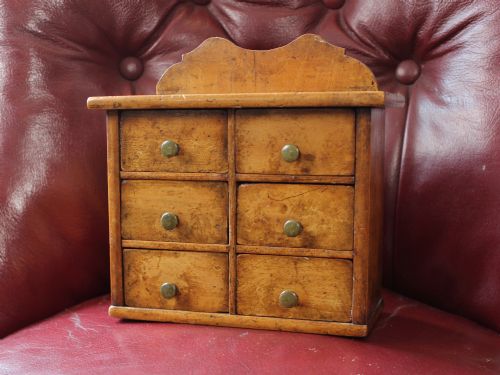
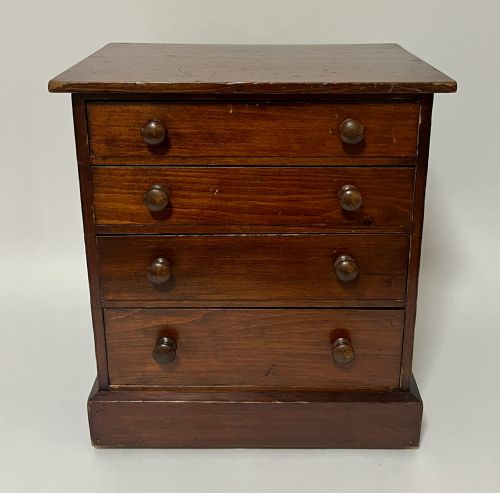
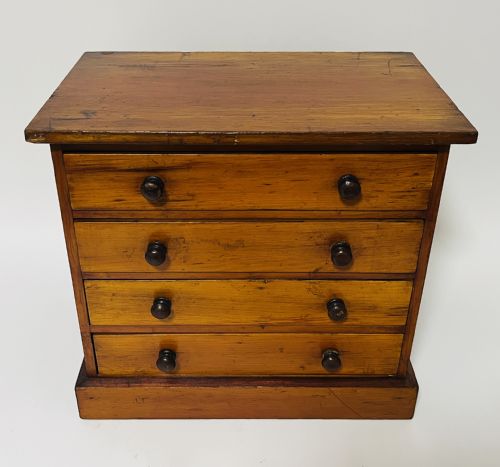
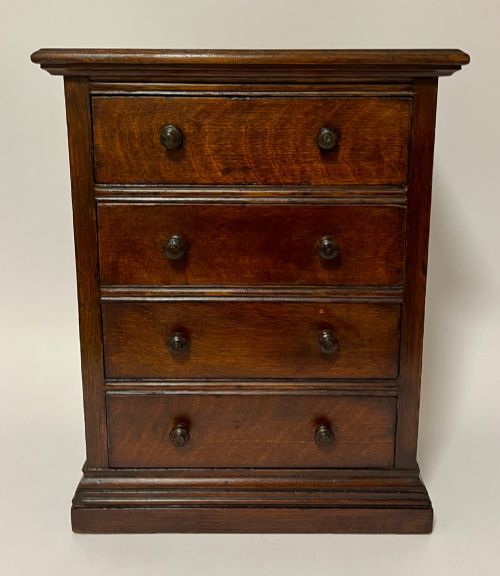
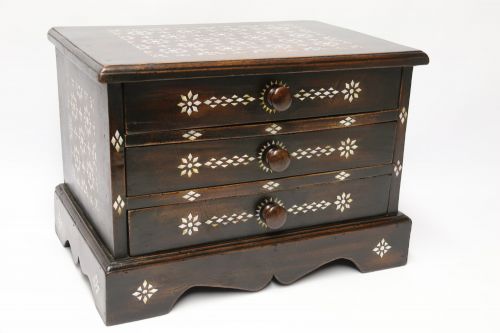
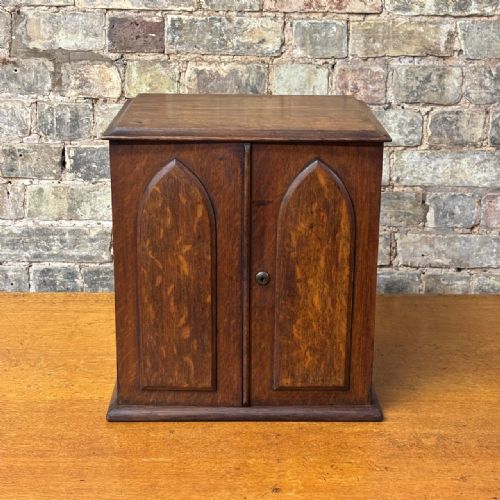
A vintage miniature cabinet encompasses a varied group of small storage pieces, ranging from collectors' chests with multiple drawers to jewellery cabinets and tabletop cupboards. These objects mirror full-scale furniture styles across several centuries, including Georgian, Victorian, and Edwardian designs.
The selections encountered here frequently span walnut, mahogany, oak, and pine constructions, alongside specialised forms like spice drawers and apothecary chests. Pieces emerge from diverse origins, including British workshops, French provincial makers, and Meiji period Japanese studios.
Buyers seeking a vintage miniature cabinet encounter functional storage scaled down for desk or tabletop use, often designed by makers as apprentice pieces or specialised display units.
Materials and Construction
Cabinet makers utilised dense hardwoods such as mahogany, walnut, and oak to construct stable miniature carcasses that could withstand the intricate joinery required at a reduced scale. Drawer construction often involved dovetail joints, ensuring durability across tiny compartments designed for frequent use.
Surface finishes rely on traditional polish, wax, and occasionally gold leaf or lacquer, highlighting the natural grain of fruitwood, satin walnut, or palmwood. Specialised pieces incorporate brass hardware, glass panels, and inlaid hardwood details to emulate the grandeur of full-sized furniture.
Vintage Miniature Cabinet Retail Price Guide 2026
Typical asking prices for vintage miniature cabinet among the pieces listed under this phrase on Sellingantiques today, from the lower quarter to the upper quarter. They describe what is for sale here now, not the wider market.
Listings incorporate 18th century walnut jewelery cabinets alongside 19th century Japanese black lacquered table cabinets and Edwardian mahogany wardrobes.
Assessing Quality and Execution
Quality rests upon the fidelity of proportion and the precision of miniature joinery, where the maker must execute complex locking mechanisms and snug drawer fits at a demanding scale. Superior examples display thoughtful timber selection, such as figured walnut or matched mahogany veneers, rather than relying solely on applied ornamentation.
The integrity of original hardware, working keys for miniature locks, and untouched surface patination elevate individual pieces. Lesser examples may exhibit clumsy proportioning, replacement fittings, or unsympathetic modern finishes that obscure the original hand of the maker.
Chosei·Daisy Makeig-Jones Wedgwood·William Ricketts
The Vintage Miniature Cabinet Glossary
- Apprentice piece
- A small-scale item demonstrated by a craftsman seeking master status within a guild. These items prove fine mastery of full-scale techniques at a reduced size.
- Kodansu
- A traditional Japanese portable small cabinet featuring multiple internal drawers or compartments. These objects frequently utilise black lacquer and fine metal fittings.
- Collector cabinet
- A specialised piece housing numerous shallow drawers intended for botanical, geological, or insect specimens. Such units often include glass-fronted doors or dust-proof internal construction.
- Spice cabinet
- A small wall-hanging or tabletop cupboard containing multiple small drawers for provisions. These items date predominantly from the 18th and 19th centuries in oak or fruitwood.
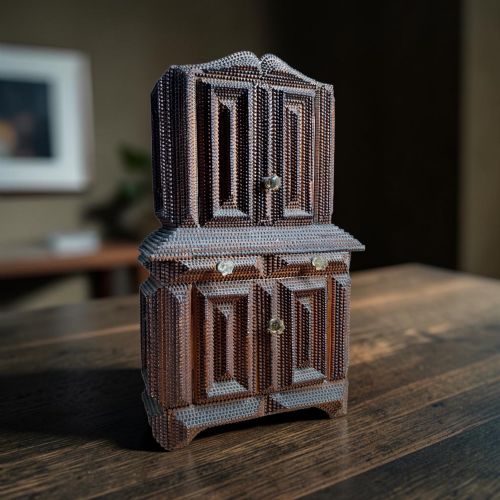
- Tramp art
- Folk art constructed by self-taught makers using chip-carving techniques on scrap wood, commonly cigar boxes and packing crates. This tradition produced distinctive textured surfaces.
Vintage Miniature Cabinet: Frequently Asked Questions
What were miniature cabinets used for originally?
These small pieces served various domestic and professional purposes, from storing spices and apothecary supplies to housing jewellery or microscope slides. Wealthy households utilised them for precious curiosities.
Craftsmen also produced them as salesman samples or apprentice pieces to demonstrate skill to prospective clients or guild masters.
How do I date a wooden miniature cabinet?
Dating relies upon timber species, secondary woods used in drawer linings, and construction methods like dovetailing. Mahogany and walnut indicate 18th or 19th-century origins, while specific hardware styles offer further clues.
Stylistic markers mirroring Georgian, Victorian, or Edwardian full-scale furniture help narrow the period of manufacture.
Where should I place a table cabinet at home?
Table cabinets suit study desks, sideboards, or console tables where their detailed joinery and compact scale remain visible. They require stable environments away from direct heat sources to protect historic wood.
Placing them at eye level allows the contents and internal drawer arrangements to be appreciated easily.
Are antique specimen cabinets suitable for modern collections?
Specimen and collector cabinets provide ideal storage for small modern collections such as minerals, shells, or coins. The shallow drawers protect delicate items from dust and light exposure.
Original internal layouts offer functional organisation without requiring modification to the historic piece.