




Vintage Metal Tea Caddy
A vintage metal tea caddy brings utility and decorative form together, offering a tangible link to historic tea storage.
Vintage Metal Tea Caddy
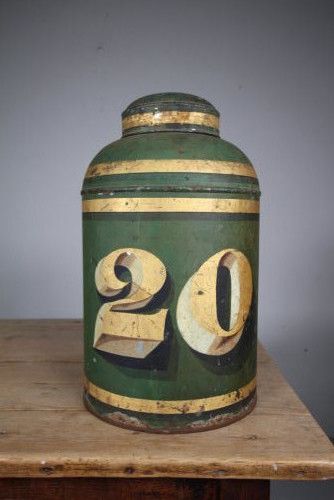
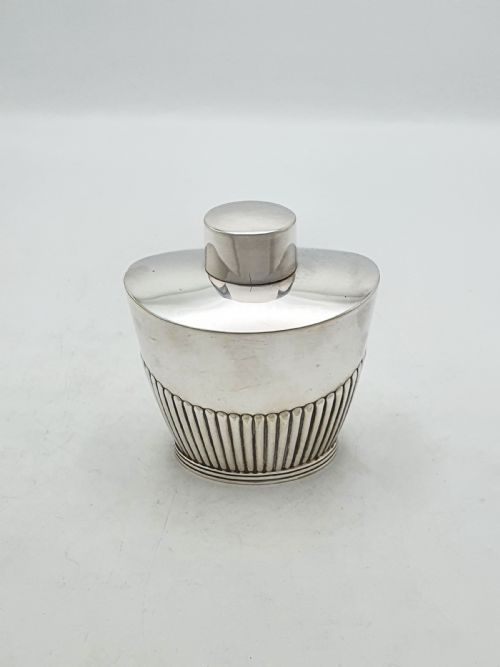
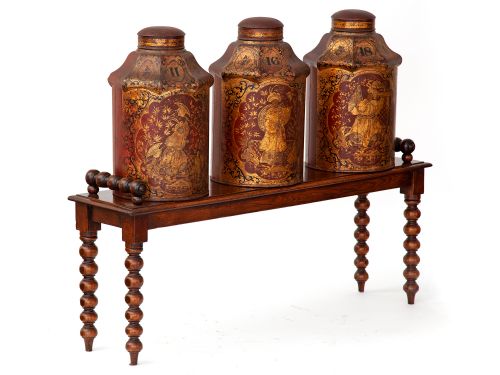
A vintage metal tea caddy encompasses functional storage vessels designed for dry leaf, appearing across periods from the eighteenth century through the twentieth century. These objects include individual canisters, lidded boxes, and multi-piece sets intended originally to preserve precious dry goods. Buyers encountering this selection will find examples ranging from early Georgian boxes fitted with internal metal canisters to Edwardian novelty biscuit tins and painted toleware.
The assortment on this page draws on diverse regional traditions and stylistic influences, spanning English Country designs, Chinoiserie motifs, and Hollywood Regency forms. Material choices vary from heavy cast brass and silver plate to lightweight tinplate and painted toleware. Many surviving pieces show adaptations over time, such as conversion into table lamps or inclusion within decorative sets.
Materials and construction methods
Metal fabrication relied on forming sheet iron, brass, or tinplate into rigid containers designed to seal tightly against moisture. Toleware items utilised japanning and hand-painted finishes over metal substrates, often incorporating gilt highlights or orientalist scenes. Silversmiths applied silver plate or Sheffield plate over base metals to achieve the appearance of solid silver vessels.
Joinery and structural integrity depended on soldered seams, rolled edges, and dovetailed or pinned wooden carcases where metal canisters sat within decorative boxes. Chiselled brass work and engraved decoration required skilled hand tools to apply surface patterns directly to the metal. Makers finished interiors with foil linings or left plain metal exposed depending on the intended contents.
Storage containers occasionally took whimsical forms, including domestic hat boxes and literary volumes designed to sit unobserved on shelves.
Distinguishing quality across examples
Quality separates mass-produced decorative tins from bespoke metalwork through the precision of the construction and the crispness of surface decoration. Hand-painted toleware demonstrates superior merit when brushwork remains controlled and the japanned base shows depth without heavy crazing. Engraved and chiselled brass work varies according to the sharpness of the tool marks and the weight of the underlying metal.
Integrity of original surfaces dictates the standing of an individual piece within its period. Examples retaining their original lids, internal compartments, and unpolished patination command greater interest than those with replaced parts or stripped finishes. The presence of maker marks or retailer stamps adds documentation regarding the original workshop origin.
Mappin & Webb·Huntley & Palmers·John Grinsell & Sons
The Vintage Metal Tea Caddy Glossary
- Toleware
- Painted or japanned metalware produced primarily in tinplate or iron. This technique originated to imitate expensive Asian lacquer items.
- Tinplate
- Thin sheet iron coated with tin to prevent corrosion. It served as the primary material for commercial packaging and domestic storage.
- Japanning
- A European imitation of Japanese and Chinese lacquer finishes. It involved applying layers of heat-cured varnish to metal or wood.
- Sheffield Plate
- A composite material made by fusing a thin sheet of silver to a thicker copper ingot. This process preceded modern electroplating.
- Chinoiserie
- A Western decorative style employing imagined Chinese motifs. It appeared frequently on painted toleware and lacquer furniture.
Vintage Metal Tea Caddy: Frequently Asked Questions
What is a vintage metal tea caddy used for?
These vessels originally stored loose tea leaves protected from air and light to preserve flavour. Today, collectors use them as decorative accents or for domestic storage.
Their robust construction allows them to sit securely on tabletops or within display shelving alongside other antique metalware.
How do I date a metal tea caddy?
Dating relies on examining manufacturing techniques, material composition, and decorative style markers. Georgian and Regency pieces often feature heavy cast brass or Sheffield plate.
Later Victorian and Edwardian examples frequently utilise printed tinplate or electroplated white metals associated with industrial production.
Are painted toleware canisters durable?
Painted toleware uses japanned finishes baked onto metal substrates to create a hard protective coating. While resilient, the surface remains susceptible to moisture and scratching if handled roughly.
Gentle cleaning with a dry cloth preserves the underlying hand-painted decoration and gilt highlights.
What is the difference between a tea caddy and a biscuit barrel?
Tea caddies were designed specifically for dry tea leaves, often featuring internal compartments or tight-fitting lids. Biscuit barrels served as dining table containers for dry baked goods.
Biscuit barrels frequently incorporate silver-plated swing handles and ceramic or glass bodies alongside metal versions.