
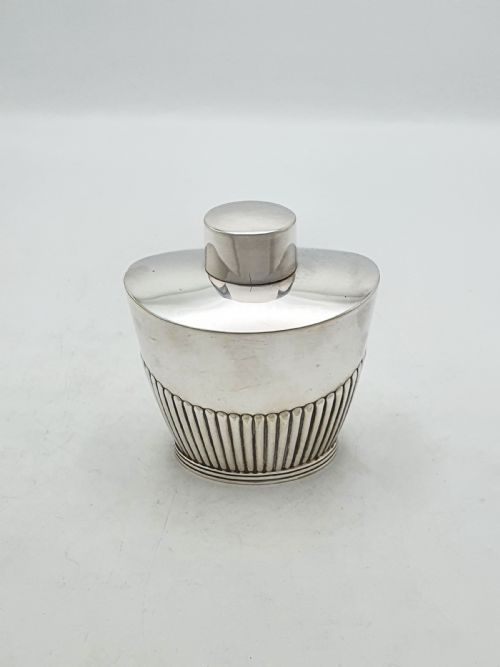


Silver Plated Storage Jar
These silver plated storage jar selections bring domestic history directly to your table, offering sturdy vessels for biscuits, tea, and cigars.
Silver Plated Storage Jar
When you search for a silver plated storage jar, you are looking at functional Victorian and Edwardian containers designed to hold dry goods like biscuits, tea, and cigars. These vessels combine metalwork with ceramic, earthenware, or cut glass bodies to safely store household provisions.
The most common versions on this page are biscuit barrels and tea caddies originating from the nineteenth and early twentieth centuries. Makers utilised durable base metals and plated them with silver to create gleaming tableware for the parlour and dining room.
Beyond tea and biscuits, the selection includes lunch boxes, cigar boxes, and canisters spanning Georgian styles through to French Modernist designs. Each piece represents a specific domestic function from an era when dry goods required secure, decorative storage.
How they were made
Makers formed these storage vessels using base metals like nickel silver, copper, and EPNS, which were then coated in a layer of silver plate or Old Sheffield Plate. Glass bodies were frequently faceted or cut, whilst ceramic and earthenware components added weight and colour to the designs.
Metal lids and mounts were cast, spun, or stamped to fit snugly over ceramic or glass interiors, often featuring hinged mechanisms for practical everyday use. Artisans applied surface decoration through chasing, engraving, and polishing to accentuate the reflective properties of the silver.
Some biscuit barrels doubled as ice buckets when the dining fashion demanded chilled treats instead of baked goods.
What varies in quality
The distinction between standard domestic wares and top-tier pieces lies in the weight of the metal, the crispness of the chasing, and the integration of maker marks from notable firms. Thicker silver plating ensures the underlying base metal remains hidden after decades of polishing and handling.
Material combination also drives distinction, where hand-cut glass or signed ceramic bodies meet precisely fitted, substantial silver plated mounts. Pieces by recognised makers display superior balance and finish in their hinges and handles.
Mappin & Webb·Thomas Bradbury·William Hutton·Crevillen Paris·Elkington & Co
The Silver Plated Storage Jar Glossary
- EPNS
- Electro Plated Nickel Silver. This designates a base metal alloy coated with an even layer of silver using an electrical process, common in nineteenth-century manufacturing.
- Old Sheffield Plate
- A technique where a thin sheet of silver is fused to a thicker copper core by heat and pressure before rolling.
- Biscuit Barrel
- A lidded container designed specifically for storing dry biscuits on the dining table or in the drawing room.
- Tea Caddy
- A small storage jar or box intended to keep tea leaves fresh before brewing.
- Faceted Glass
- Glass that has been cut with multiple flat planes to catch and reflect light across the surface.
Silver Plated Storage Jar: Frequently Asked Questions
What were silver plated storage jars used for?
These vessels served practical purposes in Victorian and Edwardian households, primarily holding dry foodstuffs like biscuits, loose tea leaves, and cigars.
By keeping provisions sealed, the jars protected contents from moisture and pests whilst presenting a decorative appearance on dining tables and sideboards.
How do I clean a silver plated storage jar?
Cleaning requires a soft cloth and a specialised silver polish, applied gently to avoid wearing through the thin plated surface down to the base metal.
Ceramic or glass inserts should be washed separately with warm soapy water and dried thoroughly before being placed back into the metal housing.
How can I tell the period of a piece?
Dating relies on observing the stylistic markers, such as the geometric lines of Art Deco or the ornate floral motifs of the Victorian era.
Maker marks and stamps stamped into the base metal provide further evidence to help narrow down the decade of manufacture.
Are these jars suitable for daily use?
Most of these containers remain robust enough for regular use, provided they are handled with care and cleaned without abrasive materials.
Their sturdy construction from nickel silver, earthenware, and glass ensures they function well as practical storage items today.