

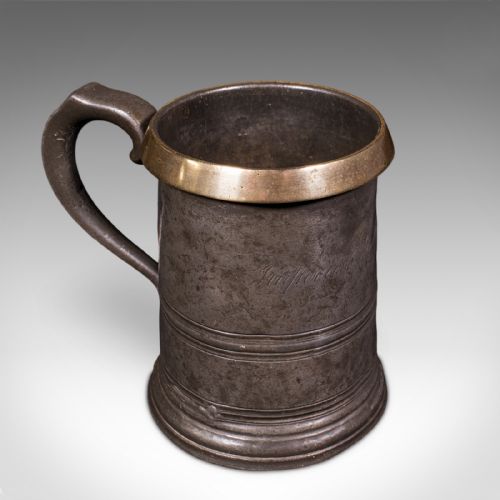


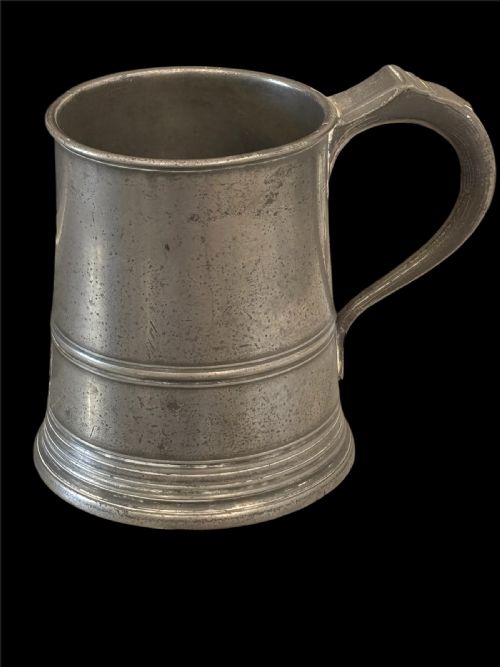
Vintage Metal Tankard
A vintage metal tankard is a robust drinking vessel shaped by centuries of tavern and household use, prized for its tactile weight and material patina.
Vintage Metal Tankard
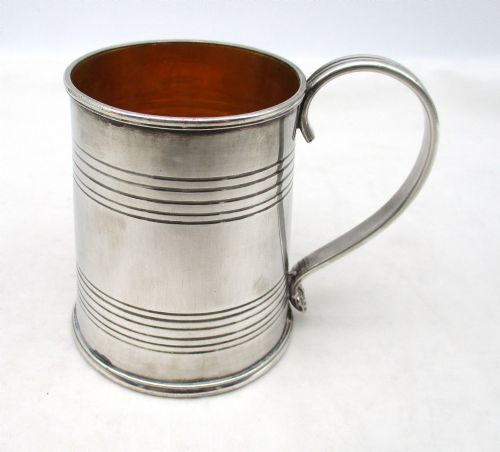
A vintage metal tankard encompasses robust drinking vessels and measures originating from periods spanning the eighteenth through to the early twentieth century. These pieces appear in forms ranging from plain tavern measures and flat-lid flagons to ornate silver-plated mugs bearing repousse decoration.
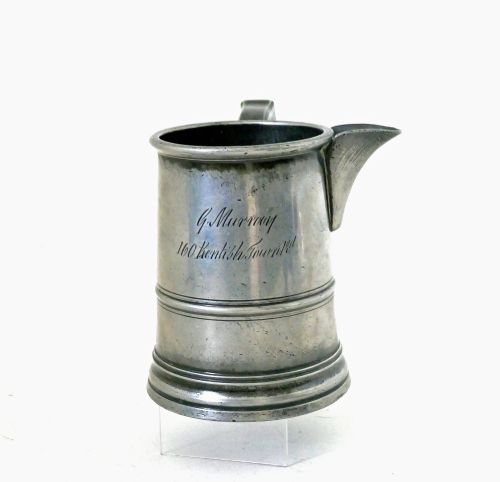
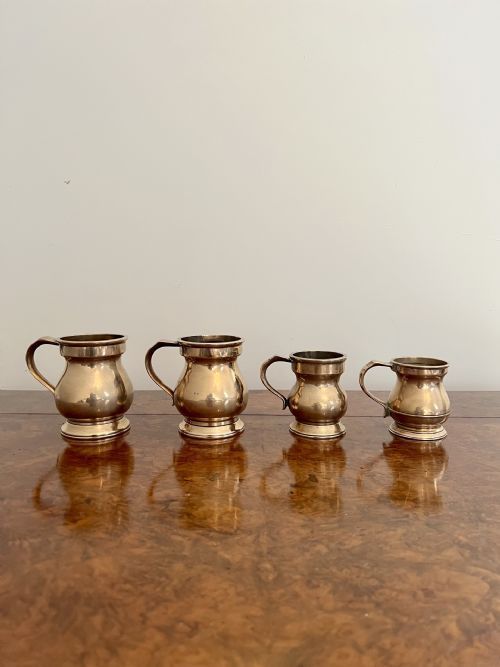
The selection here draws heavily from British public house traditions, featuring heavy pewter quarts alongside domestic copper jugs and silver-plated presentation pieces. Buyers frequently encounter nineteenth-century English pewter, alongside Scottish tappit hens and copper measures intended for commercial and household service.
Materials and construction
Pewter and copper dominate the construction, shaped through casting, hammering, and soldering to create rigid vessels capable of daily service. Silver plating and Old Sheffield Plate apply thin protective layers of precious metal over copper or base alloy cores, yielding a bright reflective surface.
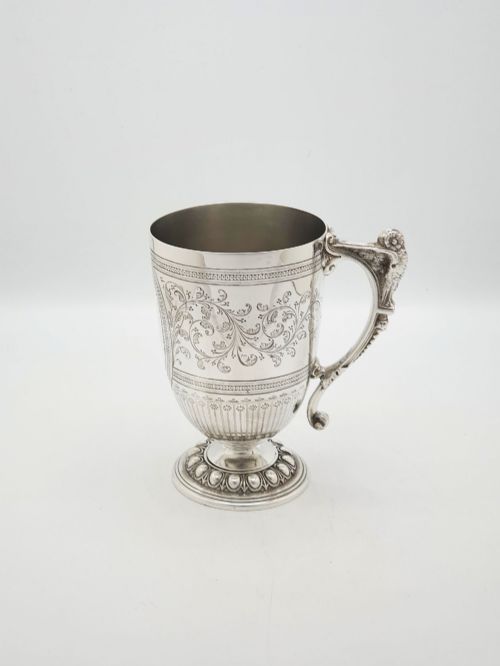
Makers utilised handles cast in distinct forms, including scrollwork, owls, and simple strap handles, soldered securely to the body. Engraving and stamping supply ownership marks, capacity stamps such as VR verification cyphers, and decorative hops motifs.
An owl peers perpetually from a heavy silver-plated handle, guarding the ale within.
Assessing quality and character
Quality rests in the original thickness of the metal and the crispness of any cast ornament, ensuring the vessel maintains its structural integrity without undue thinning. Pieces retaining clear touchmarks, maker stamps, or period verification marks demonstrate superior provenance.
The preservation of the original surface texture, whether unpolished pewter dullness or warm copper oxidation, dictates the visual appeal. Heavy handling wear that softens historical engraving detracts from the integrity of the piece.
Frederic Sanders·Watts and Harton
The Vintage Metal Tankard Glossary
- Pewter
- A malleable alloy consisting primarily of tin, often hardened with copper or lead, used extensively for drinking vessels and measures. It develops a soft, dark grey oxidation over centuries of exposure.
- Old Sheffield Plate
- An early fused composite material made by melting a sheet of silver to a thick copper base, developed in the eighteenth century. Edges often reveal the underlying copper core upon close inspection.
- Tappit Hen
- A traditional Scottish measure and flagon form featuring a lid with a small knob or weight resembling a nesting hen. These capacity vessels were widely utilised for ale and wine.
- Flagon
- A large drinking vessel with a handle and usually a hinged lid, designed for serving liquids at table or in public houses. Examples often display flat lids or elevated spire finials.
- Quart
- An imperial unit of liquid capacity equivalent to two pints, commonly stamped onto tavern measures to denote official volume. Many surviving examples carry verification marks from the Crown.
Vintage Metal Tankard: Frequently Asked Questions
What is a vintage metal tankard?
A vintage metal tankard is a historical drinking vessel or measure fashioned from materials like pewter, copper, or silver plate for holding ale and beer.
These items range from utilitarian public house measures bearing VR stamps to decorative silver-plated presentation mugs produced during the Victorian and Edwardian eras.
How do I identify pewter tankard ages?
Age is identified through stylistic markers, handle forms, touchmarks stamped into the metal, and official capacity verification stamps.
Georgian and eighteenth-century examples typically feature heavier, simpler walls and flat lids, whereas Victorian pieces often display bulbous bell shapes or engraved tavern details.
Were these tankards used in pubs?
Many surviving examples served as commercial public house measures for pouring and serving ale to patrons.
Capacity marks and tavern names engraved on the bodies indicate active service in English and Scottish inns before entering private collections.
How should I clean antique metal?
Antique metal requires minimal intervention to preserve the historic surface patina and original tool marks accumulated over centuries.
Gentle washing with warm water and mild soap suffices, avoiding aggressive metal polishes that strip away age and erase faint touchmarks.