

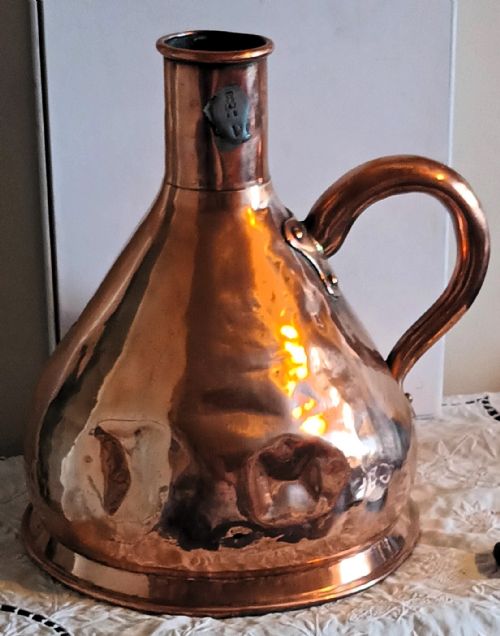


Vintage Metal Measuring Vessels
These vintage metal measuring vessels bring sturdy utility and warm metallic tones from public houses and markets straight into modern rooms.
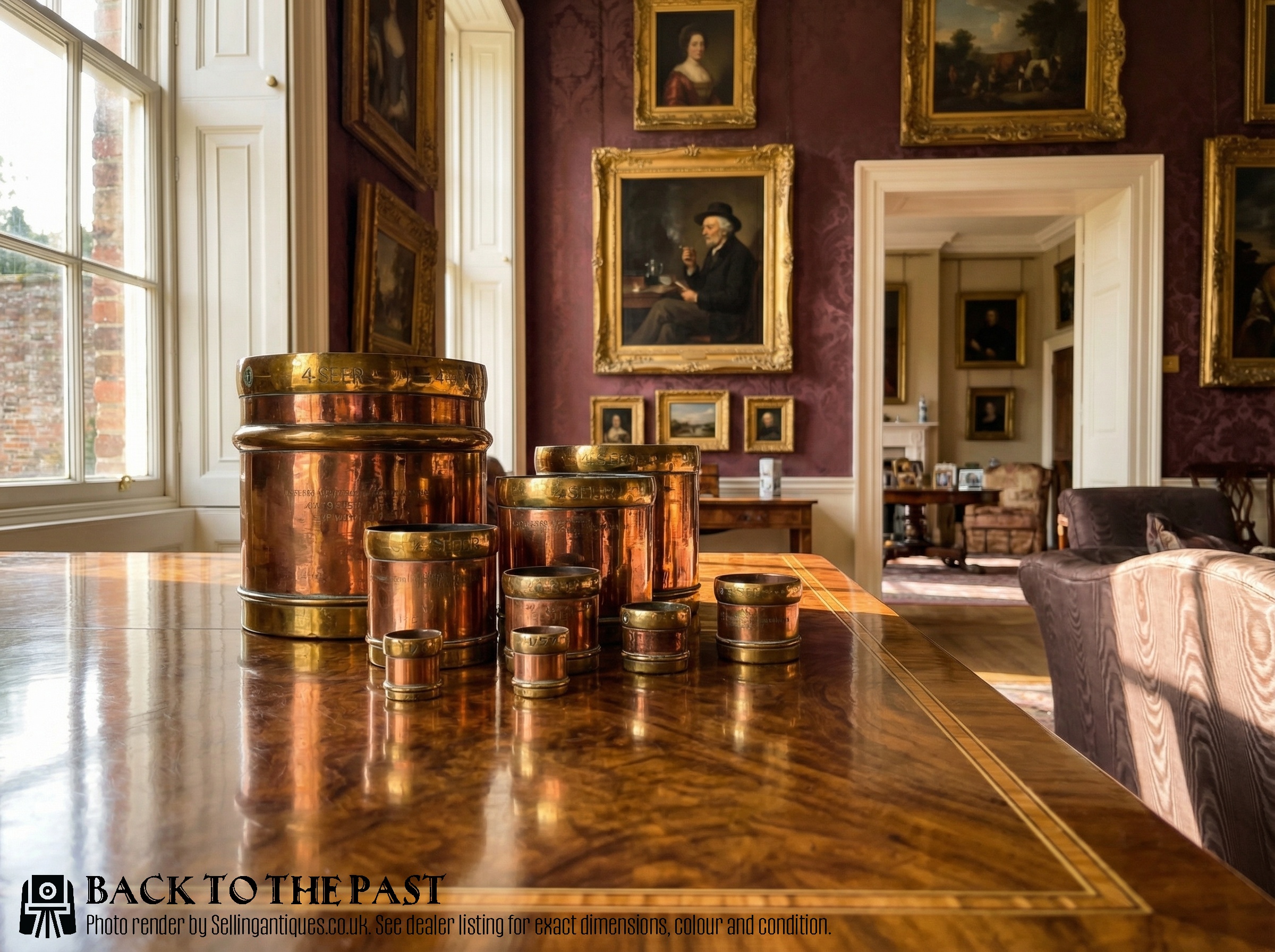
Vintage Metal Measuring Vessels
Vintage metal measuring vessels span standard capacities used in taverns, households, and trade across the eighteenth, nineteenth, and early twentieth centuries. A buyer searching this phrase encounters utilitarian jugs, flagons, tankards, and grain measures made to strict legal capacities. The selection relies heavily on nineteenth-century pieces alongside Georgian and eighteenth-century examples.
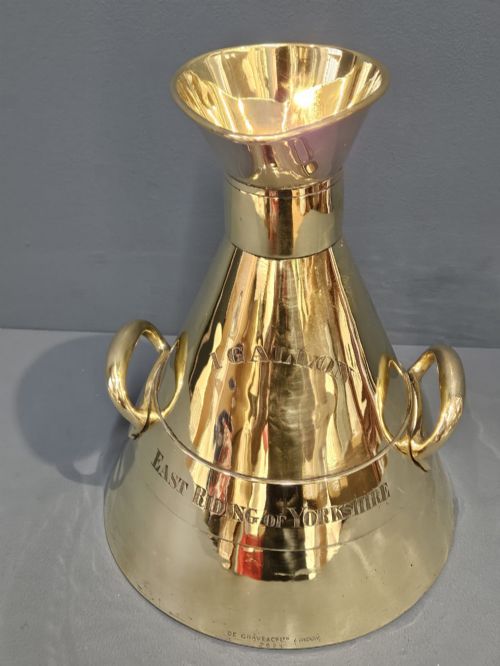
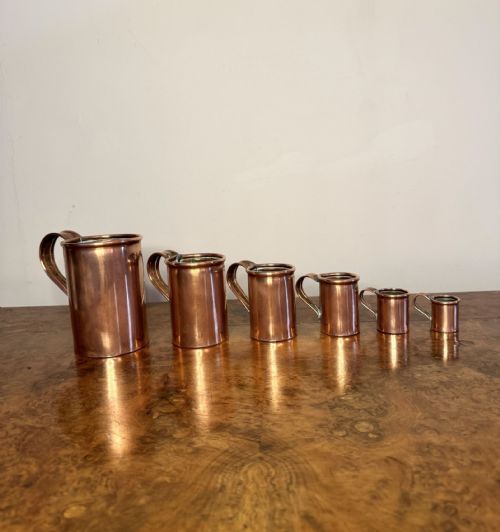
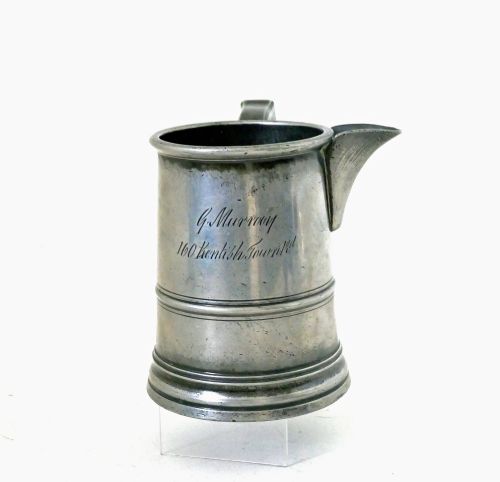
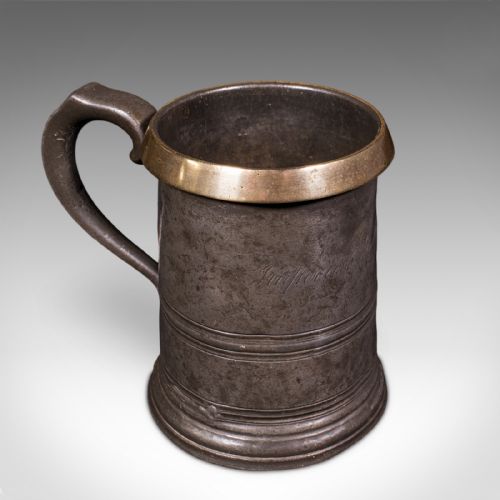
The commonest forms appearing here are copper and pewter jugs, tankards, and haystack measures bearing touchmarks, capacity stamps, or engraved tavern names. These practical containers range from small pint measures up to multi-gallon flagons once employed for ale, spirits, and dry goods. Many show the dents and wear of active service in public houses and markets.
How they were made
Coppersmiths shaped heavy sheet copper by hand, hammering the metal over stakes and joining seams with dovetailing, brazing, or rivets. Brass collars and handles were often attached with brazing or copper pins to reinforce the structure.
Pewterers cast tin-alloy mixtures in metal or stone moulds, turning the bodies on lathes and soldering components together. Makers stamped touchmarks onto the rims or handles to guarantee alloy standards.
Vintage Metal Measuring Vessels Retail Price Guide 2026
Typical asking prices for vintage metal measuring vessels among the pieces listed under this phrase on Sellingantiques today, from the lower quarter to the upper quarter. They describe what is for sale here now, not the wider market.
Listings span the eighteenth, nineteenth, and early twentieth centuries, featuring copper, pewter, brass, lead, tin, and wrought iron.
What varies in quality
Subtleties of gauge and proportion separate workaday vessels from superior examples. Heavier gauge copper and thick-walled pewter retain their structural integrity better through centuries of use.
Crispness in touchmarks, clean hand-beaten seams, and well-balanced handles indicate skilled workshop production. Surviving verification stamps from official inspectors add historical depth to a piece.
Joseph Sankey·J Bower·Frederic Sanders·Loftus of Oxford Street London
The Vintage Metal Measuring Vessels Glossary
- Haystack measure
- A distinctively shaped nineteenth-century British liquid measure with a tapered body resembling a stacked rick of hay. These brass or copper vessels usually carry imperial capacity verification marks.
- Flagons
- Large lidded drinking vessels or measures, often cast in pewter with flat lids or spire thumbsips. They were used to hold and pour ale or wine.
- Touchmark
- A maker's stamp pressed into pewter to identify the workshop or guild member. These marks help historians trace the origin and approximate date of a vessel.
- Imperial measure
- A container adjusted to standard British units established by the Weights and Measures Act. These vessels often bear verification stamps naming specific towns or royal ciphers.
Vintage Metal Measuring Vessels: Frequently Asked Questions
What were vintage metal measuring vessels used for?
These vessels served everyday commercial and domestic functions, measuring liquids like ale, wine, and spirits, as well as dry goods such as grain. Publicans and merchants relied on them to deliver accurate portions regulated by local authorities.
Over time, many retired from trade to sit on shelves or counters, shifting from tools of commerce to decorative objects valued for their craftsmanship and material warmth.
How do I identify a Georgian measure?
Georgian measures generally display heavier casting, simpler handles, and distinct regional forms predating the standardisation of the Imperial system in the nineteenth century. Look for early touchmarks, flat pewter lids, and heavier copper gauges.
They often carry engravings naming the public house, owner, or specific town where they operated, distinguishing them from later mass-produced items.
How should I clean copper and pewter?
Pewter and copper develop a dark, stable oxide layer over decades, which most collectors prefer to leave undisturbed. Gentle washing with warm soapy water removes surface dust without stripping the natural patina.
Avoid harsh commercial metal polishes that remove fine tool marks and soften the edges of touchmarks or engravings.
Why do some vessels have multiple stamps?
Verification stamps were applied by official inspectors to confirm that a vessel held the exact legal volume required for trade. Additional stamps often accumulated as measures were re-inspected and recertified over their working lives.
Town marks and royal ciphers like VR help trace the geographic path and active decades of individual pieces.