


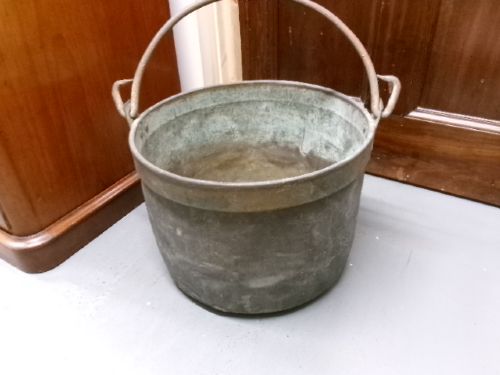
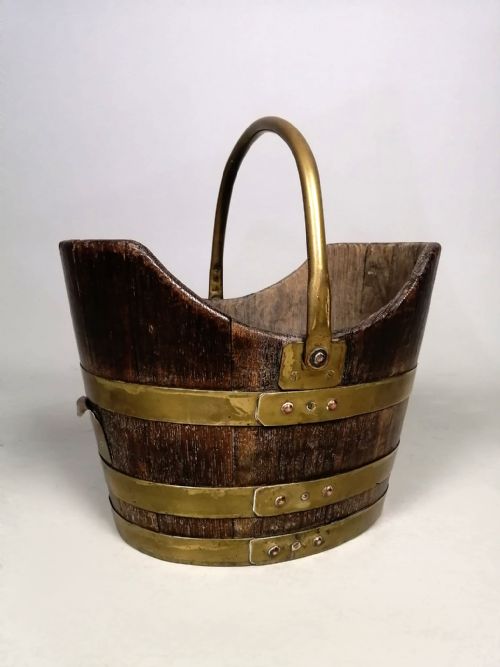


Vintage Brass Copper Containers
These vintage brass copper containers combine rich metal tones and solid utility, offering robust hearth vessels and decorative tubs built for practical daily service.
Vintage Brass Copper Containers
Vintage brass copper containers encompass a sturdy group of hearth and storage vessels designed primarily for domestic use. When exploring these items, you will frequently encounter coal scuttles, log bins, and cauldrons from the nineteenth and early twentieth centuries.
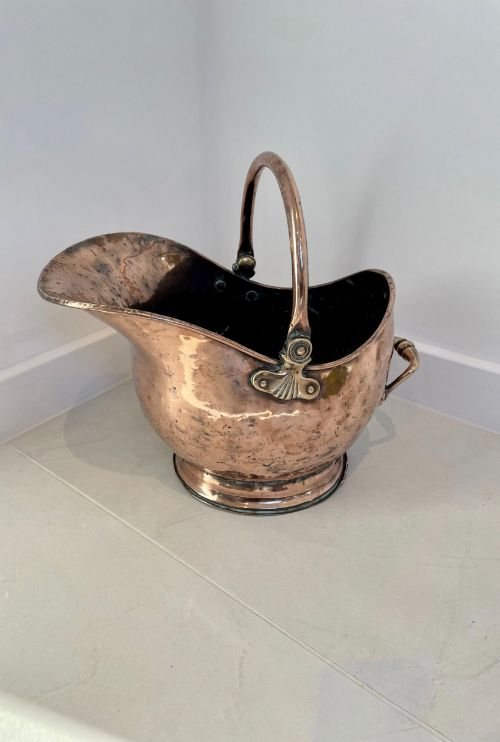
The selection here draws heavily upon Victorian and Arts and Crafts design traditions. Common forms include helmet-shaped coal hods, riveted buckets, and decorative planters fashioned for interior utility.
Originating largely from British and European domestic settings, these pieces bridge the gap between heavy industrial function and polished domestic display. Their dual-metal construction provides both durability and visual warmth.
Materials and construction methods
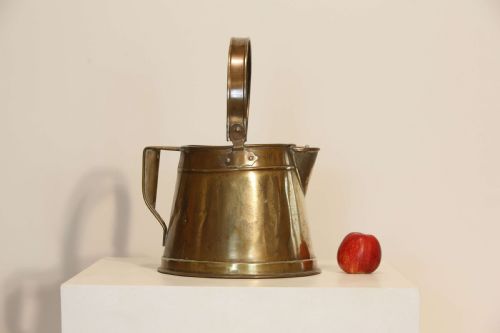
Makers utilised heavy gauge sheet copper and cast brass handles, combining the metals to provide structural strength and decorative contrast. Riveting was standard practice for joining heavy seams on boilers, buckets, and log bins.
Surface decoration frequently involved hand-beating, embossing, or adding polished brass bands to secure the copper body. Oak and iron elements occasionally appeared in supportive frames, swing handles, and sturdy base mounts.
Vintage Brass Copper Containers Retail Price Guide 2026
Typical asking prices for vintage brass copper containers among the pieces listed under this phrase on Sellingantiques today, from the lower quarter to the upper quarter. They describe what is for sale here now, not the wider market.
Listings feature items spanning from the Georgian period through the Arts and Crafts movement, utilising oak, iron, brass, and copper.
What determines the quality of these vessels
Quality rests on the thickness of the metal sheet and the integrity of the original joints and rivets. Substantial weight in the hand and crisp execution of embossed motifs distinguish superior examples from lighter utility items.
The balance between the brass fittings and the copper body reveals the maker's hand. Original patination and minimal structural intervention preserve the character that collectors prize.
The Vintage Brass Copper Containers Glossary
- Coal scuttle
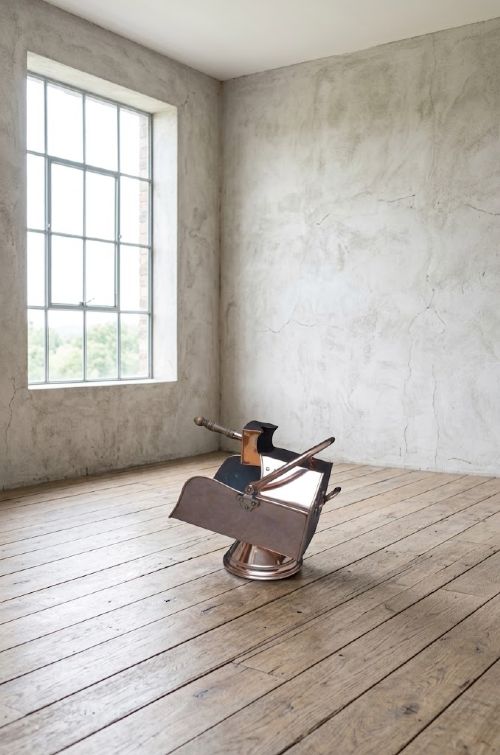
- A container designed to hold coal for a fireplace, often featuring a sloping helmet shape and a sturdy carry handle. These vessels combine functional depth with decorative brass mounts.
- Log bin
- A large tub intended for storing firewood beside the hearth. They frequently incorporate brass banding and riveted copper construction.
- Jardiniere
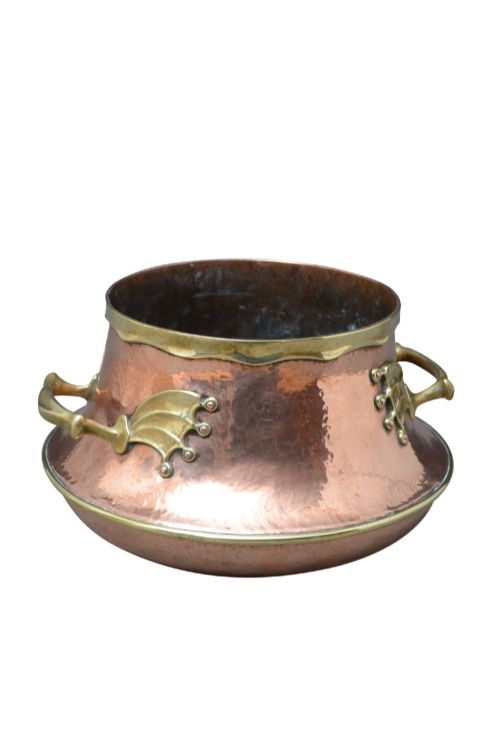
- An ornamental pot or stand designed to hold growing plants or flowers. In metalwork, these vessels often take the form of large brass and copper bowls.
- Cauldron
- A round, deep cooking or heating vessel with a swing handle. Victorian examples in this category were often repurposed for decorative use.
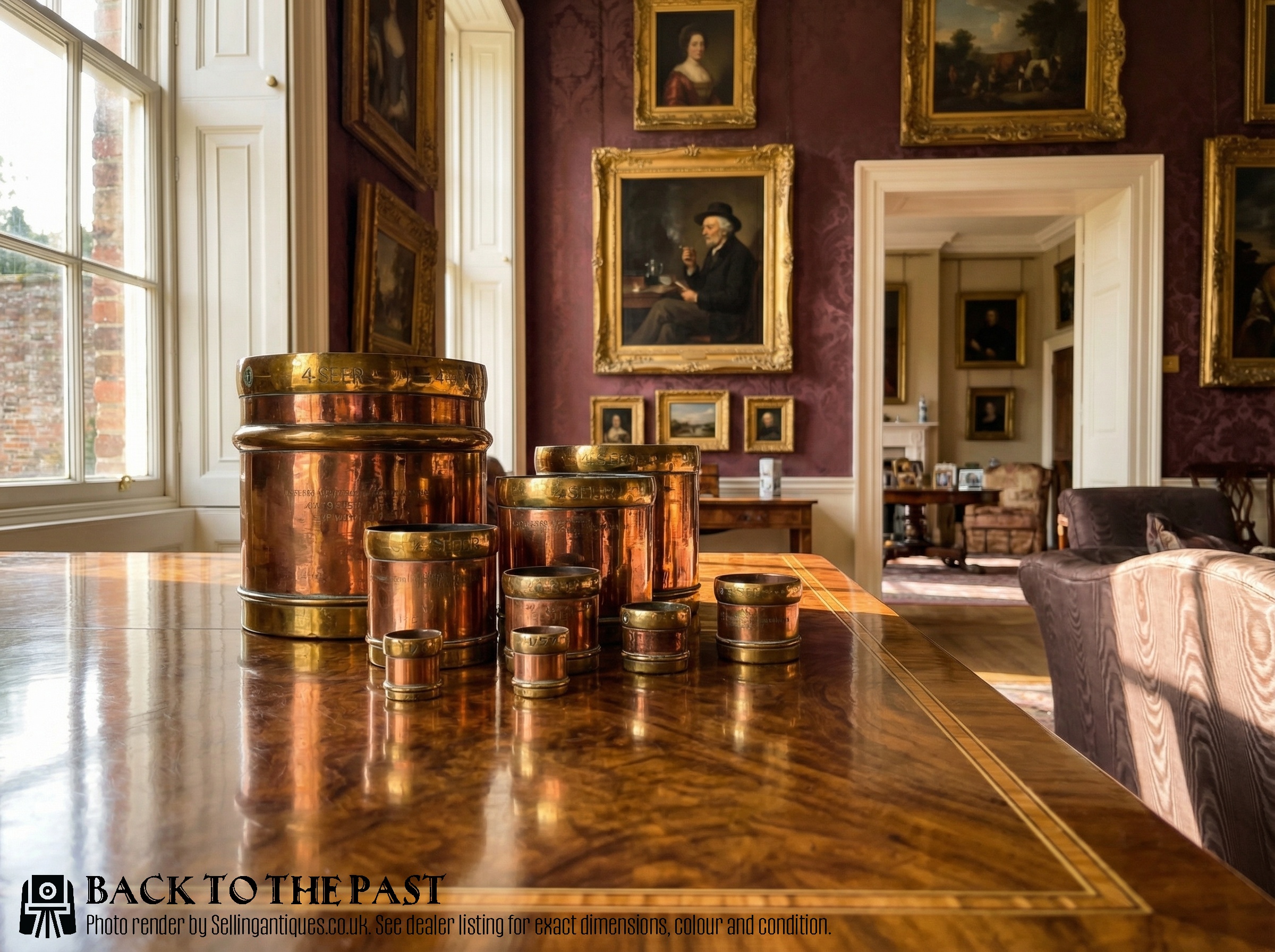
- Seer measure
- A traditional volumetric measuring vessel, typically found in sets made from copper and brass. These cylindrical pieces reflect historical trade standards.
Vintage Brass Copper Containers: Frequently Asked Questions
How do I clean a brass and copper container?
Maintenance requires gentle washing with warm soapy water to remove dust and dirt without stripping the historic surface. Avoid harsh abrasive cleaners that remove the natural darkening acquired over decades.
Allow the metal to dry completely after cleaning. Many collectors prefer to leave the stable oxidation undisturbed to preserve the authentic appearance.
Are these containers waterproof for plants?
Many copper and brass vessels were originally manufactured for dry storage or holding coal rather than holding water. Over time, older riveted joints can develop minor weeping if exposed to standing water for long periods.
Utilising a modern inner plastic liner protects the historic interior from moisture and mineral deposits. This simple step allows you to use planters safely inside the home.
How can I date a copper coal scuttle?
Dating relies on observing construction details such as hand-cut dovetails, handmade rivets, and the style of the brass mounts. Victorian pieces often display heavy embossing and specific helmet profiles associated with nineteenth-century hearth furniture.
Earlier examples from the George III period tend to feature simpler, heavier gauge construction with restrained brass banding. Comparing the form against dated examples helps narrow the production era.