

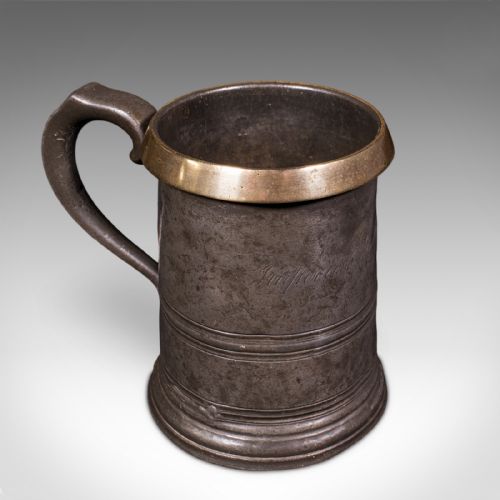


Vintage Metal Measure Jug
These vintage metal measure jug examples bring substantial industrial utility and tavern character into modern domestic spaces.
Vintage Metal Measure Jug
A vintage metal measure jug serves as a tangible link to historical trade, hospitality, and domestic administration. Buyers seeking a vintage metal measure jug typically encounter practical vessels designed for dispensing liquids accurately in public houses, homes, and commercial premises across the eighteenth, nineteenth, and early twentieth centuries.
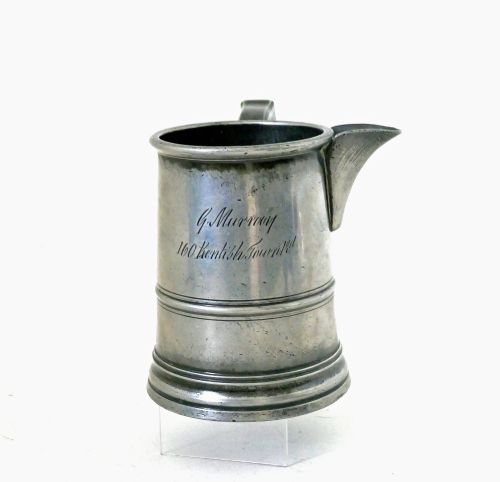
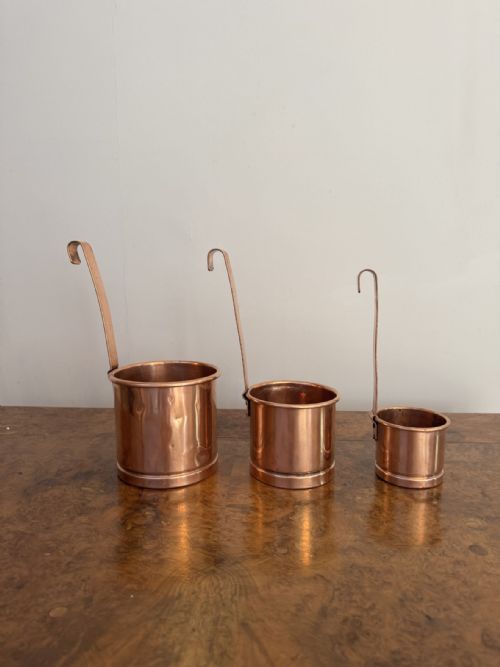
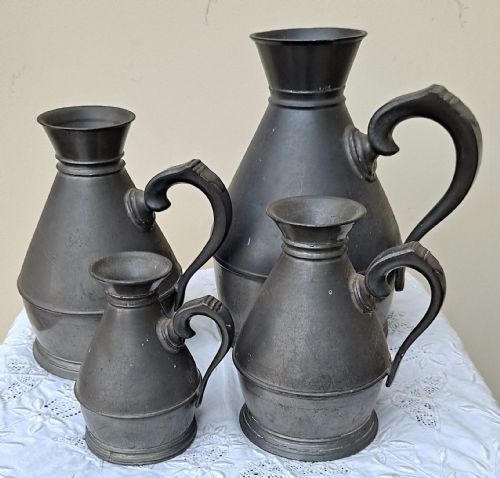
The selections available range from sturdy tavern tankards and flagons to graduated sets of copper and pewter containers. Examples often display capacity marks, regional styling, and maker inscriptions that denote their original commercial purpose.
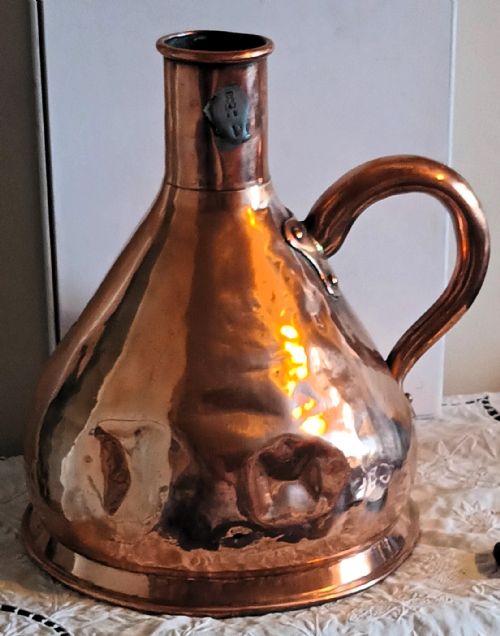
Forms span from slender spire flagons and Scottish tappit hens to bulbous haystack measures and domestic jugs. These pieces reflect the functional demands of Georgian and Victorian life, where metal vessels provided durable service for ale, spirits, and milk.
Materials and construction
Craftsmen utilised copper, pewter, brass, lead, and tin to fabricate these utilitarian vessels, often employing seamed sheet metal construction or casting techniques. Copper and brass sheets were beaten, rolled, and joined at seams, frequently reinforced for heavy daily use in busy environments.
Pewter and lead alloys allowed founders to cast thick-walled measures, such as haystack types and flagons, in specialised moulds. Finishing involved planishing, polishing, and stamping official verification marks directly onto the metal surface.
Current listings feature copper, pewter, and brass vessels spanning the Georgian, Victorian, and Arts and Crafts periods.
Factors determining quality
Quality rests upon the crispness of form, the integrity of original seams, and the clarity of maker stamps or capacity verifications. Heavy-gauge metal maintains its structural geometry better over centuries of handling, whereas thin metal suffers from severe dents and distortion.
Completeness within graduated sets elevates desirability, as scattered single units lack the visual coherence of an assembled group. Furthermore, clean surfaces displaying honest patination rather than aggressive modern polishing preserve the historical integrity of the piece.
Joseph Sankey·J. Bower·Loftus of Oxford Street London
The Vintage Metal Measure Jug Glossary
- Haystack measure
- A distinctive Irish or English measuring vessel characterised by its bulbous, tapered body resembling a stack of hay. These pieces usually feature prominent pouring spouts and sturdy side handles.
- Tappit hen
- A traditional Scottish liquid measure featuring a distinctive lidded form with a knob or tap on the lid. They were commonly cast in pewter for measuring ale or wine.
- Spire flagon
- A tall, tapered drinking or measuring vessel with a hinged lid, terminating in a spire-like finial. This ecclesiastical or tavern shape dates back to earlier periods of metalwork.
- VR mark
- A royal verification stamp indicating Victoria Regina, used to certify the accurate volumetric capacity of commercial measures. These stamps establish official regulatory use.
- Planishing
- The process of smoothing and shaping metal with a light-faced hammer, leaving subtle faceted marks across the surface. This technique hardens the metal while imparting texture.
Vintage Metal Measure Jug: Frequently Asked Questions
What were metal measure jugs used for?
These vessels served as standard volumetric containers for measuring and dispensing liquids such as ale, wine, spirits, and milk in public houses and domestic settings.
Official verification marks ensured traders dispensed accurate quantities to customers.
How do I identify a Georgian measure?
Georgian examples typically display simpler, robust proportions in heavy copper or early pewter, often pre-dating standardised Victorian verification stamps.
Form variations reflect regional British and Irish manufacturing traditions from the eighteenth century.
Are these jugs safe for food use?
Most antique pieces contain lead or other metal alloys that make them unsuitable for modern food consumption and daily beverage use.
Collectors generally display them as decorative historical objects rather than functional kitchenware.
How should I clean antique metal?
Dust gently with a soft cloth and avoid harsh chemical dips that strip away the aged patination accumulated over centuries.
Preserving the original surface texture maintains both the historical value and visual character of the metal.