



Vintage Mercury Thermometer
These vintage mercury thermometer pieces combine scientific utility with fine cabinetry, offering practical measurement housed in period wood.
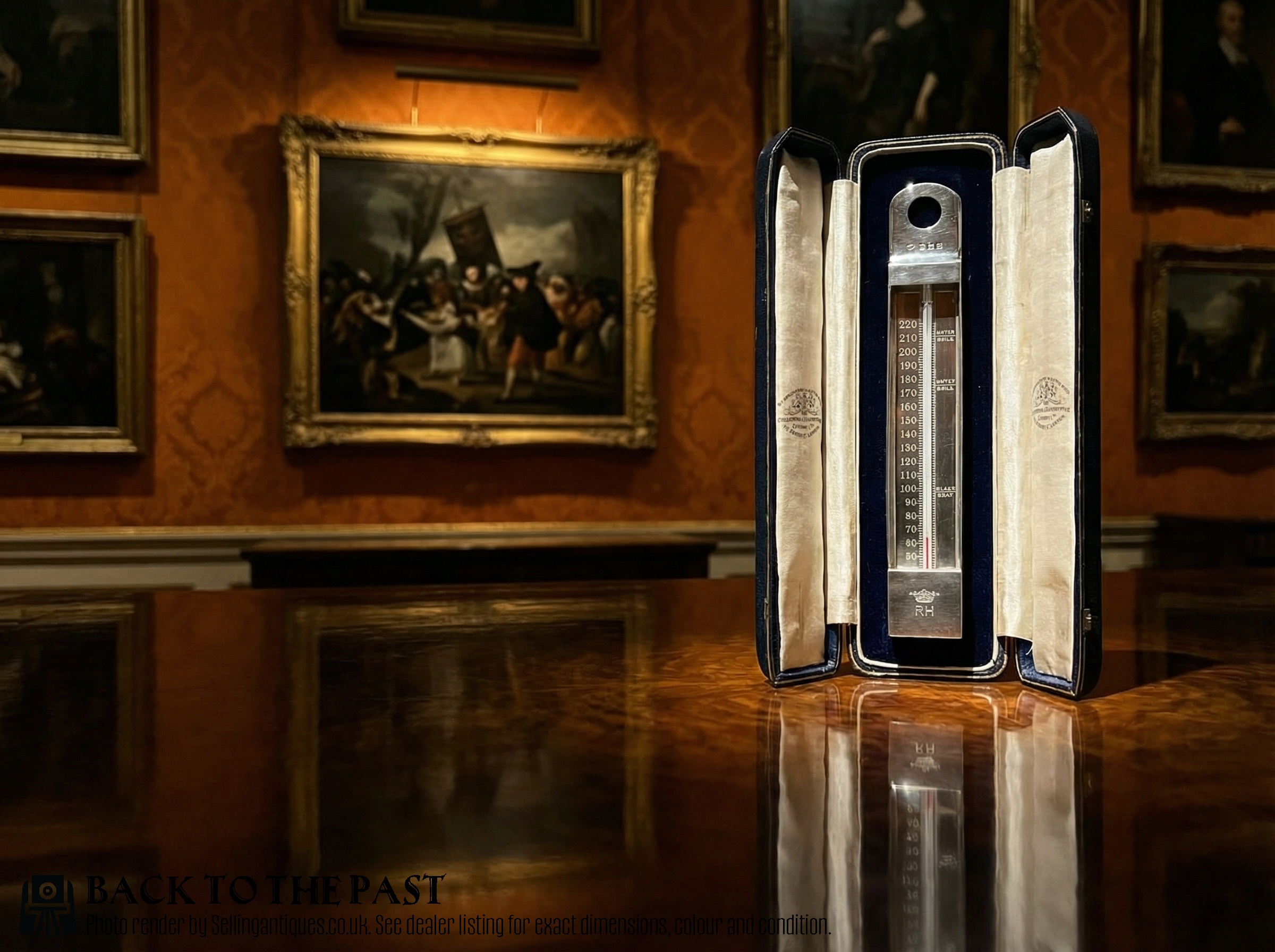
Vintage Mercury Thermometer
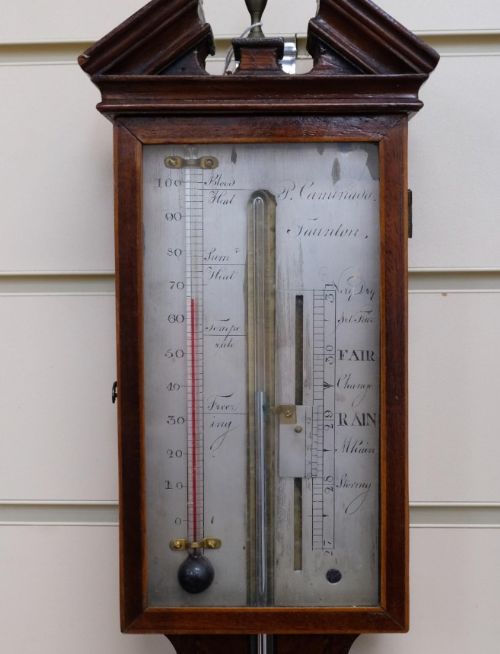
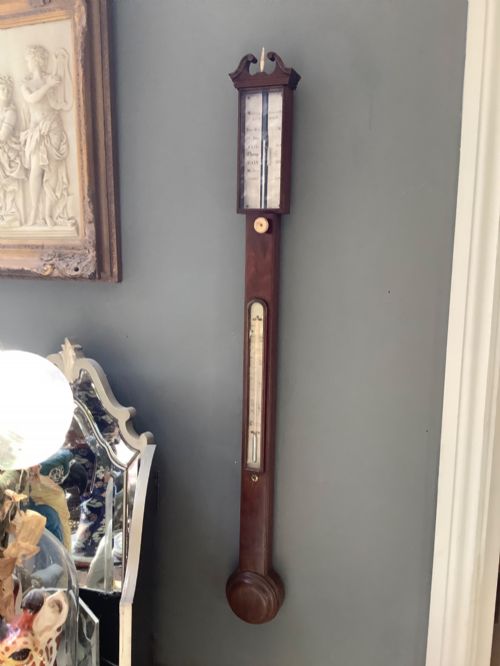
A vintage mercury thermometer search uncovers scientific instruments housed in domestic wood frames, ranging from wall-mounted stick barometers to desk accessories and travelling cases. The listings span the Georgian, Regency, and Victorian eras, alongside Edwardian and Art Deco examples.
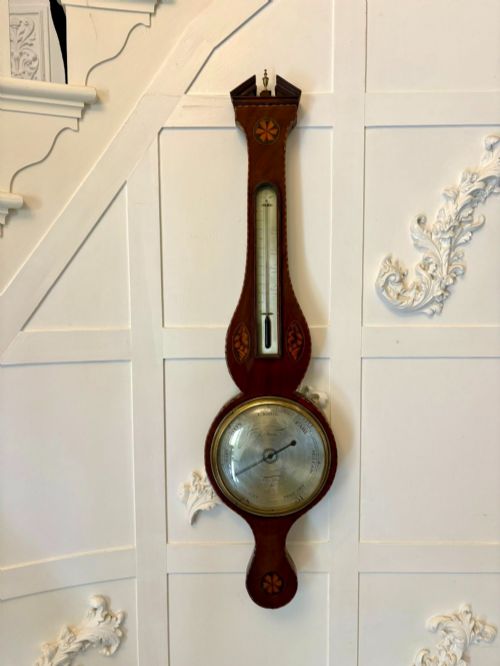
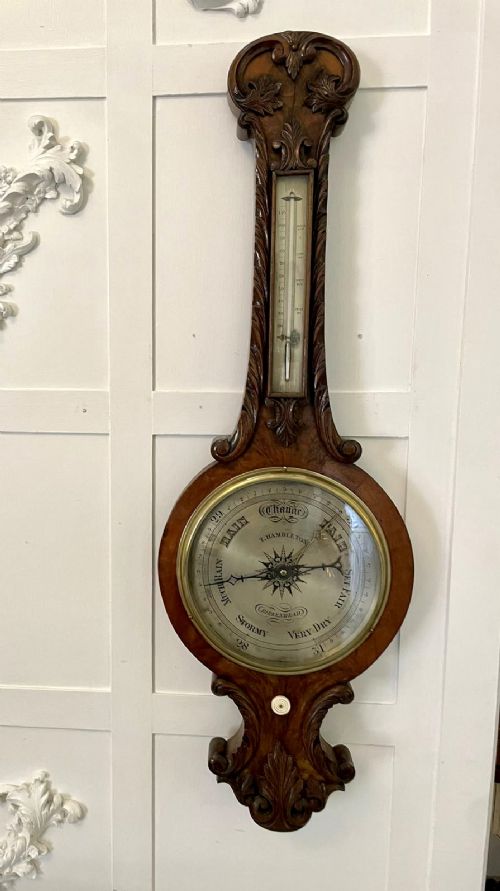
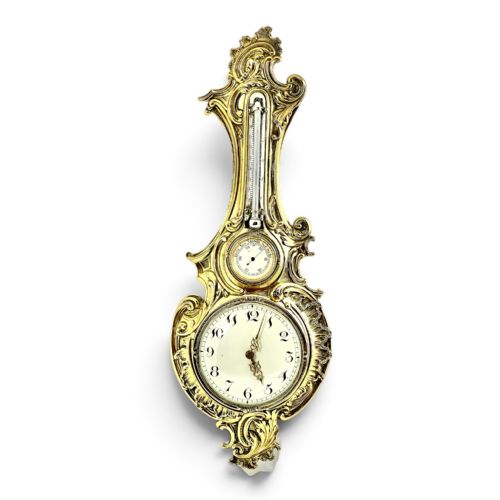
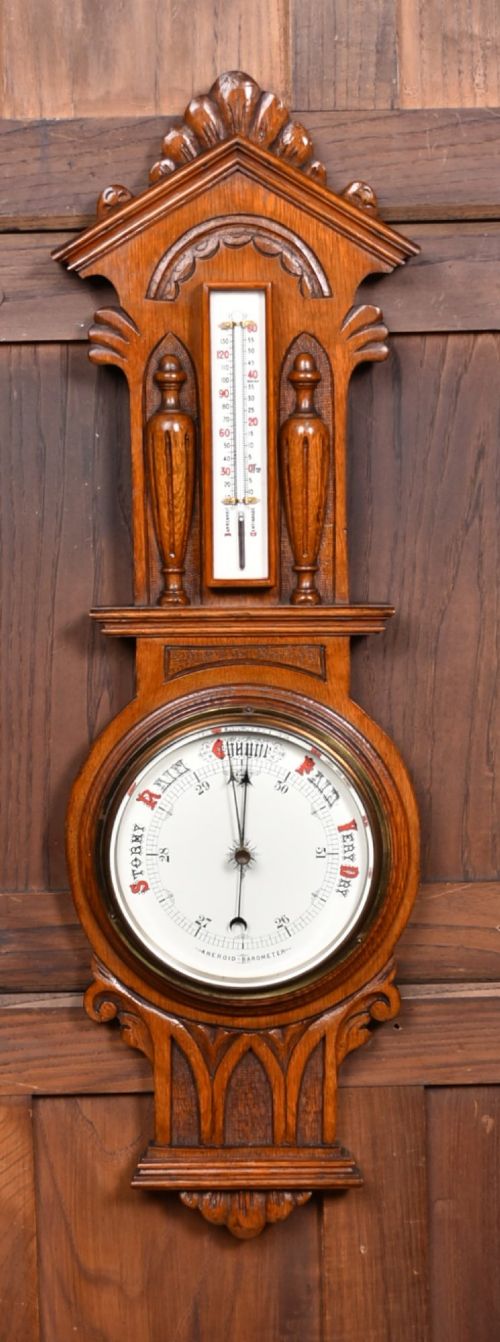
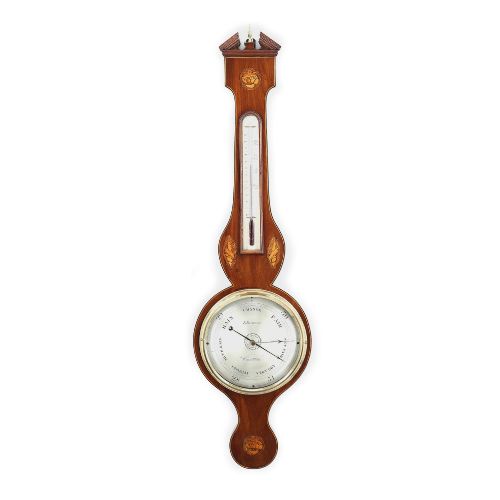
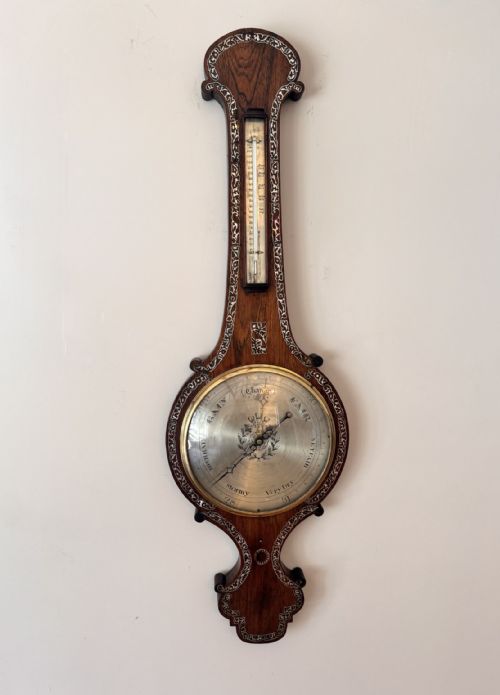
Buyers most frequently encounter banjo barometers incorporating built-in thermometers, alongside dedicated wall thermometers and desk-mounted scientific pieces. These instruments originate from provincial English makers and London instrument houses alike, using timber cases suited to contemporary domestic interiors.
Materials and Construction
Cases utilise dense hardwoods including mahogany, oak, rosewood, and burr walnut, frequently shaped into architectural frames or swept banjo outlines. Cabinetmakers employed shell inlay, mother-of-pearl, and brass stringing to ornament the timber surfaces.
Graduated scales are engraved on silvered brass plates or white porcelain, paired with blown glass tubes containing elemental mercury. Desk thermometers often sit upon serpentine stone or carved wooden bases to provide stability.
Travellers in the Regency period carried leather-cased pocket thermometers to monitor the climate while moving between coaching inns.
Quality and Execution
Quality rests upon the crispness of the cabinetwork and the legibility of the engraved scale. Superior examples feature well-figured mahogany or rosewood veneers, intricate marquetry, and signed brass dials.
Maker signatures engraved upon the silvered brass plates distinguish workshop pieces from unmarked commercial output. The preservation of the original mercury column and glass tube dictates the integrity of the instrument.
George Adams of Fleet Street·Thomas Harris and Son·Negretti and Zambra·W Watson and Sons·Dollond London·Goldsmiths of London
The Vintage Mercury Thermometer Glossary
- Banjo barometer
- A household instrument featuring a rounded dial at the base and a long trunk above, commonly housing a thermometer alongside the main weather gauge.
- Stick barometer
- A tall, narrow wall instrument where the mercury tube is exposed against a scale, favoured for precision measurement.
- Silvered brass
- A brass dial plate treated with a silver composition to provide a bright, readable background for engraved graduations.
- Minimum thermometer
- A specialist instrument designed to record the lowest temperature reached over a specific monitoring period.
Vintage Mercury Thermometer: Frequently Asked Questions
How do I read a vintage mercury thermometer?
Read the temperature by observing the top of the mercury column against the engraved scale on the silvered brass or porcelain plate. The numbers indicate the ambient temperature recorded at the bulb.
Ensure the instrument is mounted vertically on a stable wall or surface to maintain proper contact within the glass tube.
Where should I hang my wall thermometer?
Hang your instrument on an interior wall away from direct sunlight, radiators, and draughts to ensure accurate temperature readings. Consistent indoor environments protect the antique timber case from rapid humidity shifts.
Use secure fixings suited to the weight of the mahogany, oak, or rosewood backing board.
How do I identify a Georgian instrument?
Georgian instruments typically feature restrained mahogany cases with simple architectural lines or early banjo configurations without heavy Victorian carving. The brass dial plates carry crisp, hand-engraved maker inscriptions.
Drawer and case construction methods on the reverse reflect eighteenth-century cabinet-making techniques.
What is the difference between a barometer and a thermometer?
A thermometer measures ambient temperature via an enclosed mercury column, while a barometer measures atmospheric pressure to forecast weather changes. Many period pieces combine both instruments into a single housing.
Combined banjo barometers frequently incorporate a hygrometer or spirit level at the base alongside the thermometer dial.