



Vintage Masons Pottery
These vintage masons pottery pieces bring robust ironstone body and striking transfer or hand-painted colour to your table.
Vintage Masons Pottery
When you search for vintage masons pottery, you encounter durable domestic wares and display pieces shaped by 19th Century, Georgian, and Edwardian traditions. The inventory leans heavily on sturdy ironstone bodies adapted into practical forms like plates, jugs, comports, and cheese dishes.
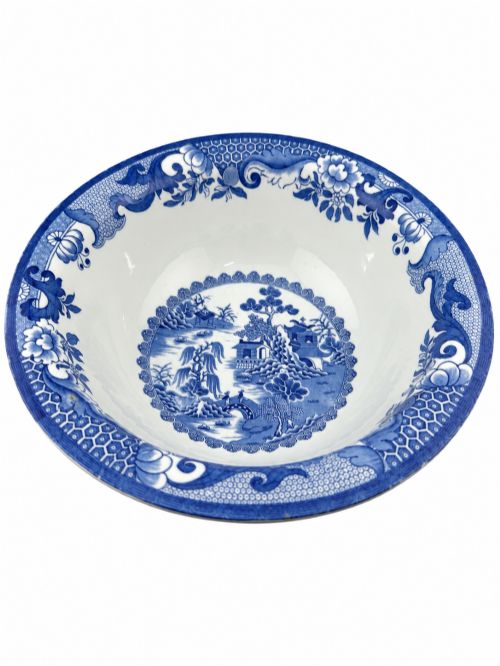
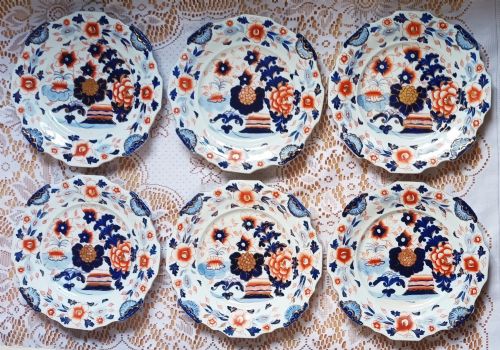
You meet a variety of decorative treatments across these forms, ranging from blue and white transfer printing to vibrant Chinoiserie, Imari, and Japan patterns. The pieces reflect a long history of utilitarian production designed to withstand heavy daily use while offering visual charm.
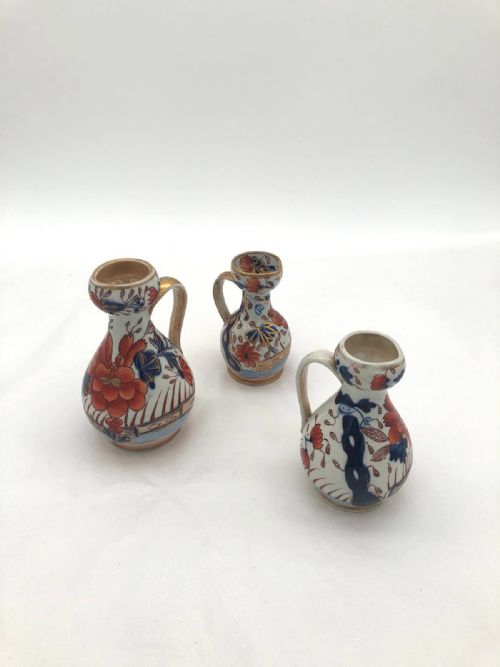
Most items you find date from the 19th Century, displaying the characteristic weight and density of patent ironstone china. These range from simple dessert dishes and porringers to ornate hydra jugs and orange ground charger plates embellished with exotic birds.
How they were made
Makers utilised heavy ironstone and earthenware bodies, valued for their durability and capacity to hold thick, protective glaze layers. This dense ceramic composition allowed potters to form robust serving vessels, plates, and jugs that resisted chipping during everyday service.
Surface decoration combined transfer printing with hand-applied enamel colours and rich gilding. Artisans applied cobalt blue transfers or polychrome motifs featuring Pagoda and Japan patterns, often finishing details with gold leaf highlights to enhance the visual depth of the design.
Vintage Masons Pottery Retail Price Guide 2026
Typical asking prices for vintage masons pottery among the pieces listed under this phrase on Sellingantiques today, from the lower quarter to the upper quarter. They describe what is for sale here now, not the wider market.
Some hydra jugs wear their serpent handles with such fierce pride you half expect them to hiss at the morning milk.
What varies in quality
The standard of these wares depends on the crispness of the transfer print and the precision of the hand-applied enamel painting. Stronger pieces display clean outlines and well-registered polychrome details that sit firmly beneath or upon a clear, unblemished glaze.
The Vintage Masons Pottery Glossary
- Ironstone
- A heavy, durable ceramic body patented in the 19th Century to provide a strong alternative to porcelain. It forms the structural base for the majority of these plates and jugs.
- Chinoiserie
- A decorative style employing European interpretations of Chinese artistic motifs. These designs typically feature pagodas, exotic birds, and imaginary landscapes rendered in bright enamels.
- Imari
- A decorative palette inspired by Japanese export wares, utilising iron red, cobalt blue, and gold leaf. The scheme appears frequently on plates and comports from this tradition.
- Comport
- A raised serving bowl or dish supported by a footed base. They function primarily for presenting fruit or sweetmeats centrally on a dining table.
- Hydra jug
- A water or milk jug featuring a distinct serpentine handle shape and an expanded spout. This specific moulded form appears on several 19th Century ironstone vessels.
Vintage Masons Pottery: Frequently Asked Questions
What is ironstone china?
Ironstone is a dense, vitrified ceramic material patented to resist chipping and cracking during heavy kitchen and dining use.
It provides a sturdy, opaque body that accepts thick glazes and colourful transfer prints exceptionally well.
How do I date these pieces?
Dating relies on identifying backstamps, ceramic bodies, and decorative styles typical of Georgian, Victorian, or Edwardian production.
Examining the weight of the ironstone and the vibrancy of the enamel colours also helps place an item within the 19th Century.
Can I use these for dining?
Many of these plates and dishes were built for practical service and remain robust enough for careful daily use.
Hand washing is recommended to preserve the integrity of the enamel painting, transfer prints, and gold leaf highlights.
What are Japan patterns?
Japan patterns represent European adaptations of traditional Japanese Imari ceramic designs featuring rich cobalt blue and iron red.
Potters applied these motifs to ironstone plates and dishes to satisfy a strong domestic demand for exotic decoration.