


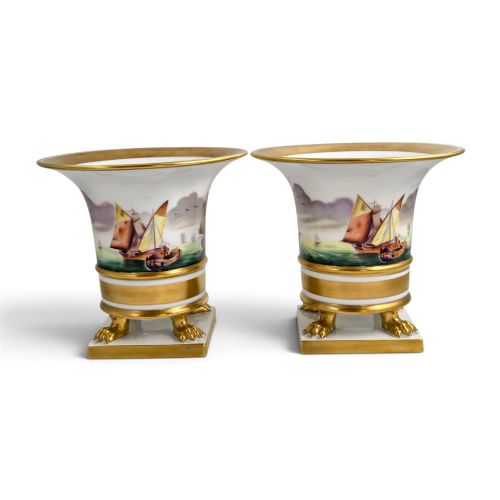


Vintage Maritime Painting Pair
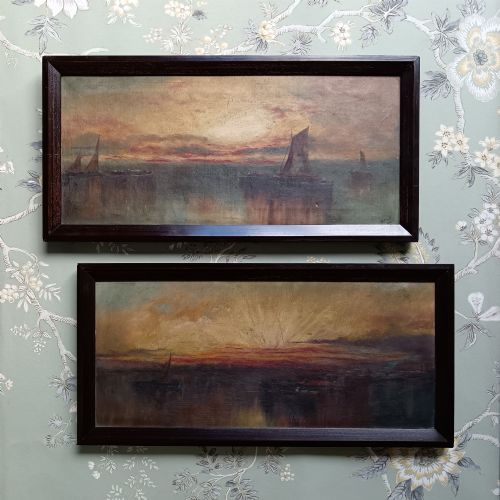
A vintage maritime painting pair brings the atmosphere of nineteenth-century coastal life directly to a wall, matching sunrise against sunset or calm water against storm.
Vintage Maritime Painting Pair
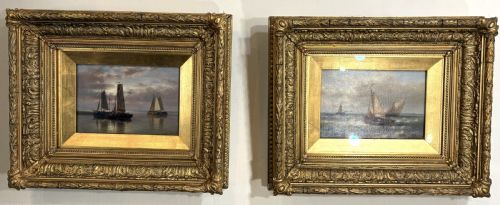
A vintage maritime painting pair consists of two complementary pictures depicting seascapes, coastal views, or sailing vessels, created as matching companions. These works capture naval vessels, fishing boats, and coastal scenes across the nineteenth century and early twentieth century. Most sets encountered combine balanced compositions, such as sunrise and sunset views or tranquil water paired with heavier weather.
The subjects span British and European shores, from the Thames and Medway to Dutch coasts and the Mediterranean. Artists utilise canvas, board, and paper to record maritime activity, often framed in period gilt wood or ebonised surrounds. Buyers select these pairs to display balanced artistic statements that reflect historic maritime trade and coastal heritage.
Materials and methods
Makers applied oil paint or watercolour onto prepared canvas, wood board, or paper. Oil paintings on canvas provide rich textures and depth, while watercolours on paper offer lighter, transparent tones for coastal atmospheres.
Frames utilise wood, including giltwood and gilt frames, which complement the maritime subject matter. Protective glass frequently covers works executed on paper to prevent environmental damage.
Vintage Maritime Painting Pair Retail Price Guide 2026
Typical asking prices for vintage maritime painting pair among the pieces listed under this phrase on Sellingantiques today, from the lower quarter to the upper quarter. They describe what is for sale here now, not the wider market.
Listings feature works spanning the nineteenth century, Edwardian era, and early twentieth century, utilising oil paint, watercolour, canvas, and wood.
Quality variations
The distinction between standard works and finer examples lies in the precision of the brushwork and the accuracy of the vessel rigging. Master artists render water movement, atmospheric light, and maritime architecture with distinct clarity.
Original matching frames contribute to the overall integrity of the set. Well-preserved surfaces retain their original pigment depth without excessive restoration or overpainting.
Abraham Hulk I·Adrian Van Porten·George Dodgson Callow·Leslie Rackham·Hubert Thornley·Pieter Cornelis Dommersen·Gordon Meadows
The Vintage Maritime Painting Pair Glossary
- Seascape
- A work of art depicting the sea, coastal views, or marine subjects. These pieces focus on water, weather, and vessels.
- Giltwood
- Wood carved and covered with a thin layer of gold leaf or gold paint. This finish appears frequently on nineteenth-century frames.
- Watercolour
- A paint consisting of pigment suspended in a water-based solution, applied to paper. It allows for delicate washes of light and colour.
- Board
- A rigid flat surface made of wood or pasteboard used as a support for painting. It provides a firm alternative to stretched canvas.
Vintage Maritime Painting Pair: Frequently Asked Questions
How should a pair be displayed?
Hang the two pictures side by side at eye level with consistent spacing to maintain their visual balance. Matching frames allow them to anchor a room as a single cohesive unit.
Keep the works away from direct sunlight and excessive humidity to protect the canvas, paper, and gilt frames from deterioration.
What periods do these pieces date from?
The works originate primarily across the nineteenth century and the early twentieth century, spanning Victorian and Edwardian eras. Dates range from early nineteenth-century studies to works produced around nineteen-ten.
Stylistic shifts reflect changing artistic approaches, moving from traditional marine art towards Hague School influences and regional watercolours.
Are all pairs painted by the same artist?
Many pairs are created by a single hand, signed by artists such as Abraham Hulk I or Pieter Cornelis Dommersen, ensuring stylistic consistency. Other sets are matched by subject and period rather than creator.
Dealers assemble complementary scenes of sunrise and sunset or matching coastal views to form harmonious pairings.
What subjects appear in these paintings?
Common subjects include fishing boats, barques, and coastal towns situated along British and European shores. Scenes often capture daily maritime labour, harbour entrances, and tidal waters.
Compositions frequently pair contrasting conditions, such as calm moorings alongside vessels navigating choppy seas.