



Dutch Coastal Oil Paintings
Dutch coastal oil paintings capture maritime life and moody shorelines through centuries of brushwork, offering timeless character for your walls.
Dutch Coastal Oil Paintings
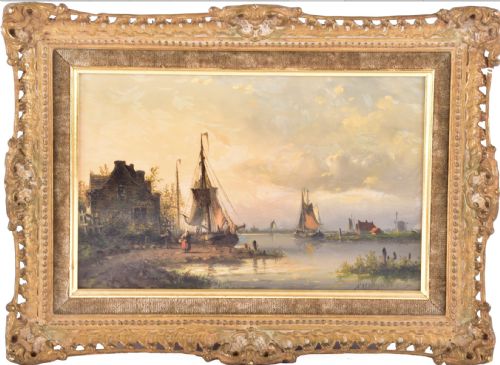
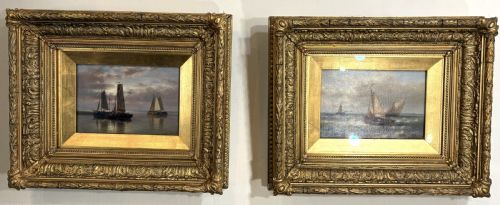
Dutch coastal oil paintings depict maritime scenes, estuaries, and shorelines, often featuring traditional fishing boats, sailboats, and windmills. When exploring these works, you will encounter pieces spanning from the seventeenth century through to the mid-twentieth century.
The nineteenth century provides the strongest representation on this page, offering numerous depictions of the Dutch coast by both British and continental artists. These works frequently showcase marine realism and impressionist approaches to coastal light and water.
Forms range from intimate panels and boards to large canvases, frequently housed in period giltwood frames. Subjects include bustling port views, quiet estuaries, and portraits of fisher folk.
How they were made
Artists painted primarily with oil paint on stretched canvas, wood panels, or board supports. These traditional media allowed for rich layering and subtle blending of tones to capture atmospheric skies and choppy coastal waters.
Dutch Coastal Oil Paintings Retail Price Guide 2026
Typical asking prices for dutch coastal oil paintings among the pieces listed under this phrase on Sellingantiques today, from the lower quarter to the upper quarter. They describe what is for sale here now, not the wider market.
The listings on this page span from the seventeenth century through the 1960s, utilising oil on canvas, wood, and panel supports.
What varies in quality
Quality rests upon the artist's command of light, movement, and atmospheric perspective in depicting the sea and sky. Superior works demonstrate confident brushwork that conveys the weight of water and the motion of wind-filled sails.
The harmony between the painting and its period frame also influences the overall standard. Original giltwood frames that suit the scale and era of the canvas elevate the presentation significantly.
Abraham Hulk I·Pieter Cornelis Dommersen·Bonaventura Peeters·Charles Martin Powell·Alfred Montague
The Dutch Coastal Oil Paintings Glossary
- Oil on canvas
- A traditional painting technique where pigments bound in oil are applied to a woven fabric support stretched over a wooden frame. This method allows for texture and deep colour saturation.
- Giltwood
- Wood carved and coated with gold leaf or a gold-coloured metallic finish. It is commonly found on antique frames enclosing marine paintings.
- Gesso
- A plaster-like mixture applied to wood panels or frame mouldings to prepare a smooth surface for gilding or painting. It provides a stable base for decorative elements.
- Impressionist
- A style of painting emphasising loose brushstrokes and the shifting effects of light rather than meticulous detail. This approach appears in several later coastal and marine scenes.
- Marine painting
- Artwork depicting ships, the sea, and coastal views as the primary subject matter. It encompasses both calm estuaries and dramatic gales.
Dutch Coastal Oil Paintings: Frequently Asked Questions
What subjects feature in Dutch coastal oil paintings?
These works predominantly depict sailing boats, fishing vessels, windmills, estuaries, and coastal villages. Scenes often capture daily maritime life along the shore.
Some pieces also include portraits of local figures, such as fisher girls, set against a maritime backdrop.
How do I date a Dutch coastal oil painting?
Dating relies on stylistic clues, framing techniques, artist signatures, and stretcher construction. Nineteenth-century works often exhibit the realism or early impressionism popular during that era.
Seventeenth-century pieces, by contrast, display the darker palettes and specific rigging details characteristic of the Dutch Golden Age.
Where should I hang a marine oil painting?
Marine paintings suit principal reception rooms, studies, or hallways where natural light can illuminate the brushwork. Ensure the wall space allows the piece to be viewed without direct, harsh sunlight.
Pairing the work with traditional interiors enhances its historic character.