



Vintage Marine River Painting
A vintage marine river painting captures the working life of historic waterways and bustling ports on canvas or paper.
Vintage Marine River Painting
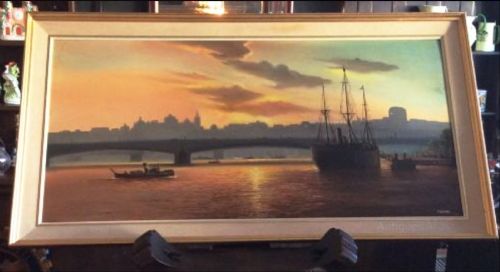
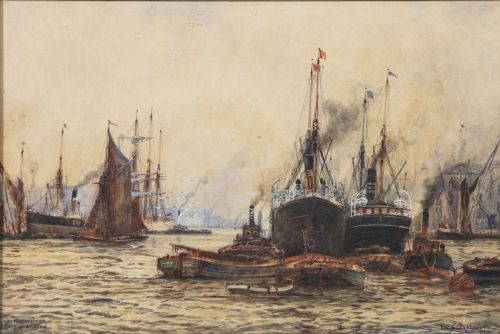
When buyers search for a vintage marine river painting, they encounter depictions of tidal rivers, estuaries, and major ports populated by barges, sailing ships, and clippers. The selection spans from the nineteenth century through the Edwardian era into the mid-twentieth century, capturing the changing industrial and natural landscapes of waterways like the Thames, the Medway, and international rivers.
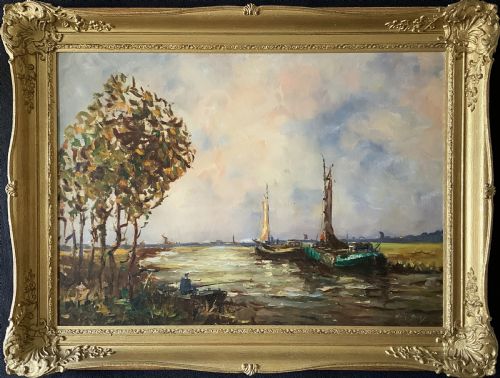
The works appear primarily as oil paintings on canvas or board, alongside watercolours on paper. Subjects range from panoramic London scenes featuring Waterloo Bridge and St Paul's Cathedral to foreign canalscapes and busy foreign waterways, reflecting both British and continental European settings.
Makers and artists documented in these pieces range from Victorian landscape painters to mid-century practitioners, providing collectors with a clear lineage of maritime and river topography. The compositions vary from calm moonlight shipping scenes to active port traffic with tugs and barges.
Materials and Techniques
Painters utilised oil paint on stretched canvas or wooden boards to build rich, textured surfaces that could capture the reflective quality of water and the atmospheric haze of industrial ports. This medium allowed artists to work up dense layers, depicting shipping and architecture with durable pigments.
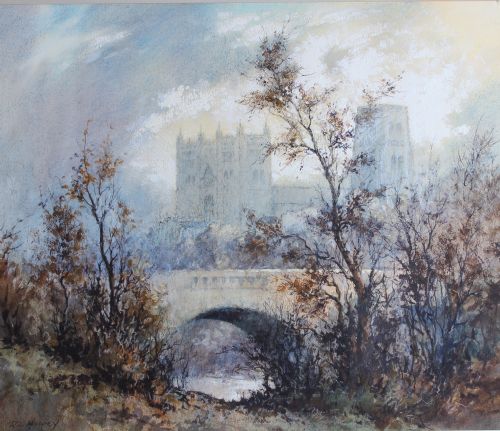
Watercolour on paper served as a primary medium for detailed topographical views, often favoured for its transparency and speed in capturing atmospheric light on rivers like the Thames. Artists frequently combined washes with pencil or ink underdrawings to define rigging, hulls, and distant spires.
Listings feature works created across the nineteenth and twentieth centuries, using oil paint, watercolour, canvas, and paper.
Distinctions in Quality
The strength of a composition lies in the artist's handling of light, water reflections, and spatial depth, separating spirited topographical records from rigid illustrations. Superior works demonstrate confident brushwork or delicate watercolour control that brings movement to both water and vessel.
Provenance and artist attribution elevate certain pieces, particularly when signed by documented nineteenth or twentieth-century marine specialists. The precision of maritime detail, such as accurate rigging and vessel type, distinguishes accomplished topographical work from generic river scenes.
Frank William Scarbrough·William Frederick Settle·Thomas Bush Hardy·Edward Henry Eugene Fletcher·Charles Harmony Harrison
The Vintage Marine River Painting Glossary
- Canvas
- A heavy woven fabric used as a surface for oil painting. It is typically stretched over a wooden frame before application.
- Watercolour
- A paint consisting of pigment suspended in a water-soluble vehicle. It is traditionally applied to paper to create transparent washes of colour.
- Board
- A rigid flat panel, often wood or pulp-based, used as a sturdy alternative to canvas for oil paintings. It provides a firm surface for direct impasto work.
- Gilt
- A thin layer of gold leaf or gold paint applied to frames or surfaces. It adds a decorative metallic finish to presentation surrounds.
Vintage Marine River Painting: Frequently Asked Questions
What periods do these paintings cover?
The available selection spans from the nineteenth century through Edwardian times and into the mid-twentieth century.
Works reflect artistic styles from Victorian maritime realism to early British impressionism.
What materials were used?
Artists worked primarily in oil paint on canvas or board, and watercolour on paper.
Gilt frames frequently accompany these pieces to house and protect the works.
How do oil and watercolour differ here?
Oils provide heavy texture and deep pigmentation suitable for dramatic shipping and moonlight scenes.
Watercolours offer delicate transparency ideal for atmospheric port mornings and architectural backdrops.