



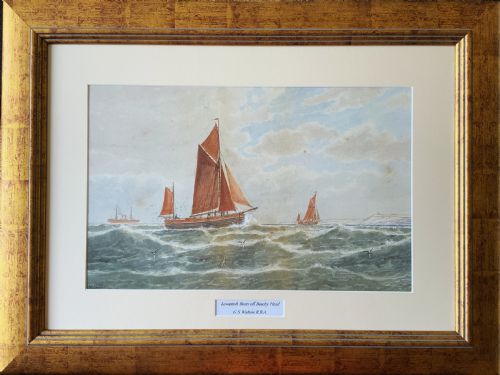
Vintage Marine Boat Painting
When you collect a vintage marine boat painting, you bring home centuries of coastal weather, bustling harbours, and open water captured on canvas or paper.
Vintage Marine Boat Painting
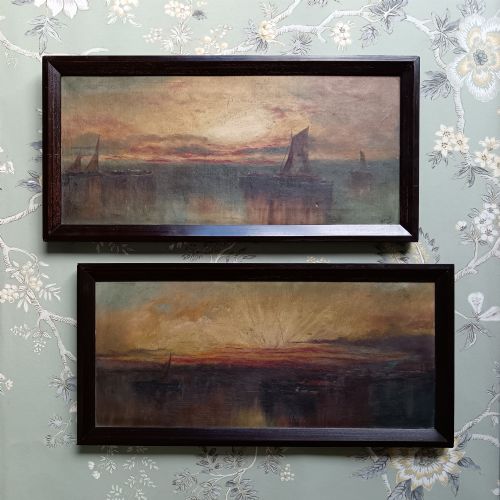
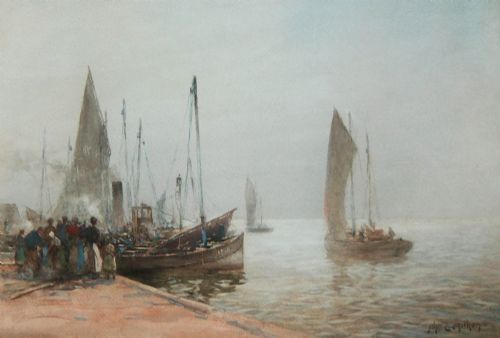
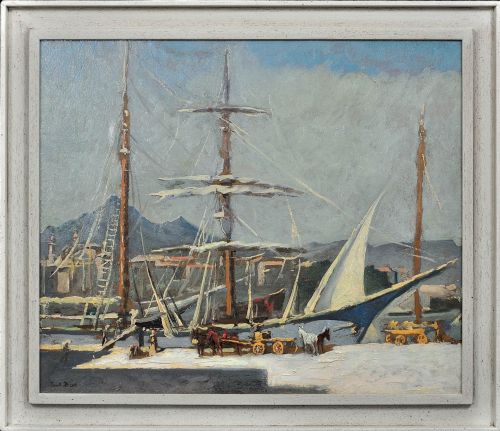
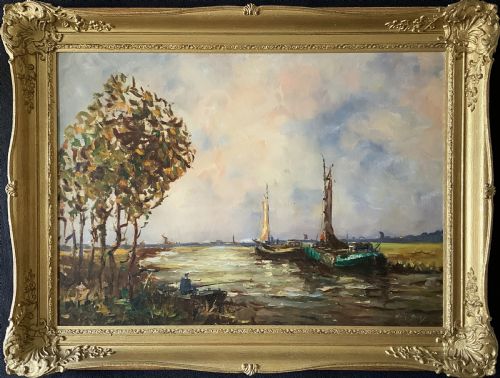
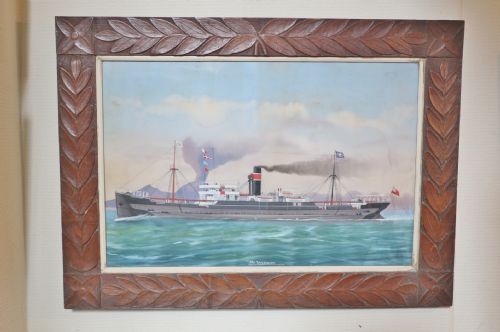
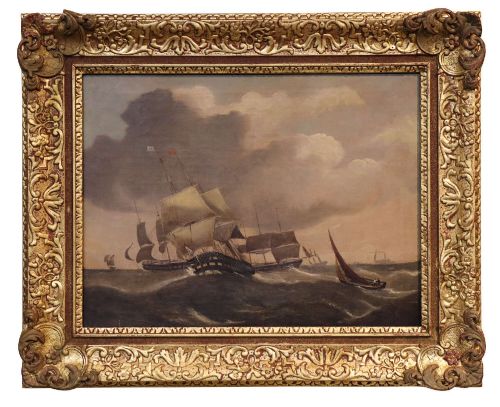
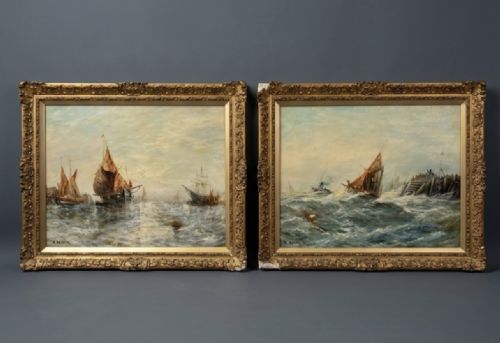
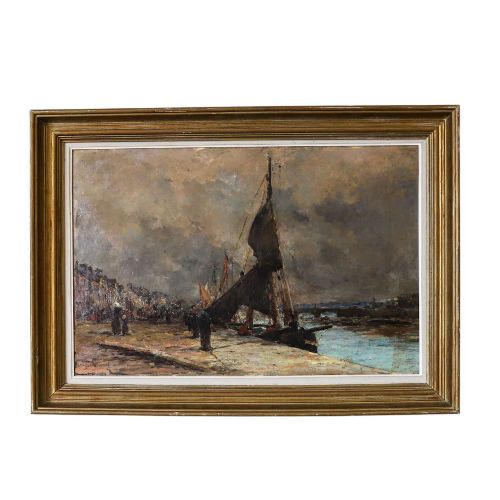
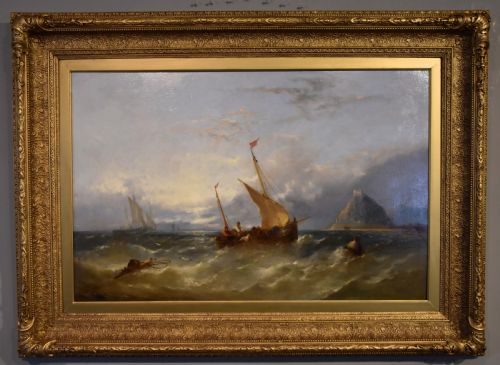
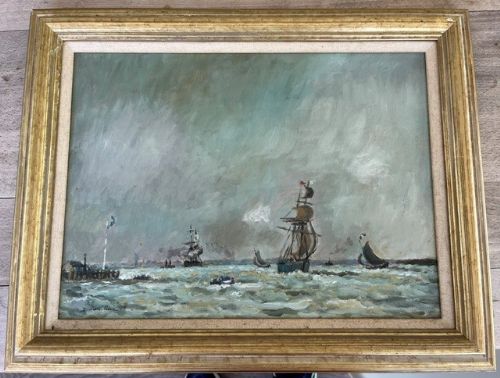
A vintage marine boat painting encompasses coastal scenes, harbour views, and open-sea subjects produced from the nineteenth century into the mid-twentieth century. The selection ranges from detailed Victorian oil paintings on canvas to atmospheric watercolours and mid-century compositions on board.
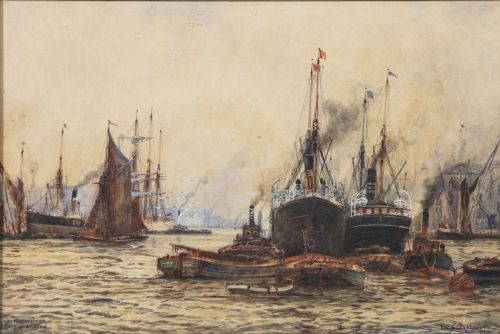
You will frequently encounter works capturing specific British and European ports, fishing vessels in heavy seas, and quiet river estuaries. The selection spans the Edwardian era, Victorian period, and post-war decades, showing both traditional maritime realism and looser impressionistic approaches.
Materials and methods
Artists relied primarily on oil paint applied to canvas, wood panels, or sturdy card, alongside watercolour pigments on paper. Many surviving works retain their original gilt wood frames, which complement the maritime subject matter.
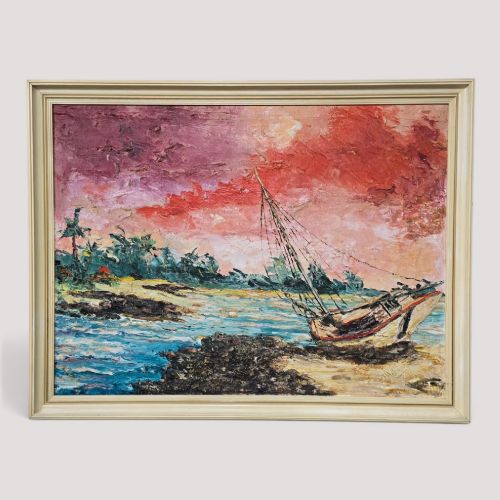
Techniques range from smooth, highly detailed brushwork recording rigging and hull construction to energetic impasto strokes capturing turbulent waves and changing light.
The listings span the Victorian, Edwardian, and mid-twentieth-century periods, featuring both oil on canvas and watercolour on paper.
Distinguishing quality
Quality rests upon the artist's command of light, atmosphere, and maritime architecture, particularly in the accurate rendering of vessels, water movement, and coastal topography. Stronger pieces display confident brushwork and a convincing sense of depth rather than rigid mechanical detail.
The harmony between the artwork and its original frame, along with the preservation of the paint or paper surface, contributes significantly to the standing of an individual piece.
Kenneth Cozens·James E Aitken·Frank William Scarbrough·Willem Bos·George Stanfield Walters·Abraham Hulk I·William Edward Webb·Charles Napier Hemy·William Lee Hankey·Edward Seago·Thomas Bush Hardy·Tom Clough·Edward Henry Eugene Fletcher
The Vintage Marine Boat Painting Glossary
- Canvas
- A heavy woven fabric stretched across a wooden frame to serve as a support for oil paintings. It provides a durable and textured surface for maritime scenes.
- Impasto
- A technique where paint is laid onto a surface in very thick layers, standing out visibly from the plane. Marine painters often utilise this to render crashing waves and thick sea foam.
- Seascape
- A work of art depicting the sea, coastlines, or marine vessels in motion. These compositions focus on the atmospheric conditions of open water.
- Watercolour
- A painting method in which the paints are made of pigments suspended in a water-based solution. Paper serves as the primary support, allowing for translucent washes of coastal light.
Vintage Marine Boat Painting: Frequently Asked Questions
How do I identify a Victorian marine painting?
Victorian marine pieces typically show meticulous attention to maritime rigging, traditional sailing vessels, and dramatic coastal weather. They are frequently executed in oil on canvas and often housed in heavy gilt wood frames.
Examination of the canvas backing, stretcher bars, and framing materials often yields further clues to the period of production.
What is the difference between oil and watercolour marine art?
Oil paintings utilise pigment bound in drying oils, offering rich textures, deep tones, and the ability to build heavy impasto for stormy seas. Watercolours employ water-soluble pigments on paper, yielding luminous, transparent effects ideal for quiet estuaries and misty harbours.
Both mediums were widely used across the nineteenth and twentieth centuries to capture maritime subjects.
How should I care for a vintage painting on paper?
Watercolours and works on paper require protection from direct sunlight to prevent fading of the pigments and yellowing of the paper support. Displaying them away from damp environments helps preserve the integrity of the paper.
Ensure framing is secure and uses acid-free materials to maintain the condition of the artwork.
Where were most of these coastal scenes painted?
The works record activity across British ports, Dutch canals, Italian harbours, and French coastal towns. Artists travelled extensively to sketch working fishing boats, merchant steamships, and local shipping lanes.
Inscriptions on the reverse or within the titles often specify the exact location, ranging from Whitby and Lowestoft to Palermo and Honfleur.