
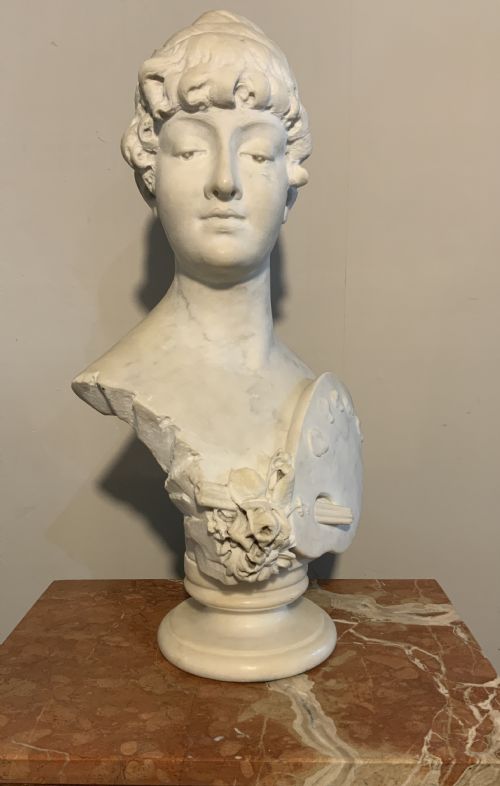
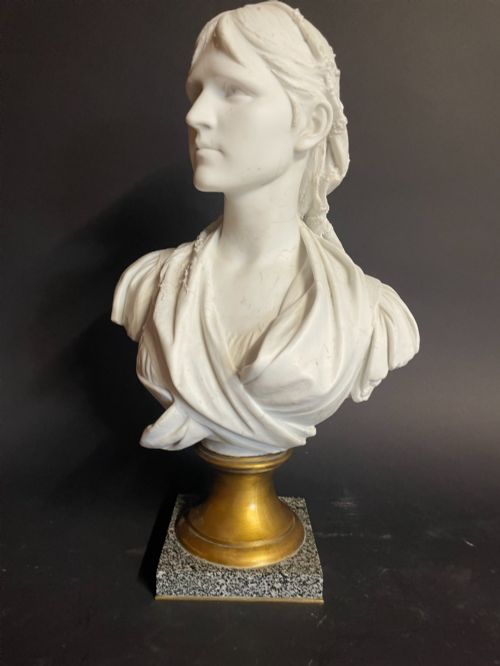
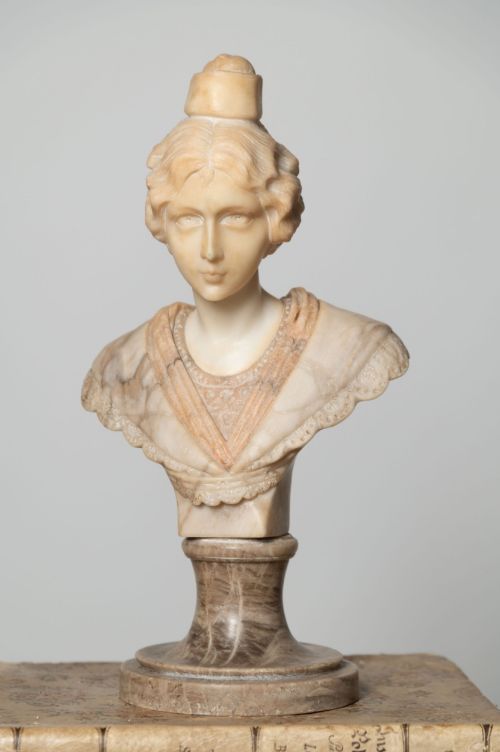
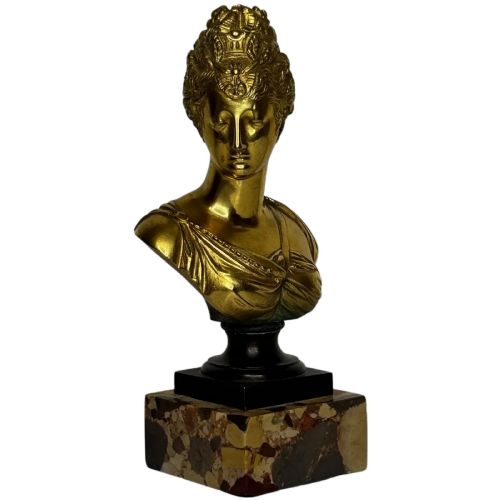
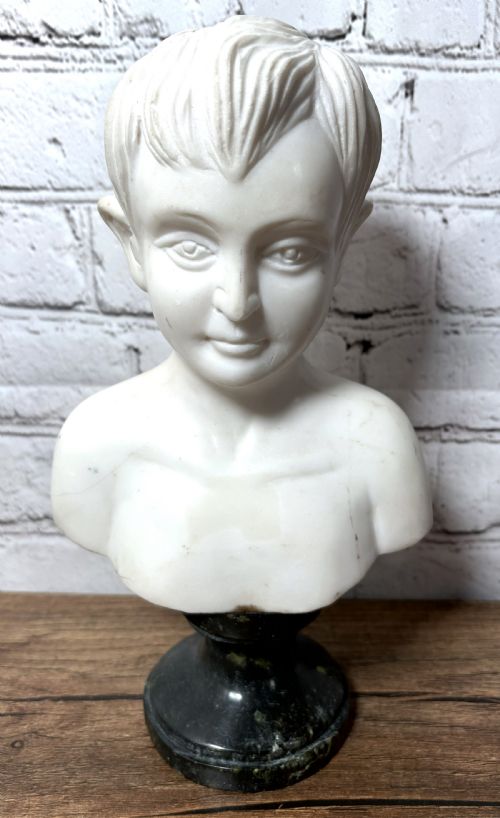


Vintage Marble Head
These vintage marble head sculptures and busts bring classical gravity and tactile presence into a room.
Vintage Marble Head
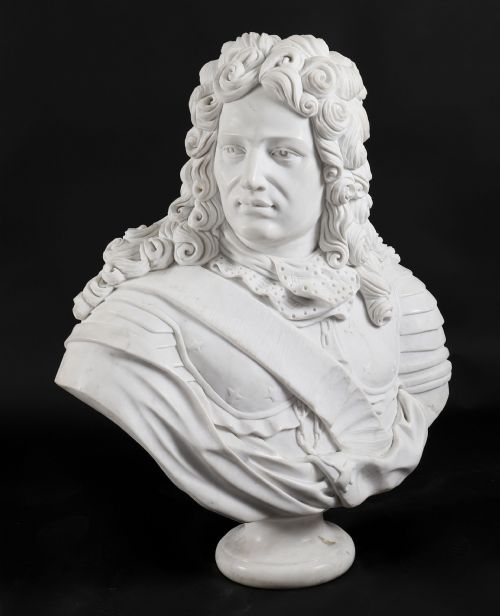
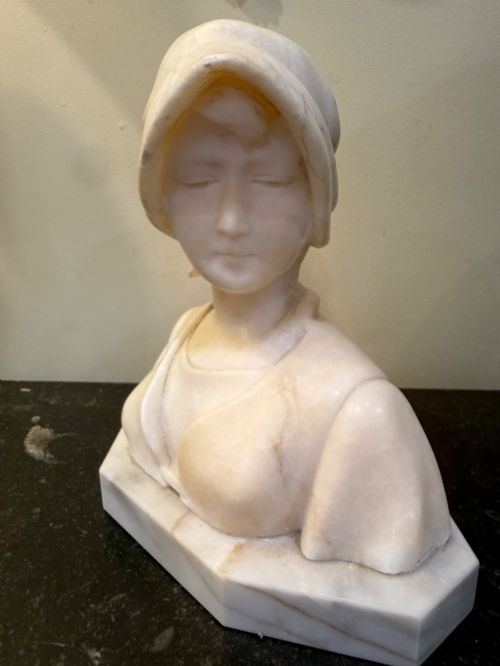
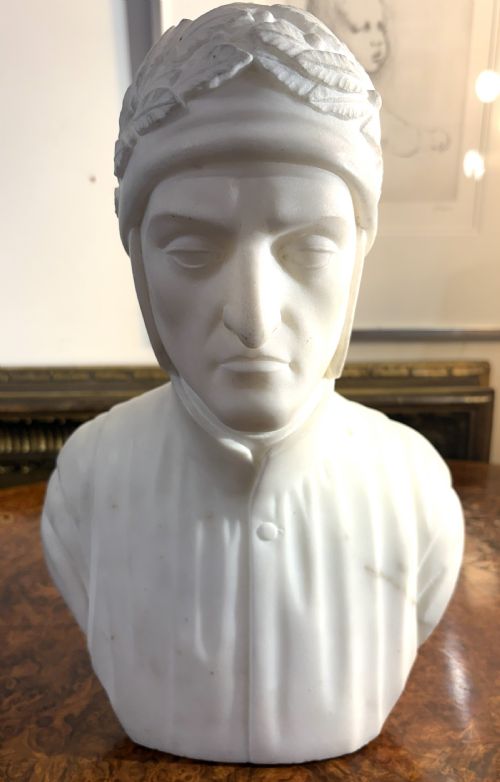
When you search for vintage marble head, you are looking at carved sculptural portraits and studies spanning the nineteenth century through the mid twentieth century. These pieces encompass library busts of historical figures, portraits of noblemen, ladies, and children, alongside carved animal studies.
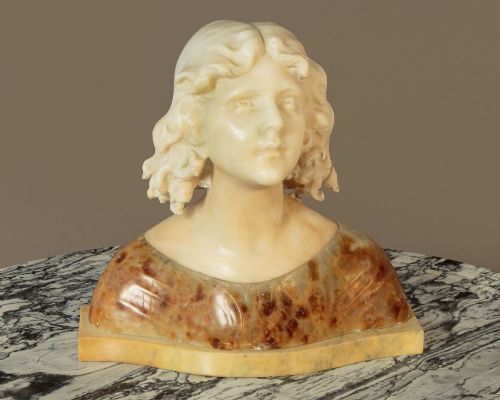
On this page, you are most likely to meet Italian and English works executed in white marble, Carrara marble, and alabaster. The forms range from classical revivals to Art Nouveau and Art Deco interpretations, frequently mounted on contrasting stone or bronze bases.
The selection also includes sculptural table elements such as bistro tables incorporating marble tops alongside portrait busts and library studies. Each piece reflects the enduring popularity of classical antiquity and historical portraiture in domestic interiors across different periods.
Materials and construction
Master carvers shaped the stone using chisels, rasps, and abrasive sands to achieve smooth skin textures alongside polished or textured hair and garments. Signature incisions and foundry marks occasionally appear on the reverse or base, indicating professional studio production.
Listings feature works spanning the nineteenth century, Edwardian era, and mid-twentieth century, utilising marble, alabaster, bronze, and granite across sculptural and table forms.
Assessing quality and execution
Quality rests in the anatomical precision of the carving, the liveliness of the expression, and the crispness of detail in hair, eyes, and clothing. Superior examples display subtle shifts in plane and delicate undercutting that mimic organic forms.
The choice and integration of materials also distinguish the work, such as the harmonious pairing of a carved alabaster or marble head with an inscribed plinth or contrasting metal base. The depth of finish and the purity of the stone without intrusive veining in focal areas mark the higher end of the range.
The Vintage Marble Head Glossary
- Carrara marble
- A type of white or blue-grey marble from the city of Carrara in Italy, prized for its use in classical sculpture. It provides a fine, uniform grain that allows carvers to render subtle facial expressions.
- Alabaster
- A fine-grained, translucent stone often used for nineteenth-century portrait busts and sculptural studies. Its softness permits delicate carving while diffusing light beneath the surface.
- Library bust
- A sculptural portrait intended for display on bookshelves or mantelpieces, frequently depicting literary figures, philosophers, or historical personalities. These pieces were popular in European studies during the nineteenth and early twentieth centuries.
- Specimen marble
- Multi-coloured marble or stone assembled in geometric patterns or figurative studies, showcasing geological variety. Italian workshops produced these intricate carved works for collectors.
- Plinth
- A heavy block or base upon which a bust or sculpture is mounted. It elevates the carved subject and often incorporates contrasting materials such as black marble or bronze.
Vintage Marble Head: Frequently Asked Questions
How do I clean a marble bust?
Dust the surface regularly with a soft, dry cloth or a gentle brush to prevent particulate buildup in the carved crevices. Avoid using household detergents, acidic cleaners, or excess water, which can etch the stone or damage alabaster.
For stubborn marks, consult a professional restorer rather than applying chemical solvents. Keeping the piece away from direct heat sources and sudden temperature changes protects the structural integrity of the stone.
Where should I display a marble head?
Place the sculpture on a sturdy surface such as a sideboard, mantelpiece, or dedicated pedestal where its weight is fully supported. Ensure the display area remains stable and away from high-traffic zones where the piece might be knocked.
Lighting plays a significant role in highlighting carved details, so position the work to catch natural daylight or soft directional illumination. This brings out the subtle contours of the face and the texture of the stone.
How do I identify the period of a bust?
Examine the clothing style, hairstyle, and facial expression, which often reflect the prevailing aesthetic of the era in which the piece was carved. Neoclassical and Victorian works differ noticeably in execution from Edwardian or Art Deco interpretations.
Signatures, inscriptions, or foundry marks on the reverse or base provide further clues to dating. The choice of mounting materials, such as specific brass or black marble plinths, also helps narrow down the timeframe.
Are these pieces signed by artists?
Some carved works bear the signature or monogram of the sculptor, often incised directly into the marble or alabaster near the base. These signatures indicate individual studio production rather than anonymous factory output.
many historical library busts and decorative studies remain unsigned, reflecting commercial production for nineteenth- and twentieth-century domestic interiors. The absence of a signature does not diminish the quality of the carving.