
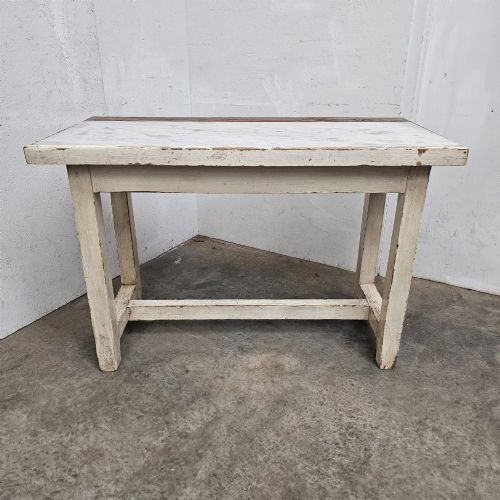
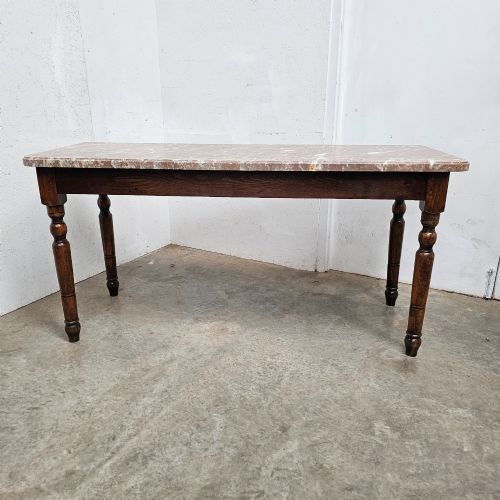
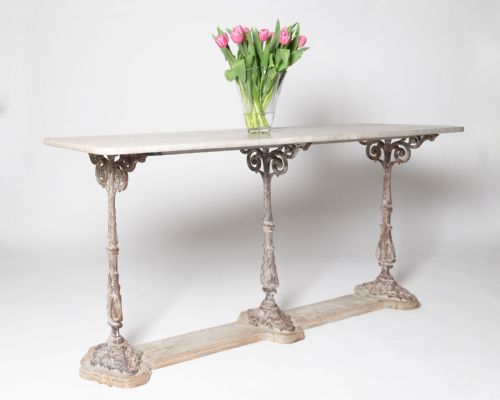
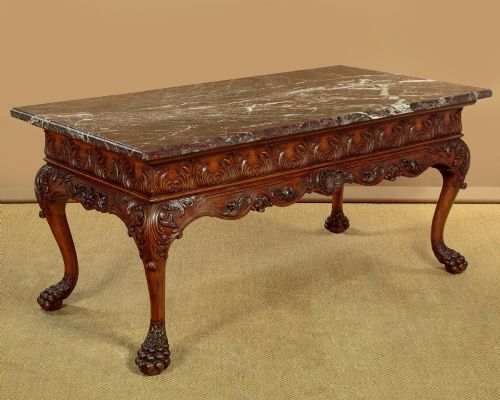
Vintage Marble Console Table
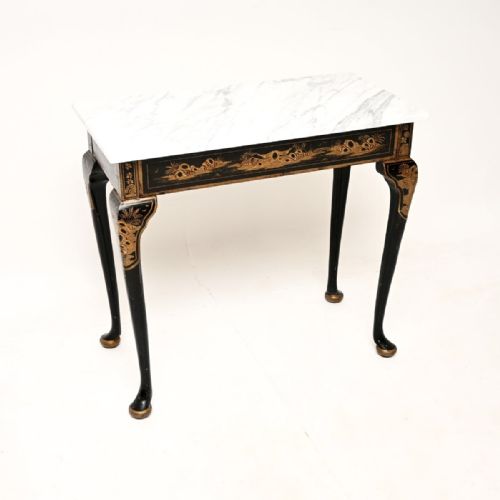
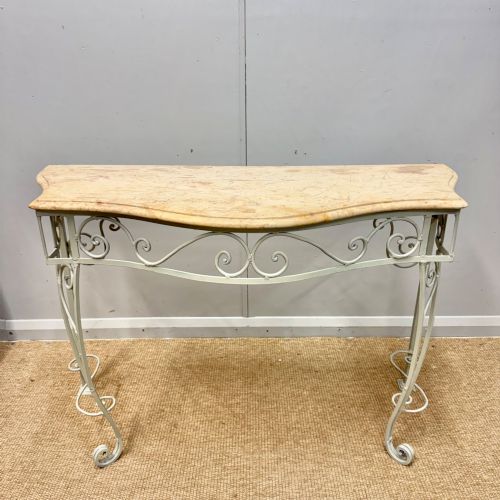
A vintage marble console table brings classical proportion and cool stone surface to an entrance hall or living space.
Vintage Marble Console Table
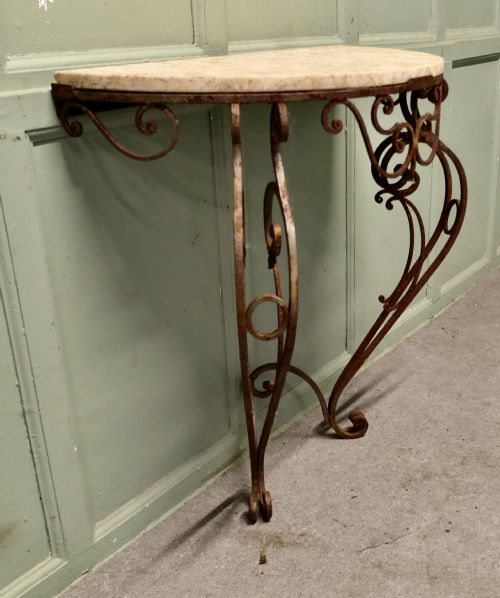
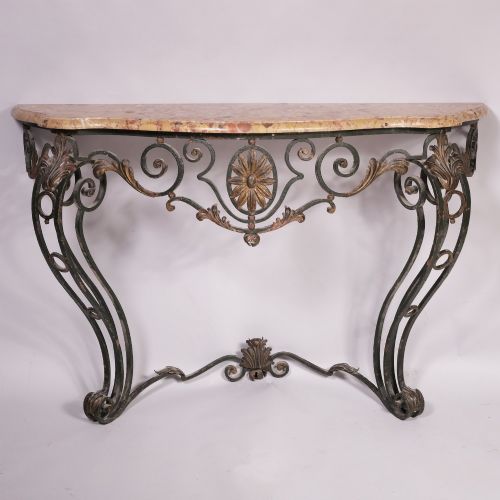
A vintage marble console table combines a durable stone slab with a supporting frame built from timber, iron or brass. These pieces serve primarily in hallways, reception rooms and dining spaces where surface area is needed without deep footprints.
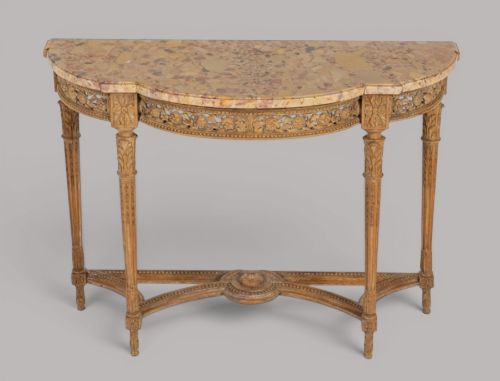
The selections span formal French styles like Louis XVI and Neoclassical alongside robust country pieces, utility tables, and washstands adapted for modern rooms. Most examples date from the nineteenth century through the early twentieth century.
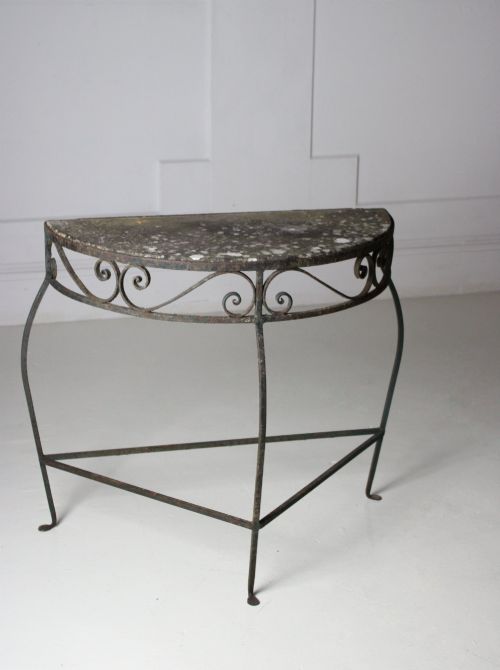
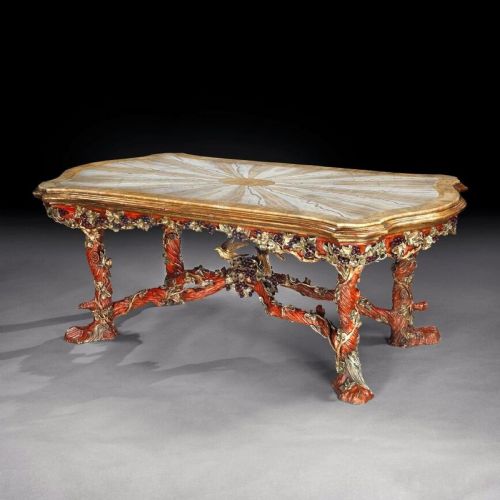
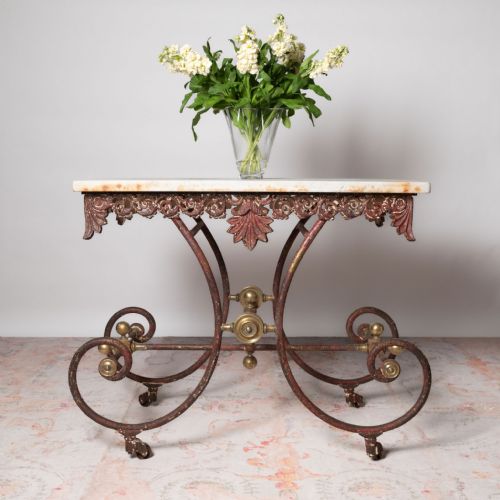
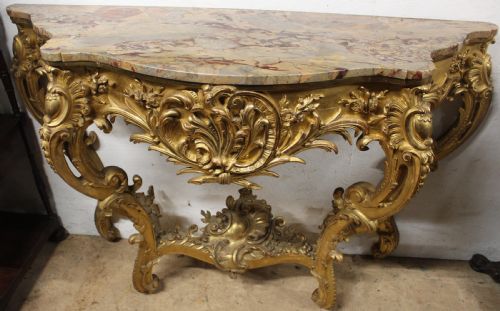
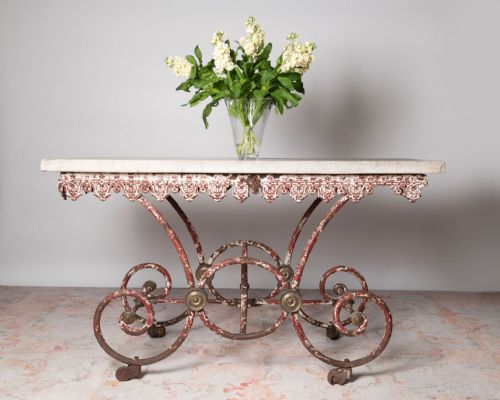
Makers utilised various timbers alongside metals to support heavy stone tops, resulting in forms ranging from delicate gilded carvings to industrial iron bases. Buyers meet both grand salon furnishings and simpler domestic preparations on this page.
How they were made
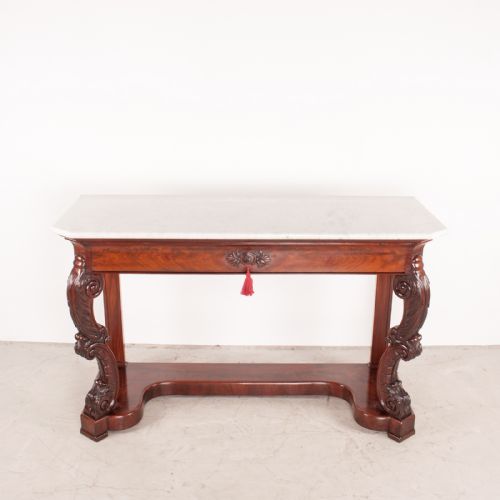
Makers fashioned the bases using seasoned hardwoods like mahogany, walnut and oak, or shaped metal through forging and casting. Carved timber frames often received polychrome, paint or giltwood finishes to emulate rich architectural motifs.
Slabs of marble, onyx or fossil stone were hand-cut and polished to form the upper surfaces, resting directly upon the supporting framework or secured with wooden battens.
Some marble tops bear the faint, enduring chill of past French butchers and patisseries.
What varies in quality
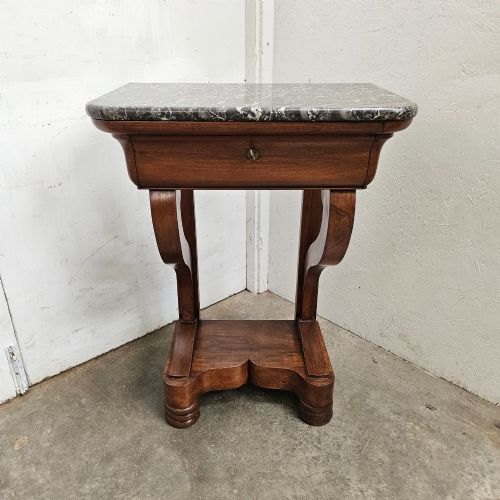
The refinement of the carving and the choice of timber dictate the tier of craftsmanship, where hand-shaped details on walnut and mahogany outrank simpler pine constructions. Superior pieces display harmonious proportions between the heavy stone top and the structural base.
The geological quality of the marble slab, along with the precision of its edge moulding and corner profiling, separates standard utility tables from high salon pieces.
Amleto Bertoni
The Vintage Marble Console Table Glossary
- Console table
- A table designed to stand against a wall, traditionally fixed with brackets or supported by front legs. These items anchor narrow spaces such as hallways.
- Giltwood
- Timber coated with a thin layer of gold leaf. This finish appears frequently on formal nineteenth-century salon tables.
- Washstand
- A domestic piece featuring a marble top designed to hold a basin and jug. Many surviving examples now function as console tables.
- Serpentine
- A curved line that undulates convexly and concavely. This profile often appears along the front edge of marble tops.
Vintage Marble Console Table: Frequently Asked Questions
Where should I place a marble console table?
These narrow tables suit entrance halls, corridors, and reception rooms where floor space is limited. Their shallow depth allows them to sit against walls without blocking walkways.
The stone surface provides a practical landing space for keys, mail, and decorative objects while introducing architectural character to domestic interiors.
How do I clean a vintage marble top?
Use a soft cloth dampened with warm water and mild, pH-neutral soap to wipe down the stone surface. Avoid abrasive scourers, vinegar, and acidic cleaners that can etch the polished finish.
Dry the marble thoroughly afterwards to prevent water spots and maintain the natural sheen of the vintage material.
Are washstands suitable for use as console tables?
Many nineteenth-century washstands feature the exact proportions and stone surfaces required for hallway console use. Their original basins are often removed to leave a flat display area.
Edwardian and Victorian washstands in mahogany, walnut, or painted pine integrate easily into modern hallways as practical side surfaces.
How do I identify a Neoclassical style table?
Neoclassical pieces feature restrained geometric lines, classical motifs, and architectural symmetry inspired by ancient Greece and Rome. Look for straight tapered legs, fluting, and carved swags.
These tables often pair gilded or painted wooden frames with contrasting dark or white marble tops.