
Vintage Mahogany Side Cupboard
Vintage mahogany side cupboard pieces bring practical utility and rich timber tones into a room, offering compact storage with traditional character.
Vintage Mahogany Side Cupboard
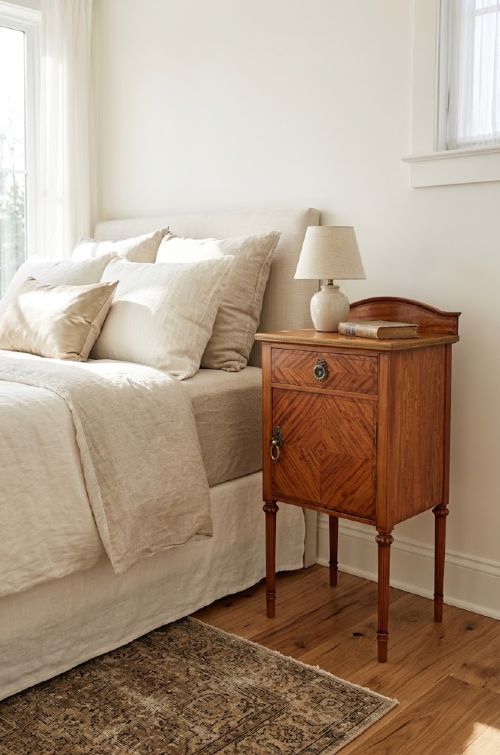
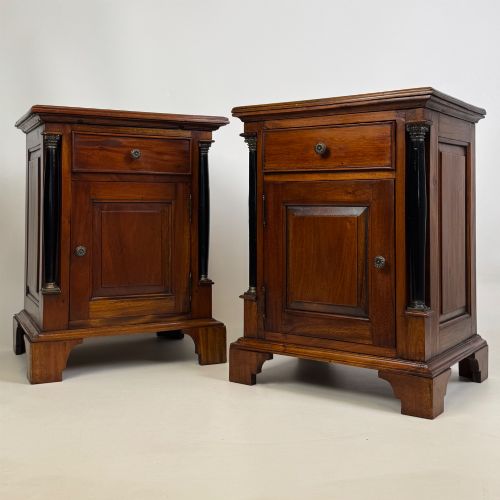
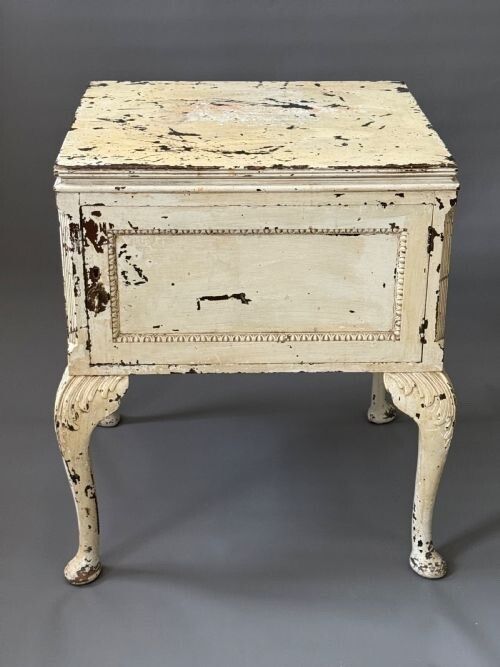
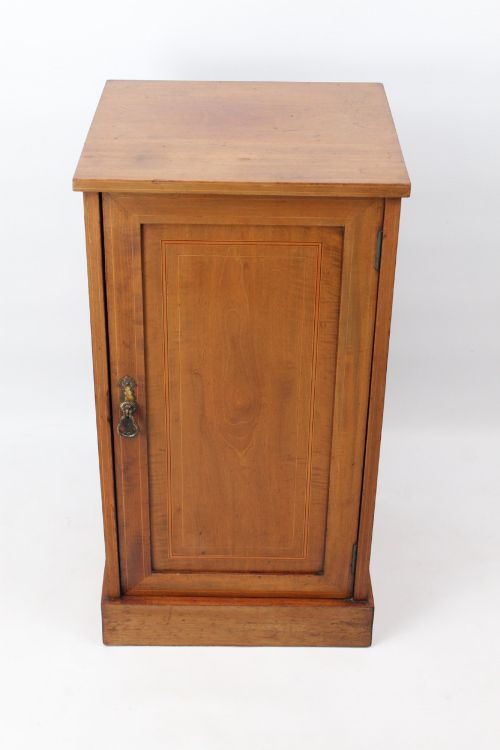
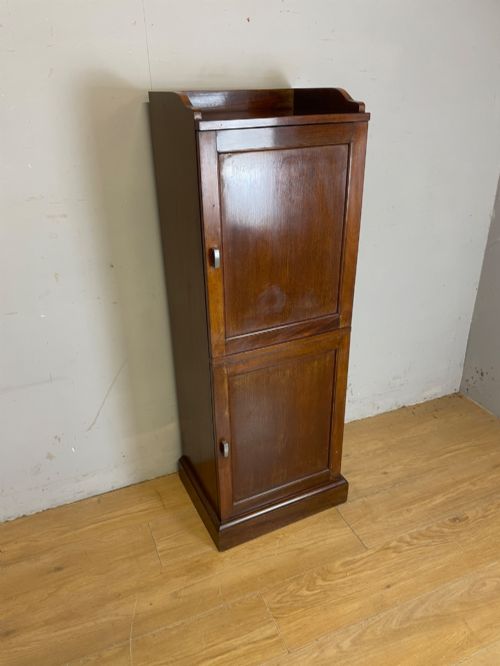
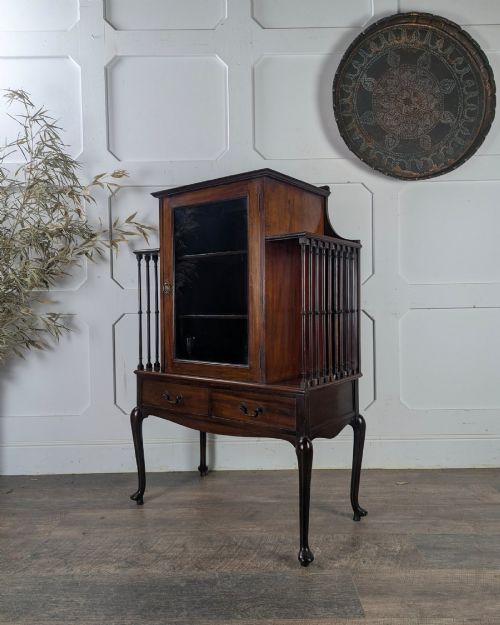
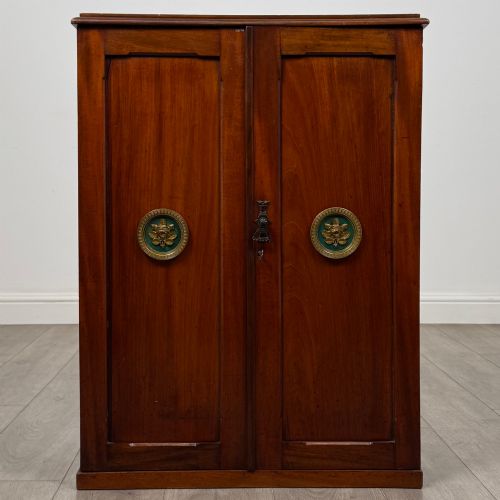
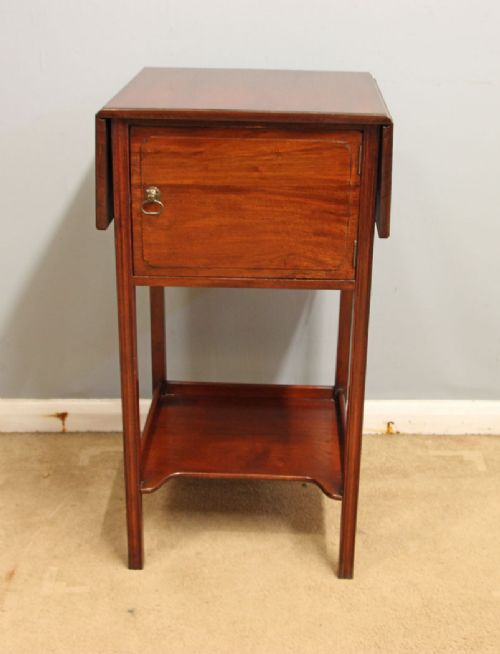
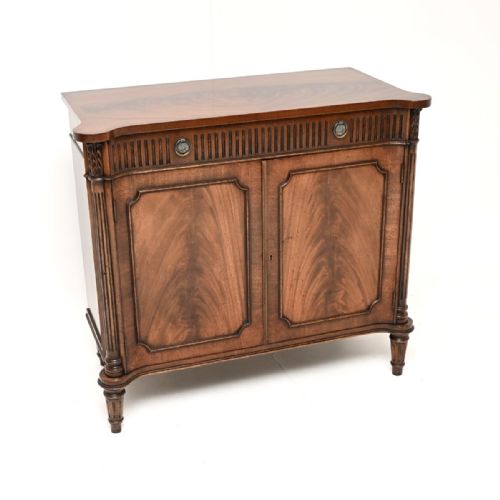
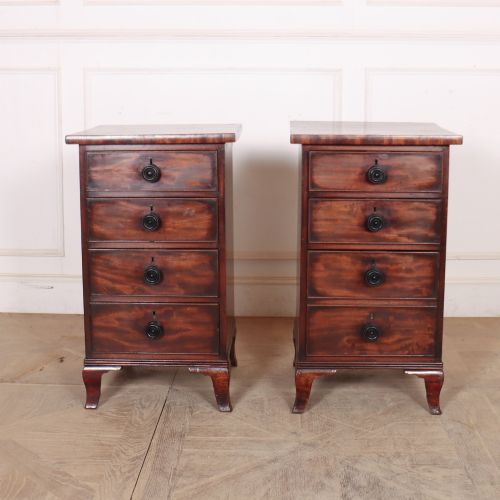
A vintage mahogany side cupboard serves as a compact storage unit, appearing frequently across this selection as bedside cabinets, nightstands, and small commodes. These pieces emerge from periods spanning the late eighteenth century through the Edwardian era, Victorian decades, and into the nineteen-twenties and thirties. Buyers seek them to anchor a bedside or corner, combining enclosed storage with the deep reddish grain characteristic of traditional timber work.
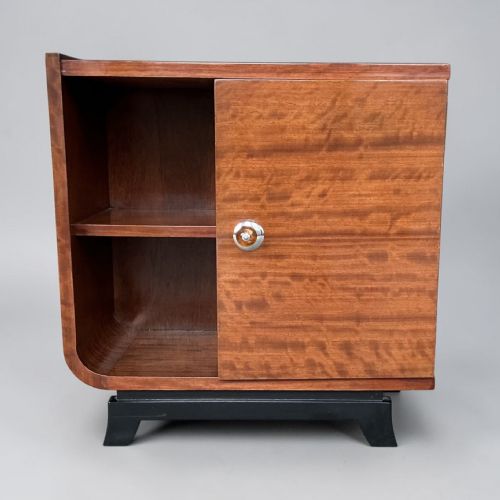
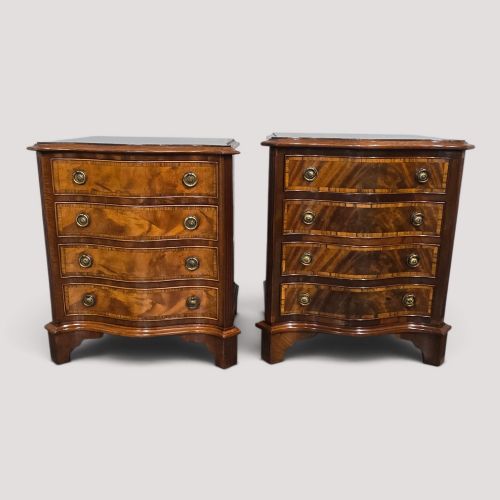
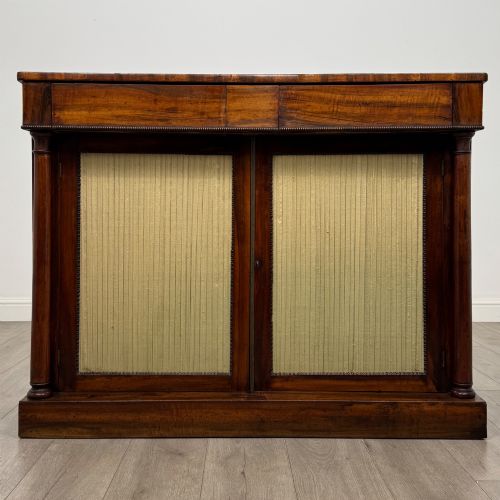
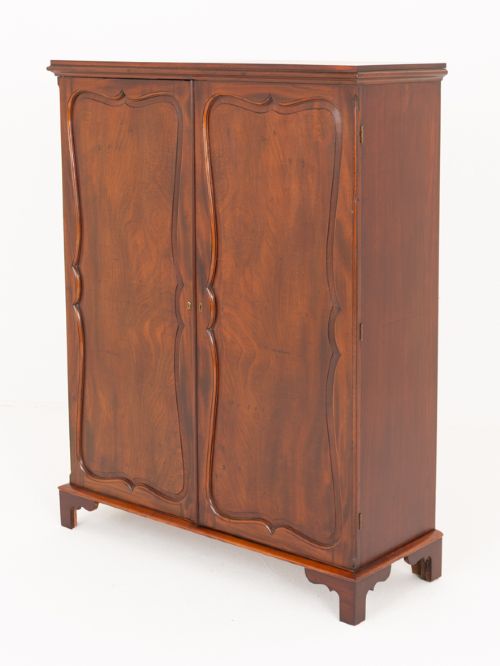
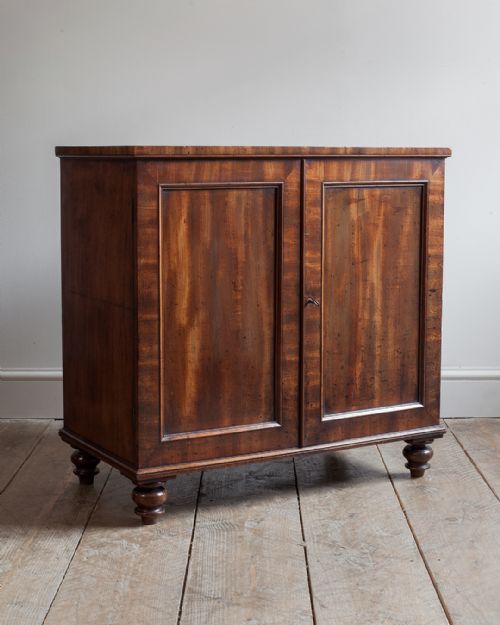
The assortment includes Georgian and Regency iterations alongside Sheraton Revival commodes, Edwardian inlaid designs, and occasional French Art Deco side cabinets. Forms range from simple two-door cupboards and drop-leaf tables to serpentine chests of drawers, music cabinets, and display units with mirror backs. Most options lean toward domestic scales intended for intimate spaces rather than grand public rooms.
Materials and Construction Methods
Cabinetmakers utilised solid mahogany and flame mahogany veneers over secondary timbers, frequently augmenting the primary wood with contrasting stringing and banding in satinwood and boxwood. Structural integrity relied on traditional joinery techniques, creating sturdy carcasses designed to withstand daily domestic service. Turned legs, bracket feet, and plinth bases support the primary body of each cabinet.
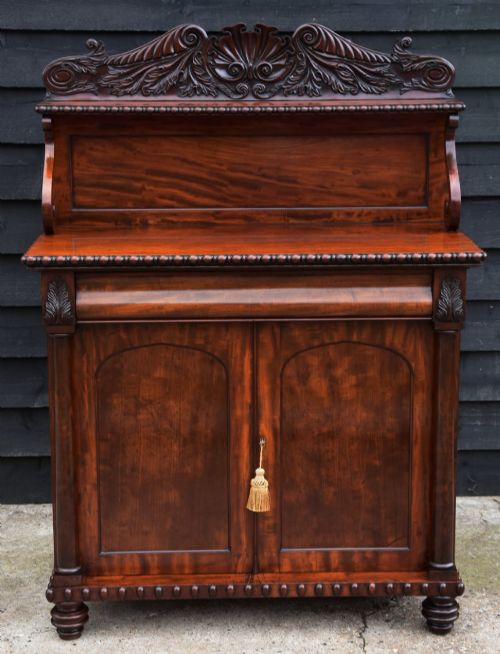
Decorative surface details often incorporate floral marquetry, painted motifs, and intricate crossbanding reflecting Georgian, Regency, or Sheraton Revival tastes. Hardware typically involves brass handles, escutcheons, and hinges, while certain Continental variations incorporate marble tops and glass elements to alter the textural weight of the piece.
One Dutch nineteenth-century specimen incorporates floral marquetry so elaborate that tulips seem to climb the bedside drawers.
Distinguishing Quality Across the Range
The calibre of a vintage mahogany side cupboard rests on the selection of the timber, particularly the liveliness of the flame mahogany veneer and the precision of any satinwood or boxwood inlay. Superior examples display thoughtful grain matching across drawer fronts and cupboard doors, whereas lesser pieces rely on plain, uniform stock with minimal visual depth.
Execution of detail defines the upper tier, seen in crisp carving, well-fitted drawers operating smoothly within their housings, and original brass hardware. The integration of design revivals also matters; disciplined adherence to Georgian or Regency proportions yields a more harmonious object than uninspired mass production from later decades.
Gillows·Collinson and Lock London
The Vintage Mahogany Side Cupboard Glossary
- Flame mahogany
- A figure in mahogany timber produced by slicing through the branching of branches from the main trunk, yielding a characteristic flame-like pattern. Cabinetmakers reserved this striking veneer for the most prominent exterior surfaces.
- Satinwood
- A durable, yellowish timber imported from tropical regions, utilised for contrasting inlay, stringing, and banding against darker mahogany carcasses. It provides a bright visual accent on Sheraton Revival and Edwardian pieces.
- Marquetry
- The art of applying pieces of veneer to a structural structure to form decorative patterns and pictorial designs. Artisans employed various coloured woods to create floral and geometric motifs.
- Commode
- A low cabinet or chest of drawers designed for domestic use, frequently featuring curved or serpentine fronts in eighteenth and nineteenth-century furniture traditions. The term covers several decorative side storage forms.
- Serpentine
- A furniture front or top shaped with a convex centre flanked by concave curves, creating an undulating silhouette. This contour requires advanced woodworking skill to execute cleanly.
Vintage Mahogany Side Cupboard: Frequently Asked Questions
What is a vintage mahogany side cupboard used for?
These cupboards provide compact enclosed storage for books, personal items, and bedside essentials within bedrooms and sitting rooms. Their modest footprints allow them to fit easily beside beds or alongside larger seating arrangements.
Surface tops also accommodate lamps, clocks, and decorative objects, combining practical utility with traditional furniture forms.
How do I identify the period of a side cupboard?
Dating relies on observing characteristic design styles, such as Georgian proportions, Regency brass mounts, or Edwardian satinwood inlay. Construction methods and secondary timbers inside drawers provide further clues regarding age.
Later revival pieces from the twentieth century often blend historical motifs with lighter interior framing techniques.
Are marble top cabinets common?
Marble top variants appear primarily on Continental pieces, particularly French bedside cabinets from the early twentieth century. The stone provided a durable, heat-resistant surface for washing equipment and nighttime water jugs.
These tops contrast with standard all-wood English designs, adding weight and a different textural quality to the piece.
How do I care for mahogany furniture?
Mahogany benefits from placement away from direct heat sources and strong sunlight to prevent the timber and veneers from drying out or fading. Regular dusting with a soft, dry cloth maintains the finish.
Occasional application of appropriate wax polish helps nourish the grain without building up heavy chemical residues.